
The place
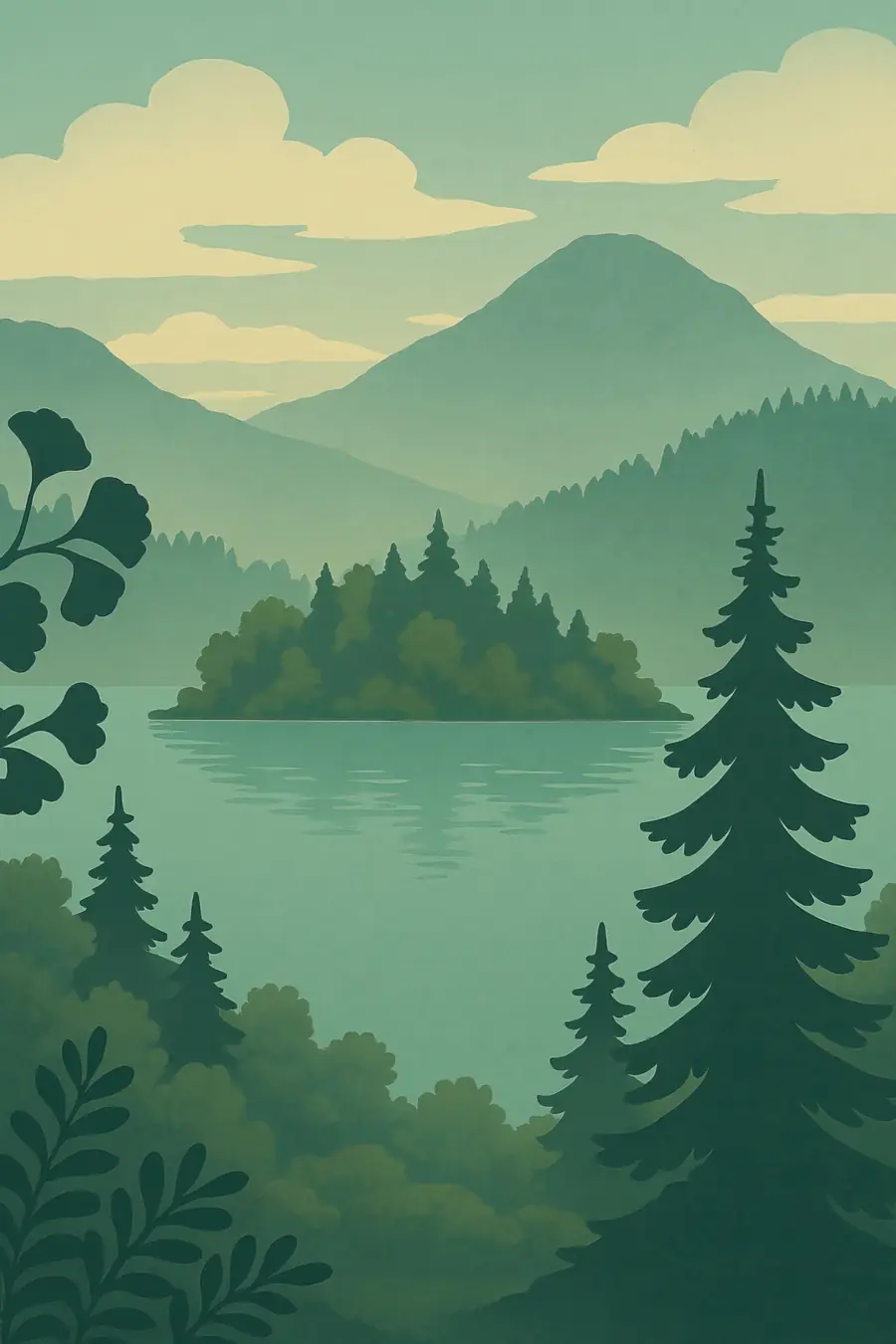
The lake lies in a basin shaped by tectonic movement and by the Bohinj glacier, which flowed through here during the ice ages. It is about 2 km long and 1.4 km wide, and its deepest point is around 30 m. Warm springs feed part of the lake, so it is warmer than many alpine lakes in summer. A small island rises near the western end, crowned by a church, and a castle stands on a cliff above the north shore. Forested hills surround the water, and on clear days the peaks of the Julian Alps and the Karawanks are visible. Wooden pletna boats glide quietly across.
History
People lived around Bled in prehistoric times, and archaeologists have found Iron Age remains and an early Slavic burial ground on the island. The island has been a place of worship for centuries, and its church, rebuilt several times, is reached by 99 stone steps. Bled first appears in written records in 1004, when Emperor Henry II gave the estate to the bishops of Brixen, who held it for most of the next eight centuries. In the 19th century, the Swiss healer Arnold Rikli founded a health resort here, promoting air, sun and water cures, and Bled grew into a spa and holiday town that later attracted royalty and diplomats.
Why it matters for the living world
Lake Bled is a natural laboratory for how alpine lakes respond to human pressure. In the 20th century, sewage and runoff from the town and farms fed the lake with nutrients, causing algal blooms, including the red-coloured cyanobacterium Planktothrix rubescens, and oxygen loss in deep water. Scientists have studied the sediments to reconstruct these changes. The lake holds native fish such as pike and perch, and introduced species, and its shores and wetlands support amphibians and waterbirds. Nearby, the Triglav National Park protects high mountain habitats of the Julian Alps, and the Radovna and Sava Bohinjka rivers link the lake to the wider alpine landscape.
People of the place
Bled is a small town whose life centres on the lake. Local families have rowed pletna boats to the island for generations, and the right to operate them has long been reserved for a limited number of local boatmen. Tourism, hotels, cafés and events such as rowing championships are the main livelihoods today, along with farming and forestry in the surrounding villages. The island church is popular for weddings, and ringing its wishing bell is a local custom. Residents, the municipality and scientists have worked for decades to improve the lake's water quality, and many people feel a strong sense of responsibility for it.
What it faces
Nutrient pollution was the biggest threat in the 20th century. Since then, a sewer system around the lake, diversion of polluted streams, a siphon that removes oxygen-poor bottom water since the 1980s and inflow of cleaner water from the Radovna river have improved conditions, though the lake still carries nutrients in its sediments. Climate change is warming the water, which may weaken mixing and favour algal growth. Tourism is intense, with large numbers of day visitors, traffic and pressure on the shoreline and paths. The municipality has introduced measures such as traffic restrictions and shore protection, and monitoring continues.
Sources
- Discover our key lakes: Lake Bled – Interreg Alpine Space
- Recent sediment of Lake Bled (NW Slovenia): sedimentological and geochemical properties – FAO AGRIS
- Lake Bled eutrophication study – Hydrobiologia (Springer)
Written for Regenerative Voices from the sources above. Spotted something wrong? Tell us.