
The place
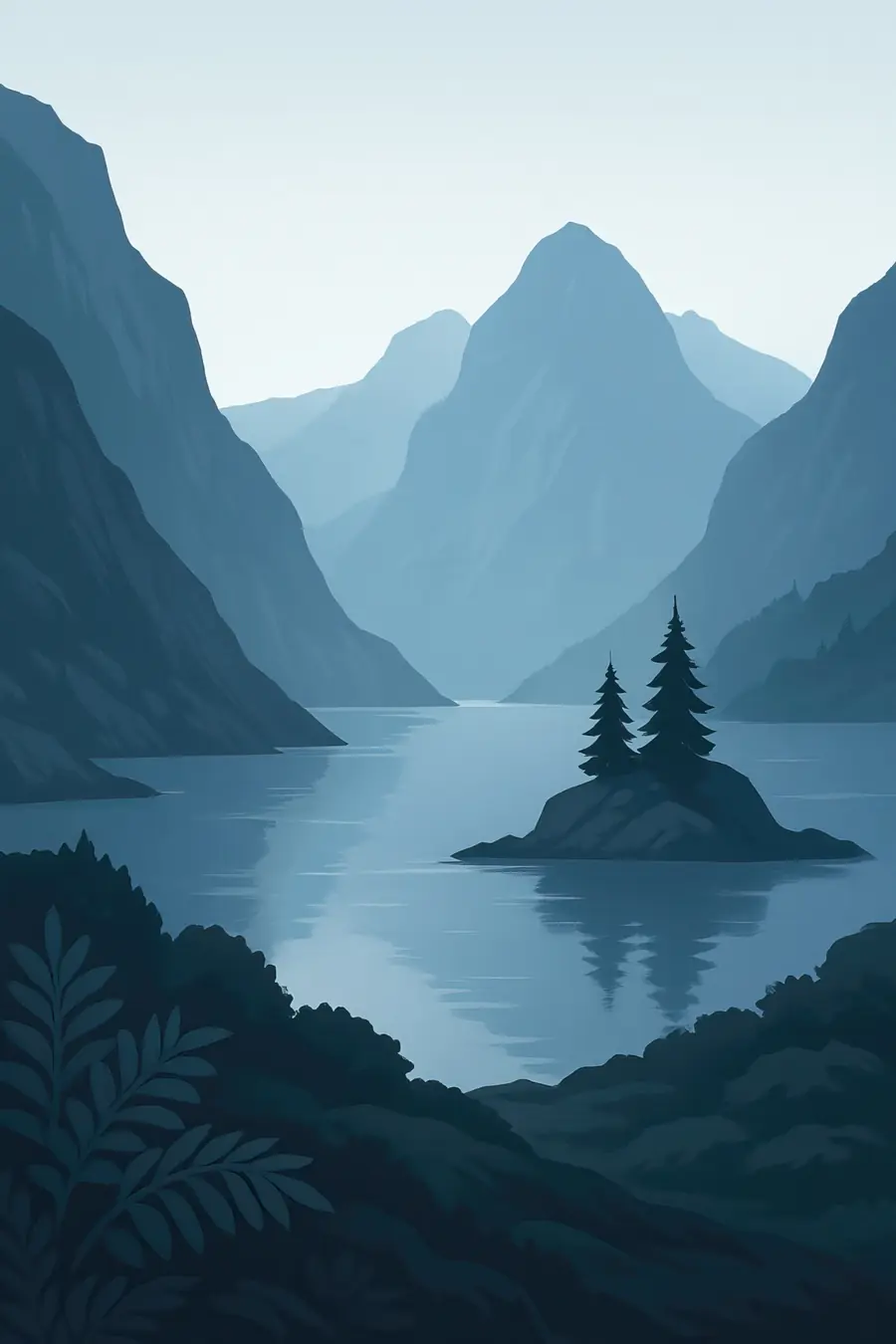
Lofoten's peaks rise straight out of the sea in sharp ridges of very old granite and gneiss, carved by glaciers into cirques, pinnacles and narrow sounds. White beaches lie between the mountains on the outer coast. Because of the warm Norwegian Current, the climate is far milder than the latitude suggests, and harbours stay free of ice. In summer the midnight sun shines for weeks; in winter the sun disappears for a time, and the northern lights often appear. Between the outermost islands runs the Moskstraumen, one of the strongest tidal currents in the world. Fishing villages of red and ochre wooden cabins line the shores.
History
People have lived on Lofoten for thousands of years, and both Norse and Sámi communities used these coasts. At Borg, archaeologists found a Viking-age chieftain's longhouse more than 80 m long, now reconstructed as a museum. For over a thousand years, the winter cod fishery has drawn fishermen from along the coast, and stockfish, cod dried on wooden racks in the cold wind, was traded south to Bergen and on to Europe. Many fishermen lived in rorbuer, simple cabins by the water, rented from local merchants who controlled trade. In the 20th century motorboats, bridges and tunnels changed island life, and tourism grew strongly from the 1990s.
Why it matters for the living world
Every winter, mature northeast Arctic cod, known as skrei, migrate from the Barents Sea to spawn in Lofoten's waters, and their eggs and larvae drift north along the coast. Herring, haddock and other stocks also depend on this area. Fisheries scientists have argued that this makes Lofoten and Vesterålen too valuable to open for oil and gas. Off Røst lies one of the largest known cold-water coral reefs. Sea eagles, otters and orcas hunt in the sounds, and the outer islands host large seabird colonies, including puffins, kittiwakes and guillemots, although many of these colonies have declined steeply in recent decades.
People of the place
About 24,000 people live in Lofoten, spread across fishing villages and small towns such as Svolvær and Leknes. Fishing and fish processing remain central, and the drying of stockfish on racks each spring is a familiar sight. Tourism, art, crafts and guiding now employ many people. Lofoten has been at the centre of a long national debate about whether to drill for oil: fishing communities, environmental groups and many residents have opposed it, and the waters off Lofoten, Vesterålen and Senja have so far been kept closed. Local people also debate how to balance tourism with housing, nature and village life.
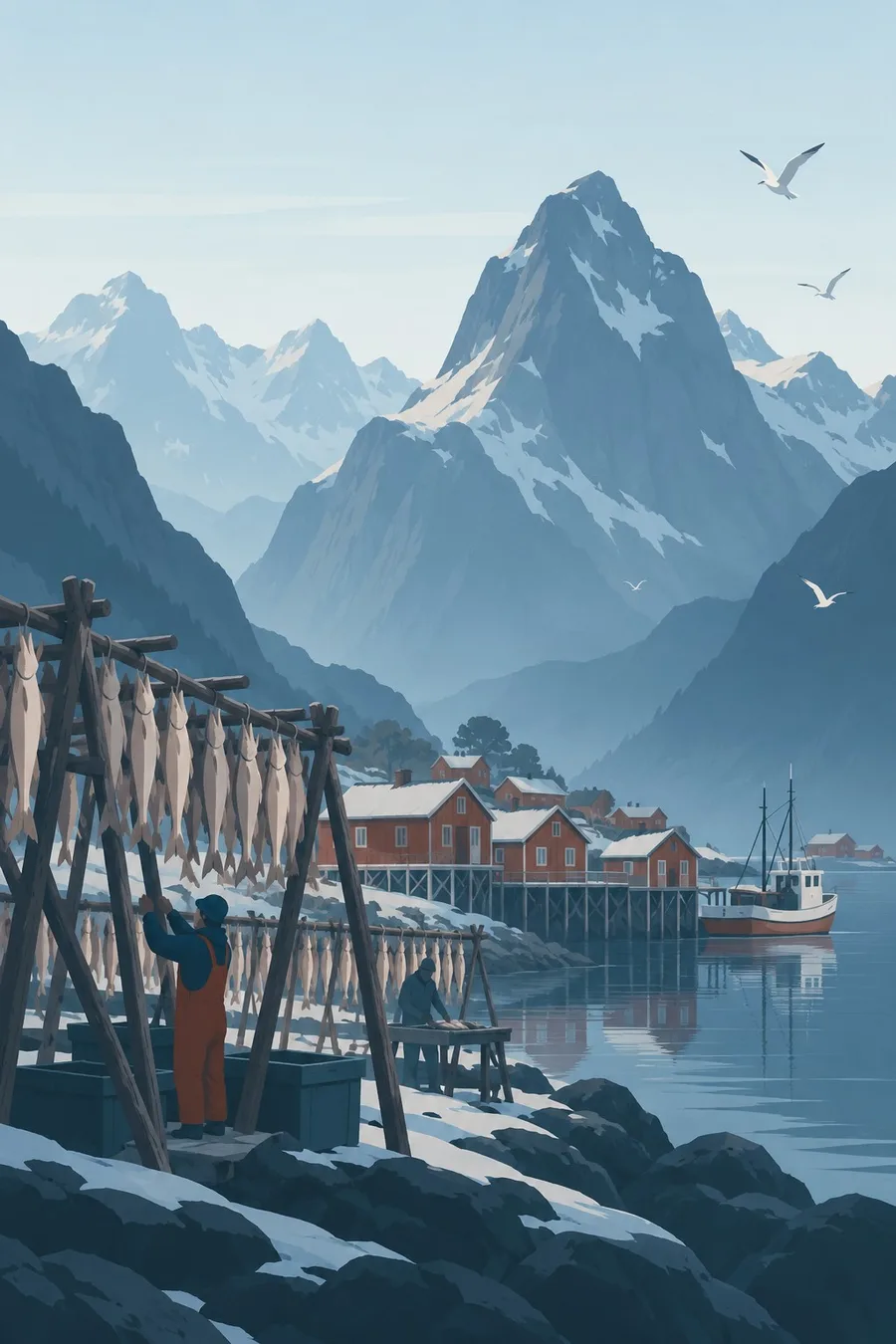
Illustrations made with AI in the style of the plates. They show life in general, not particular people or rites.
Seasons, celebrations and the sacred
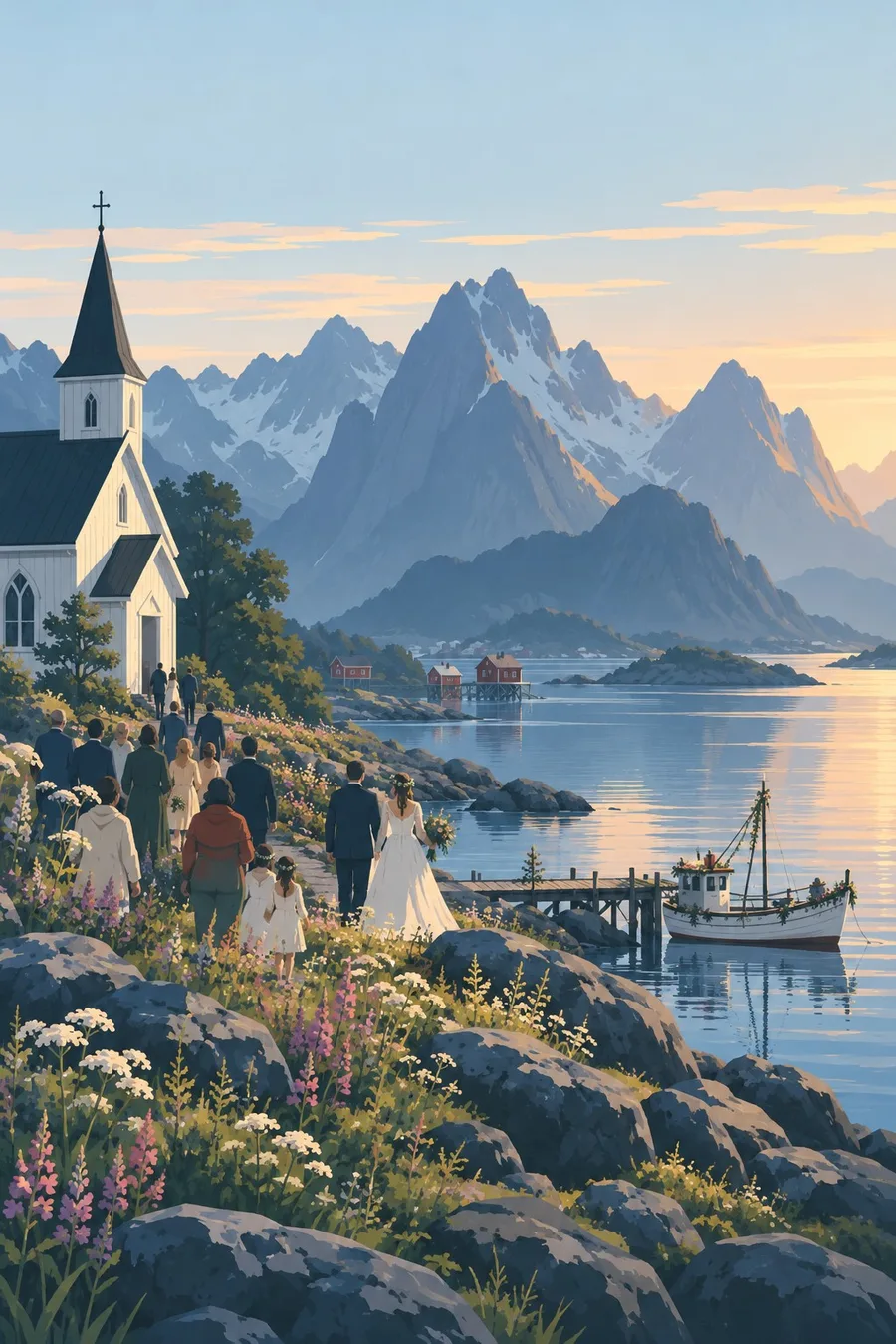
Illustrations made with AI in the style of the plates. They show life in general, not particular people or rites.
What it faces
Seabird colonies on Røst and other islands have collapsed over recent decades, mainly due to food shortages linked to ocean change. Warming seas may shift where cod and herring spawn, and warmer, wetter winters can affect the drying of stockfish. The question of petroleum exploration returns with each change of government. Salmon farming brings concerns about lice and escaped fish. Tourism has grown fast, with heavy pressure on popular mountain trails, camping on beaches, waste and traffic on the single main road. Municipalities and trail groups are building sustainable paths, toilets and visitor guidance, and the national park offers stronger protection for the southern tip.
Sources
- Lofoten–Vesterålen: for cod and cod fisheries, but not for oil? – Institute of Marine Research
- Fisheries scientists to government: no drilling in Lofoten – The Barents Observer
- Fish industry wants ban on oil drilling – The Barents Observer
Written for Regenerative Voices from the sources above. Spotted something wrong? Tell us.