
The place
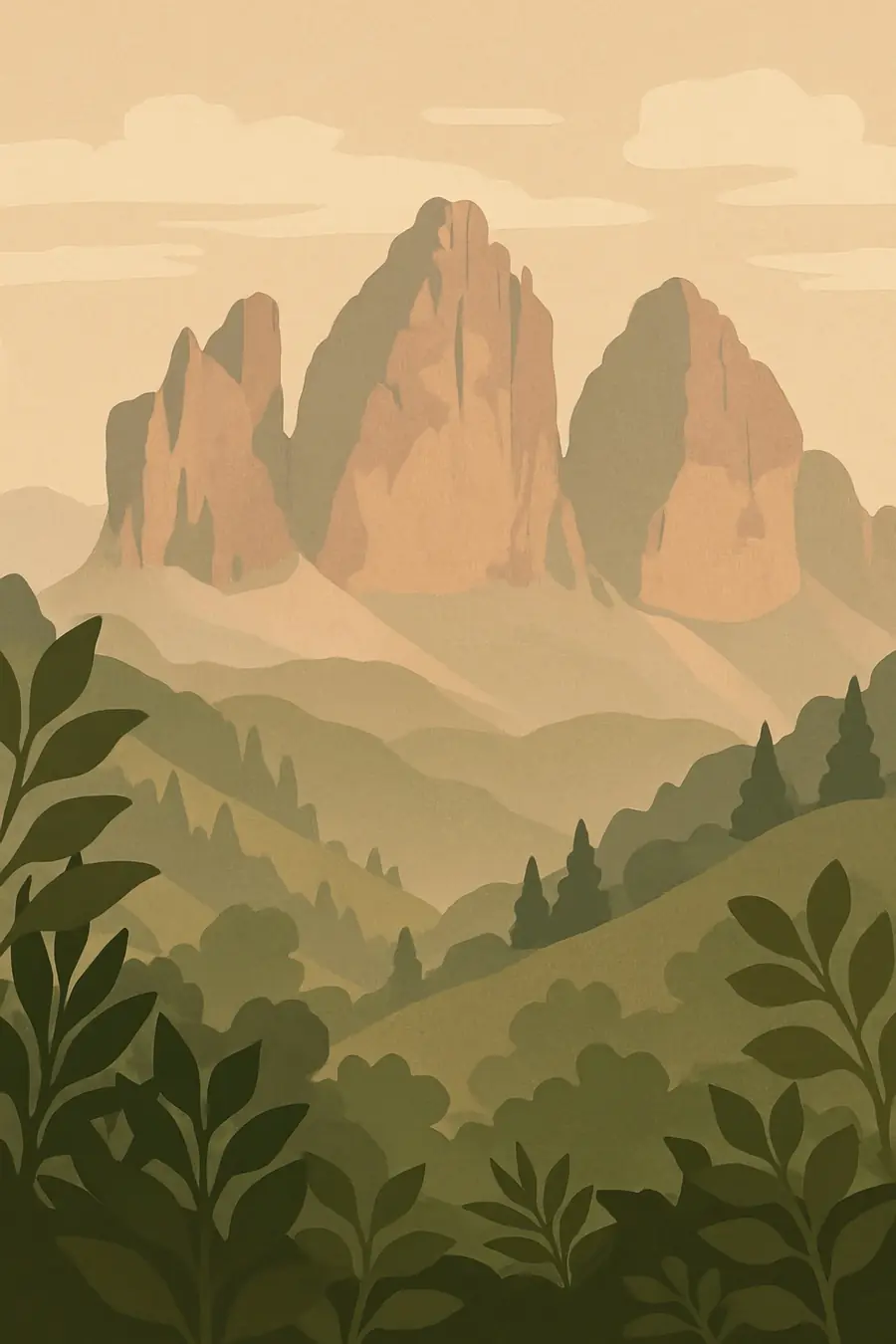
The Dolomites are made largely of dolomite, a carbonate rock named after the French geologist Déodat de Dolomieu, who described it in the 1790s. Much of it began as reefs and carbonate platforms in warm Triassic seas, around 250 to 200 million years ago, later lifted into the Alps. Erosion has carved towers, needles and sheer walls standing above soft green pastures and scree. The Marmolada, at 3,343 m, is the highest peak and carries the largest remaining glacier. At sunrise and sunset the rock often glows pink and orange, a light Ladin speakers call enrosadira. Summer brings thunderstorms; winters are snowy and cold.
History
Hunters crossed the high passes after the last ice age, and Mesolithic camps and a burial at Mondeval de Sora show people here around 7,500 years ago. Over centuries the valleys came under the Roman Empire, the Prince-Bishops of Brixen and Trento, the Republic of Venice and the Habsburgs. The Ladin language developed from Latin in the valleys around the Sella group. During the First World War, the front between Italy and Austria-Hungary ran through the mountains, and soldiers dug tunnels and fortifications that can still be seen on Lagazuoi and Marmolada. After 1919 the region became Italian. From the 19th century, climbers and tourists made the Dolomites famous.
Why it matters for the living world
The Dolomites hold a rich alpine flora on limestone soils, including many endemic plants, and their sharp contrasts in height and aspect create many small habitats. Larch and spruce forests clothe the lower slopes, and high meadows bloom with orchids, lilies and gentians in summer. Chamois, marmots, ibex, golden eagles and ptarmigan live on the higher ground. The geological record is of global interest: the rocks preserve fossil reefs and volcanic layers that show how ancient seas and atolls formed and drowned. The mountains feed the Piave, Adige and other rivers that supply water and hydropower to north-eastern Italy.
People of the place
Ladin-speaking communities live in Val Gardena, Val Badia, Val di Fassa, Livinallongo and Cortina d'Ampezzo, alongside German and Italian speakers. Their legends, such as the story of King Laurin and his rose garden, are tied to particular peaks. In Ampezzo, the Regole, old family-based institutions, still manage common forests and pastures. Mountain farming, woodcarving in Val Gardena and dairy work continue, but tourism, skiing and hiking now dominate the economy. The UNESCO Dolomites Foundation, set up in 2010, brings together the provinces and regions that share the site to coordinate management across different administrations and languages.
What it faces
Climate change is shrinking the glaciers, and on 3 July 2022 a section of the Marmolada glacier collapsed and killed eleven people. Storm Vaia in October 2018 flattened large areas of forest, and bark beetles have since spread through the weakened spruce stands. Tourism is very heavy at a few places, with traffic on passes, crowded trails and car parks at sites such as Lago di Braies and the Tre Cime. Some valleys have introduced road tolls, booking systems and limits on private cars. Plans for new ski lifts and infrastructure around major sporting events have drawn criticism from conservation groups.
Sources
- The Dolomites UNESCO World Heritage Site – Dolomiti UNESCO Foundation
- Dolomites named as a UNESCO World Heritage Site – CIPRA
- Fondazione Dolomiti UNESCO – Regione del Veneto
Written for Regenerative Voices from the sources above. Spotted something wrong? Tell us.