
The place
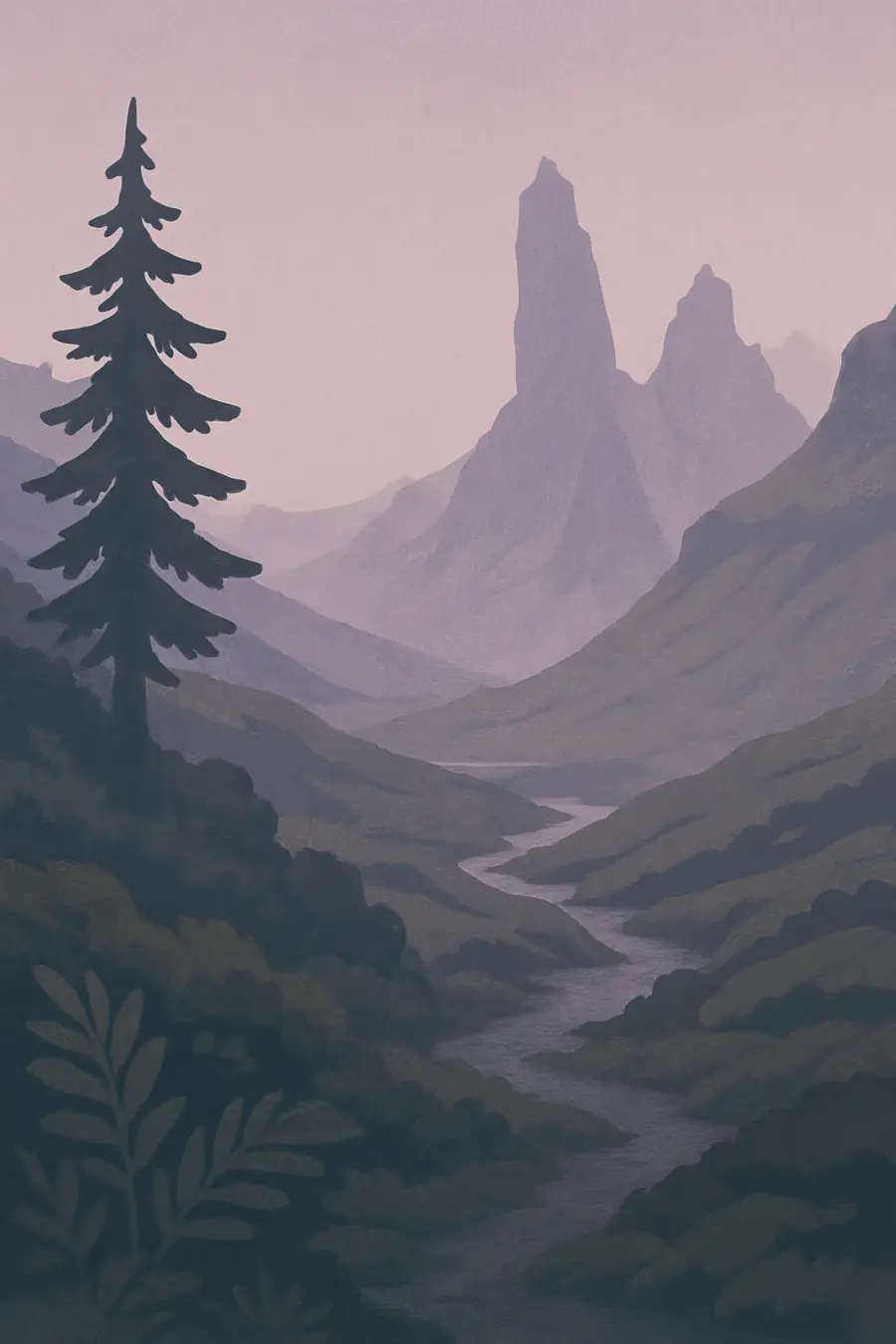
Much of Skye is made of basalt lava flows that poured out around 60 million years ago, when the North Atlantic was opening. The Black Cuillin are the eroded roots of a volcano, made mostly of rough, dark gabbro, while the rounded Red Cuillin are granite. Ice later carved corries, ridges and sea lochs. On the Trotternish peninsula, heavy basalt has slid over softer rocks, creating the pinnacles of the Old Man of Storr and the Quiraing. The coast is cut by sea lochs and cliffs. The weather is mild, wet and windy, and light changes quickly over the moors, hills and sea.
History
Skye has been lived on since the Mesolithic, and the island holds brochs, duns and Pictish and Gaelic sites. From around 800 CE, Norse settlers ruled the Hebrides until the islands passed to Scotland under the Treaty of Perth in 1266, leaving many Norse place names. The MacLeods of Dunvegan and the MacDonalds of Sleat were the main clans for centuries. After the Jacobite defeat in 1746, Flora MacDonald's role in helping Charles Edward Stuart escape became legend. In the 19th century, landlords cleared many tenants to make way for sheep, and thousands emigrated. Crofters resisted, notably in the Battle of the Braes in 1882, which led to the Crofters Act of 1886.
Why it matters for the living world
Skye combines mountain, moorland, coastal and marine habitats. Golden eagles and white-tailed eagles, reintroduced to Scotland from 1975, hunt over the hills and sea lochs, and otters live along much of the shore. Seals, dolphins and basking sharks are seen offshore. The Cuillin hold arctic-alpine plants on high ledges, and the basalt grasslands and cliffs of Trotternish support rare plants. Native woodland survives in small fragments, often protected from deer. The Jurassic rocks along the coast contain dinosaur footprints, among the most important in Scotland. Peat bogs across the island store carbon and regulate water.
People of the place
About ten thousand people live on Skye today, many in Portree, Broadford and scattered crofting townships. Gaelic is still spoken, and Sabhal Mòr Ostaig in Sleat is a centre of Gaelic higher education and culture. Crofting, small-scale farming, fishing, fish farming and tourism are the main livelihoods, along with arts and crafts. Several communities have taken land or facilities into community ownership, for example to run car parks, housing or local energy projects. Skye's population fell sharply after the Clearances and has grown again only in recent decades, and the island's identity is closely tied to its history of land and language.
What it faces
Tourism has grown fast, and places such as the Fairy Pools, the Old Man of Storr and the Quiraing see heavy footfall, erosion and traffic on single-track roads. Communities and agencies have built car parks, toilets and paths to manage visitors. Housing pressure from holiday lets and second homes makes it hard for young people to stay. High red deer numbers prevent native woodland from regenerating, and salmon farming in sea lochs raises concerns about sea lice and pollution. Climate change brings more intense rain, coastal erosion and shifts in seabird food. Gaelic continues to decline as a daily language, despite education efforts.
Sources
- Isle of Skye, Inner Hebrides – Geological Society
- Cuillin – Wikipedia
- The Cuillin – Gazetteer for Scotland
Written for Regenerative Voices from the sources above. Spotted something wrong? Tell us.