
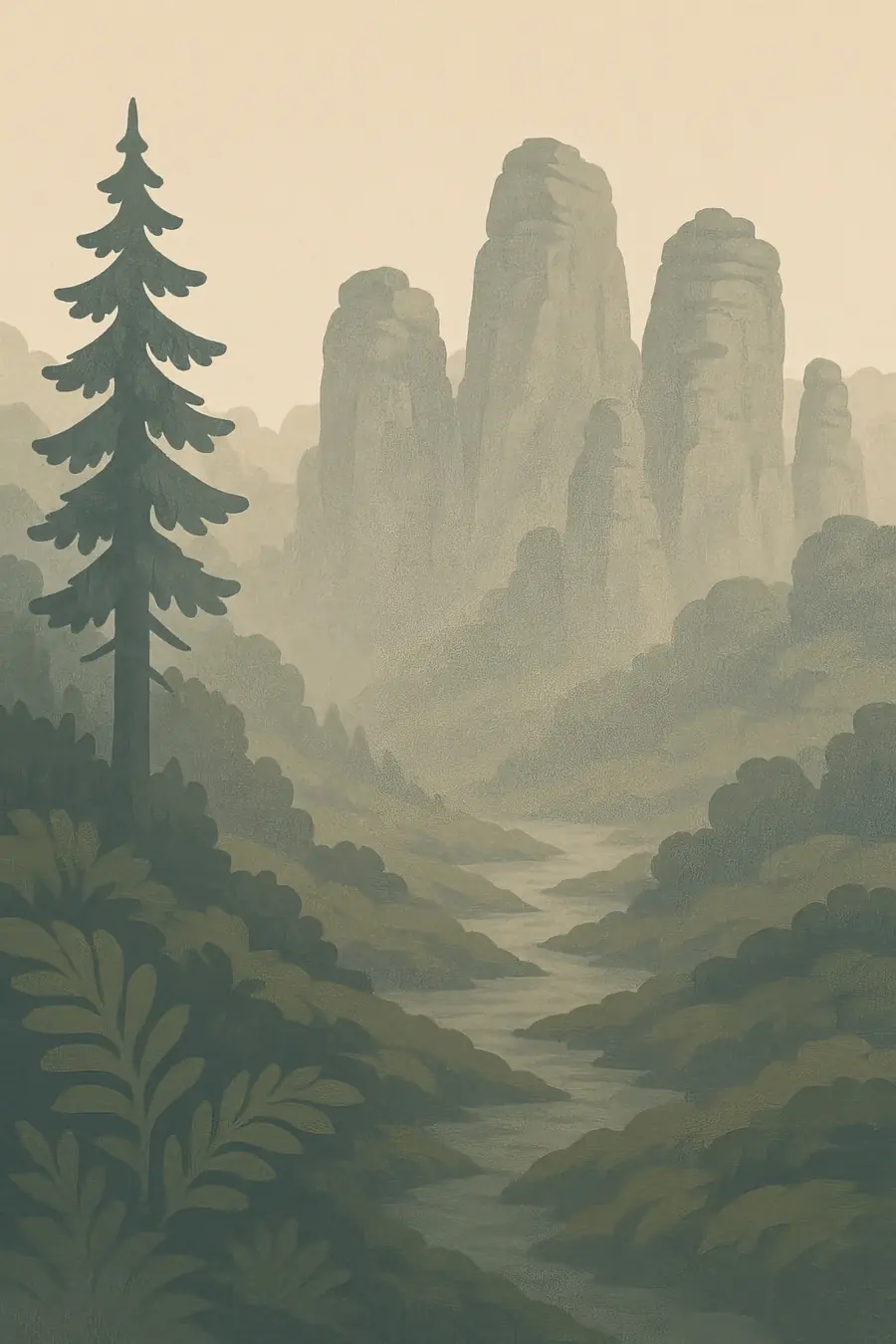
The place
The rock here formed as sand on the floor of a shallow sea during the Cretaceous period. Uplift, frost and water have since cut the thick sandstone along its cracks into towers, tablelands, deep narrow gorges and overhangs. The Elbe winds through the middle in a steep valley, and viewpoints such as the Bastei look out over pillars and the river far below. Cool, damp gorges sit beside dry, sunny rock tops, so climate varies sharply over short distances. Pine grows on the rocks, with beech, spruce and ferns in the valleys. Bird calls echo between the walls.
History
People used the area since prehistoric times, and medieval rock castles were built on some towers. In the 18th century, two Swiss painters at the Dresden Academy, Adrian Zingg and Anton Graff, said the landscape reminded them of home, and the name Saxon Switzerland stuck. Romantic painters, including Caspar David Friedrich, came to draw the rocks, and the Painters' Way trail follows their routes. Climbing began here in the 19th century, and the region developed its own strict climbing rules. Sandstone was quarried for buildings in Dresden and beyond. The national park was created in 1990, in the last months of the German Democratic Republic.
Why it matters for the living world
The national park covers about 93 km² in two parts and adjoins the Bohemian Switzerland National Park, so the two protect one connected sandstone landscape. The varied microclimates allow mountain species to grow in cold gorges at low altitude, next to warmth-loving species on the plateaus. Peregrine falcons, eagle owls and black storks breed on the cliffs and in the forests, after earlier declines. Atlantic salmon have been brought back to tributaries of the Elbe. Mosses, ferns and lichens are especially rich in the damp ravines. Large parts of the park are left to natural processes, allowing dead wood and new forest to develop.
People of the place
Small towns and villages such as Bad Schandau, Königstein and Rathen sit along the Elbe and in the valleys. Tourism, hiking, climbing and boat trips on the river are central to the local economy, and sandstone quarrying and forestry continue in places. Saxon climbers have a strong tradition and hold to rules from the early 20th century, such as climbing without metal protection and chalk, to protect the soft rock. Local residents and businesses have sometimes disagreed with the park over trail closures, fire management and how to handle dead trees, and the park works with climbing clubs and communities on access.
What it faces
Since 2018, drought and heat have weakened spruce stands, which bark beetles have killed over large areas. In summer 2022, a large forest fire spread from Bohemian Switzerland into the Saxon part of the park, and its causes and effects are still being studied, including possible damage to the sandstone. The fire led to debate about dead wood, fire breaks and access for fire services. Visitor numbers are high on popular trails and viewpoints, causing erosion and disturbance. Climate change will likely bring more drought and fire. The park is shifting toward more diverse, natural forest and improving fire prevention with its Czech partners.
Sources
- Saxon Switzerland National Park – Wikipedia
- Do forest fires do any damage to sandstone cliffs? – Institute of Geology, Czech Academy of Sciences
- Excursion to the post-fire area of Bohemian Switzerland National Park – FIRECE
Written for Regenerative Voices from the sources above. Spotted something wrong? Tell us.