
The place
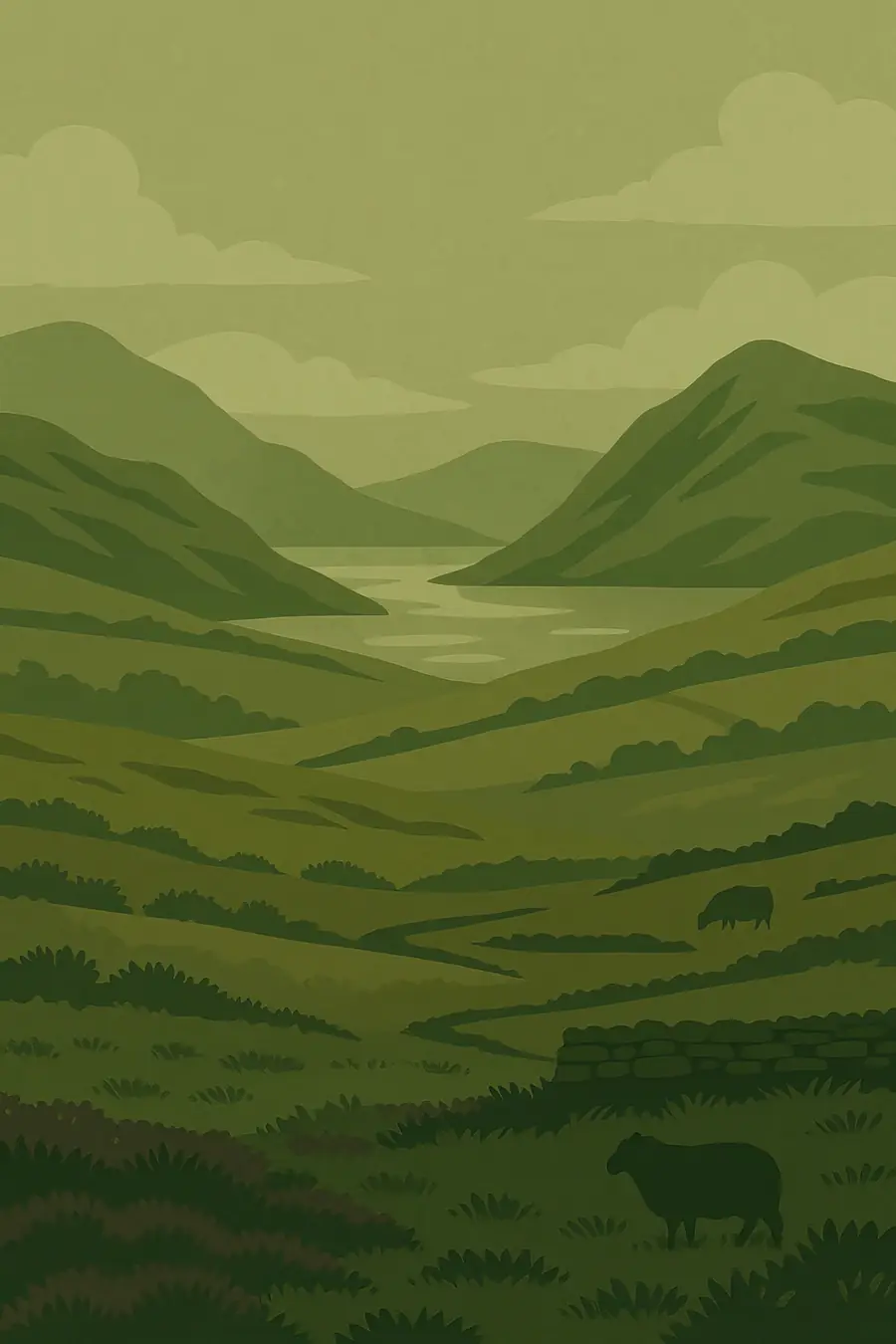
Most of Orkney is made of Old Red Sandstone, layered flagstones laid down in a large lake basin around 380 million years ago. The rock splits into flat slabs, which is why Orkney's ancient builders could make such fine stone walls. The islands are mostly low and green, with farmland, lochs and moorland, though Hoy has high hills and cliffs, and the sea stack called the Old Man of Hoy. The climate is mild but very windy, with few trees. Long summer days and short winter ones mark the year, and the sea, tides and sky are always present.
History
Farmers arrived in Orkney more than 5,000 years ago and built houses, tombs and stone circles. Skara Brae, a village of stone houses, the chambered tomb of Maeshowe, the Stones of Stenness and the Ring of Brodgar form the World Heritage Site, and recent excavations at the Ness of Brodgar have revealed a large ceremonial complex. Picts lived here later, and from the 9th century Norse settlers made Orkney the centre of a powerful earldom, recorded in the Orkneyinga saga. St Magnus Cathedral in Kirkwall was begun in 1137. Orkney passed to Scotland in 1468. In both world wars, Scapa Flow was a major naval base, and the German fleet was scuttled there in 1919.
Why it matters for the living world
Orkney's cliffs and islands host large seabird colonies, including guillemots, razorbills, kittiwakes, fulmars, puffins and Arctic terns, along with great skuas and Arctic skuas. Its farmland and moors support hen harriers, curlews, lapwings and short-eared owls, which hunt the Orkney vole, a subspecies found only here. Rare plants such as the Scottish primrose grow on coastal heaths, and the great yellow bumblebee holds on in flower-rich grasslands. The surrounding seas, with strong tidal currents, are rich in fish, seals and cetaceans. Orkney's tidal and wave energy test sites make it a centre of marine renewable research.
People of the place
About 22,000 people live in Orkney, with a strong local identity rooted in Norse and Scottish heritage; many place names come from Old Norse. Farming, especially beef cattle, is a major livelihood, together with fishing, tourism, crafts, whisky and renewable energy. Orkney produces more electricity from wind than it uses, and community-owned turbines fund local projects. Islanders are closely connected to their archaeology, and many work in heritage. Smaller islands face challenges with ferry links, housing and keeping young people. The Orkney Native Wildlife Project brings together landowners, communities and conservation groups to protect native species.
What it faces
Coastal erosion and rising seas threaten archaeological sites such as Skara Brae, which stands right on the shore, and storms are becoming more damaging. Stoats, first recorded in Orkney around 2010, prey on Orkney voles and ground-nesting birds, and the Orkney Native Wildlife Project is working to remove them. Seabird numbers have fallen, linked to changes in fish such as sandeels and to avian influenza. Cruise ship tourism brings large crowds to the Neolithic sites and Kirkwall on peak days. Agricultural intensification affects breeding waders and wildflowers. Orkney's limited grid capacity also slows renewable energy growth.
Sources
- Heart of Neolithic Orkney – UK National Commission for UNESCO
- The Heart of Neolithic Orkney: 20 years of UNESCO World Heritage status – The Orcadian
- World Heritage Sites – Orkney.com
Written for Regenerative Voices from the sources above. Spotted something wrong? Tell us.