
The place
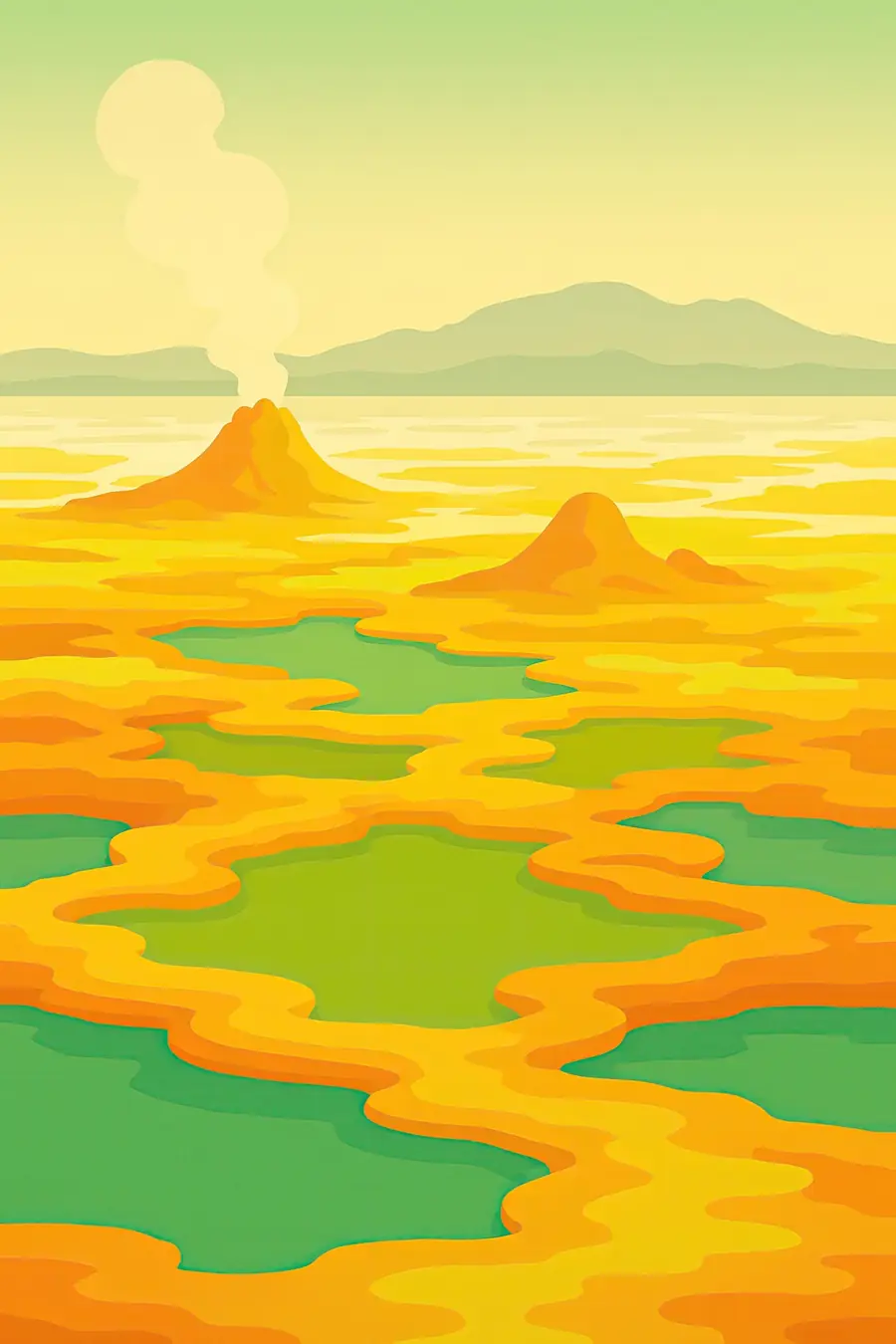
Much of the Danakil lies below sea level, and parts sink to more than 100 metres below it. The ground is a pale crust of salt, broken in places by black lava flows and volcanoes. At Dallol, hot, acidic springs build terraces and pools of yellow, green and rust-red mineral deposits that change within weeks. To the south, the shield volcano Erta Ale has held a lava lake for long periods. The heat is fierce for most of the year, and Dallol has one of the highest average temperatures recorded at any inhabited place. The silence is broken by the hiss of steam, the crack of drying salt and the bells of camel caravans.
History
The depression is a young sea floor in the making. Over the last few million years the African and Arabian plates have pulled apart here, and seawater from the Red Sea has flooded the basin and dried away several times, leaving thick layers of salt. The wider Afar region is one of the most important places for human origins: the fossil skeleton known as Lucy was found at Hadar, further south, in 1974. For centuries Afar people have cut salt from the flats and sent it by camel to the highlands, where salt bars once served as money. In the early twentieth century Italian and other companies tried to mine potash at Dallol.
Why it matters for the living world
Life here is sparse but remarkable. The hot, acidic and salty pools at Dallol are among the harshest environments on Earth, and scientists study them to learn where life can and cannot survive; some of the most extreme pools seem to hold no living cells at all, while microbes thrive in milder brines nearby. Around the edges, hardy shrubs, doum palms and acacias grow along seasonal rivers that come down from the highlands. The region is part of the range of the critically endangered African wild ass. Its value for the living world lies less in numbers of species than in what it shows about the limits of life.
People of the place
The Danakil is the homeland of the Afar people, who call themselves Qafar. They are mainly pastoralists, moving with camels, goats and cattle between the lowland and the highland edges, and they have long controlled the salt trade. Salt cutters, many of them Afar and some from the Tigrayan highlands, still split the crust into blocks by hand with axes and poles, and caravans carry it towards Berahile and Mekele. Today trucks are replacing many camels. Afar communities also guide visitors, provide escorts and run camps. Clan structures and customary law remain central to how land and resources are shared.
What it faces
Industrial potash mining has been planned for the Danakil for years, and new roads have opened the area to trucks and tourism. This brings income but threatens the salt trade that sustains many families and the fragile mineral formations at Dallol, which are easily damaged by footsteps and vehicles. Insecurity is a recurring problem: tourists were attacked near Erta Ale in 2012, and the war in northern Ethiopia from 2020 cut off access and trade. Rising temperatures and less reliable rains make life harder for herders. There is no formal protected area, though local and national voices have called for one.
Sources
- Afar Triangle (Wikipedia)
- Change looms for Ethiopia's ancient salt trade (Gulf Times)
- Where Is the Danakil Desert? (WorldAtlas)
- The Danakil Depression, part one (Tracks4Africa)
Written for Regenerative Voices from the sources above. Spotted something wrong? Tell us.