
The place
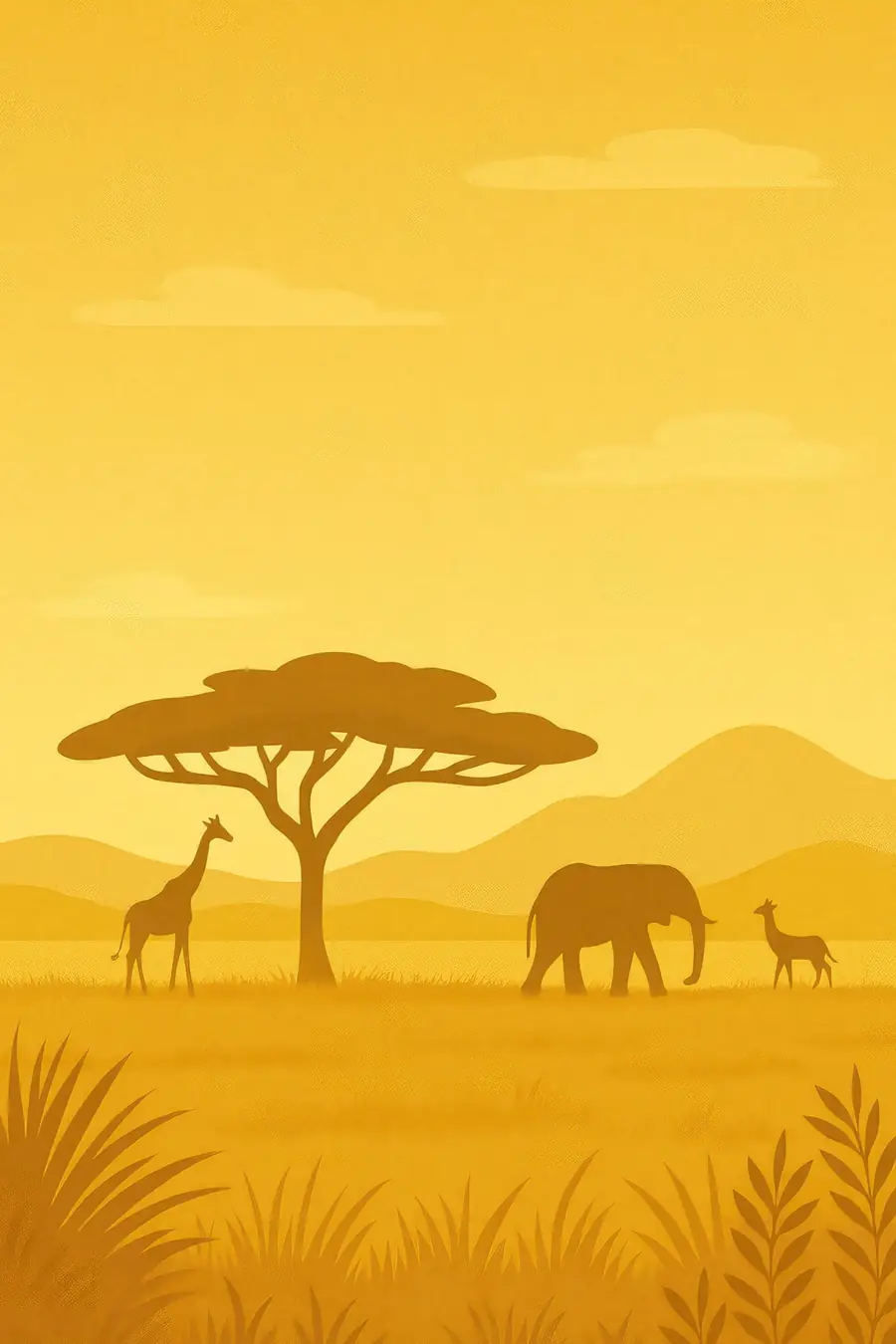
This is a country of long horizons. Grass plains, scattered acacia and commiphora, termite mounds and seasonal rivers spread across ancient plateaus, broken by volcanic hills, rift escarpments and salt pans. Rain comes in one or two wet seasons and then fails for months, so the land swings between green flush and dry gold. Fire passes through most years and keeps the trees open. In the wet season the air is full of insect sound and bird calls; in the dry season dust rises behind grazing herds and the wind carries the smell of smoke and dung. Further south the grass gives way to the drier Kalahari sands and the high, frosty grassland of the highveld.
History
Human history is unusually deep here. The fossil and stone-tool record of the East African savannas, at sites such as Olduvai Gorge, follows our own lineage over millions of years. Hunter-gatherers, among them the ancestors of today's Hadza and San, lived on these plains long before herders arrived. Cattle, sheep and goats spread south over the last few thousand years, followed by farming peoples. In the colonial period Europeans fenced land for ranches and declared game reserves, often by moving herders and hunters off land they had used for generations. Many of the region's famous parks rest on that history of removal, and its legacy still shapes debates about who owns and decides over these grasslands.
Why it matters for the living world
Savannas and grasslands carry the largest remaining herds of wild grazers on Earth, together with the lions, hyenas, wild dogs and cheetahs that follow them. Grazing, fire and drought keep the system open, and many grasses are adapted to being eaten and burned. Much of the carbon here is stored below ground, in deep grass roots and soils, which makes the grasslands an important carbon store that is easily lost when they are ploughed. Seasonal wetlands, rivers and pans hold water for wildlife and people alike. Long-distance migrations, such as those of wildebeest and zebra, depend on open, connected land, and they collapse when movement corridors are fenced or farmed.
People of the place
These grasslands are home to many pastoral and hunter-gatherer peoples. Maasai, Samburu, Datooga, Borana and Turkana herders in East Africa, and Herero, Himba and San communities in the south, have managed grazing over long distances, moving with rain and grass. Hadza hunter-gatherers still live near Lake Eyasi in Tanzania. Mobility, shared grazing and knowledge of water sources are the core of these livelihoods. Today many communities run their own conservancies, as in Kenya and Namibia, earning income from tourism and wildlife while keeping livestock. Land rights remain contested, and pastoralists are often pushed aside by parks, ranches, farms and infrastructure planned without them.
What it faces
The biggest pressures are the conversion of grassland to cropland, the subdivision and fencing of shared rangeland, and growing towns and roads that cut migration routes. Wildlife numbers have fallen sharply in many areas outside protected land. Droughts are becoming more severe; the long drought in the Horn of Africa from 2020 killed millions of livestock. Some well-meant schemes add pressure too, such as planting trees on grassland that was never forest. Responses include community conservancies, land-use plans that keep corridors open, holistic and rotational grazing led by herders, and stronger recognition of communal land rights.
Sources
- Transforming Maasai Landscapes: Land Cover Changes and Their Implications for Pastoralism and Conservation
- Frontiers in Conservation Science: South Rift Association of Land Owners study (2022)
- Human-wildlife coexistence in Kenya (Lion Center, University of Minnesota)
- UNESCO World Heritage Centre: Serengeti National Park
Written for Regenerative Voices from the sources above. Spotted something wrong? Tell us.