

The place
The Sundarbans is a maze of tidal rivers, creeks and low muddy islands covered by mangrove forest, where land and water change twice a day with the tides. The trees stand on stilt roots or send up breathing roots through the mud. The name may come from the sundari tree, which grows here in large numbers. The climate is hot and humid, with a heavy monsoon from June to September and cyclones in spring and autumn. Boats move slowly along channels lined with green walls of forest. You hear the tide sucking at the mud, kingfishers, the alarm calls of deer and monkeys, and only rarely the sign of a tiger.
History
The delta has been built over thousands of years by sediment from the Himalayas, and its channels keep shifting. People have lived in and around it for centuries; ruins of old settlements are found within the forest. From the Mughal period and especially under British colonial rule, large parts of the forest were cleared and enclosed by embankments for rice farming, pushing back the mangroves. In 1979 the West Bengal government forcibly evicted refugees from Bangladesh who had settled the island of Marichjhapi, and many were killed. India's Sundarbans National Park was listed by UNESCO in 1987, and Bangladesh's Sundarbans in 1997.
Why it matters for the living world
The Sundarbans is one of the last strongholds of the Bengal tiger, and the only mangrove forest in the world with a large tiger population. It is also home to spotted deer, fishing cats, saltwater crocodiles, Ganges and Irrawaddy dolphins, horseshoe crabs and hundreds of bird species. The mangroves are a nursery for fish and shrimp that support fisheries across the Bay of Bengal. The forest stores large amounts of carbon in its trees and mud, and it shields millions of people inland from cyclones and storm surges. Its balance depends on fresh water from the rivers mixing with salt water from the sea.
People of the place
Millions of people live on the edges of the forest in Bangladesh and India. Many depend on it directly: fishers, crab collectors, woodcutters (bawali) and honey gatherers (mawali) go into the forest by boat, often at great risk from tigers and storms. Before entering, Hindu and Muslim forest workers alike pray to Bonbibi, the forest goddess who protects them from the tiger demon Dakshin Rai. The widows of men killed by tigers often face hardship and stigma. Farming in villages behind embankments, shrimp farming and tourism are other livelihoods. Communities take part in forest protection, tiger response teams and mangrove planting.
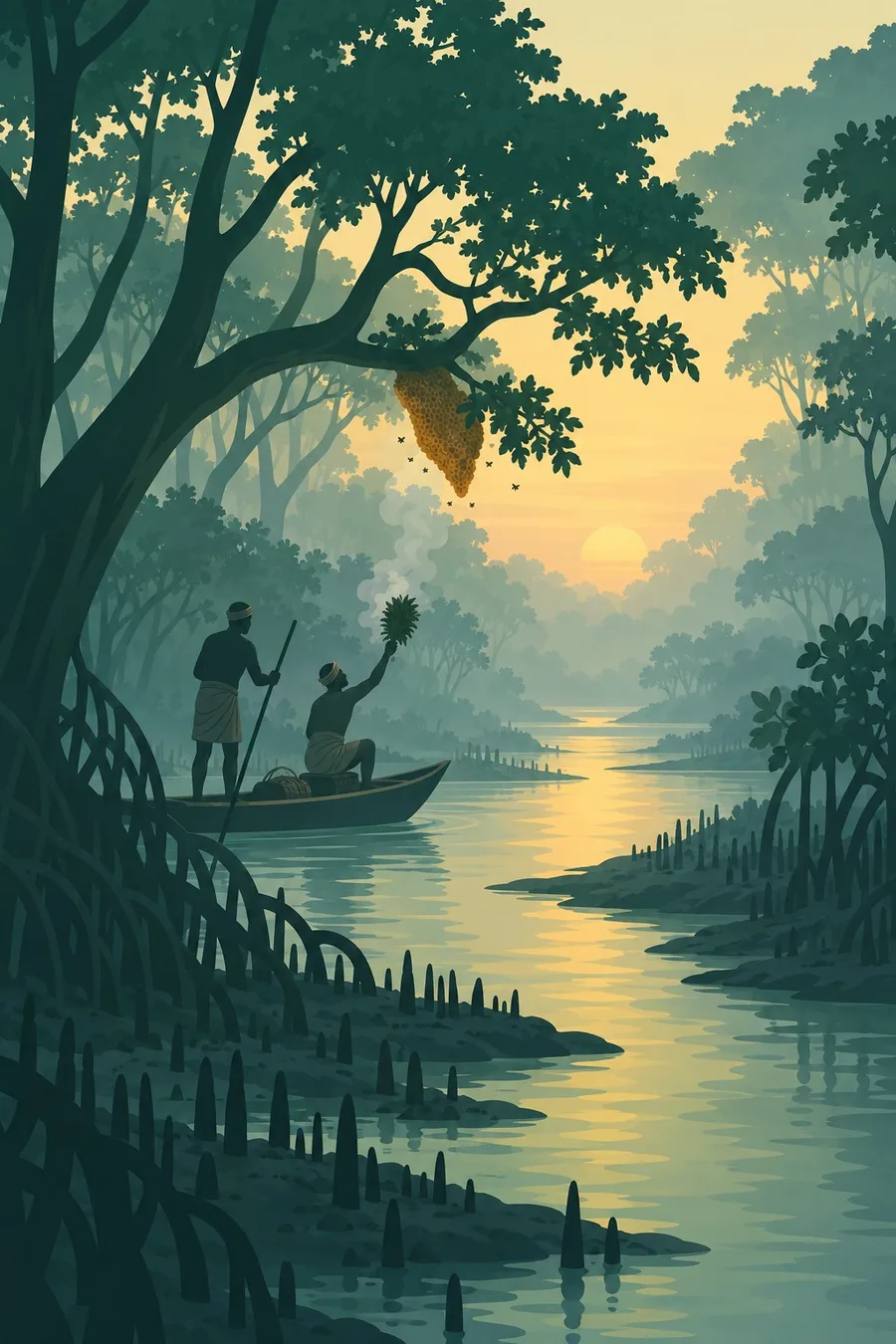
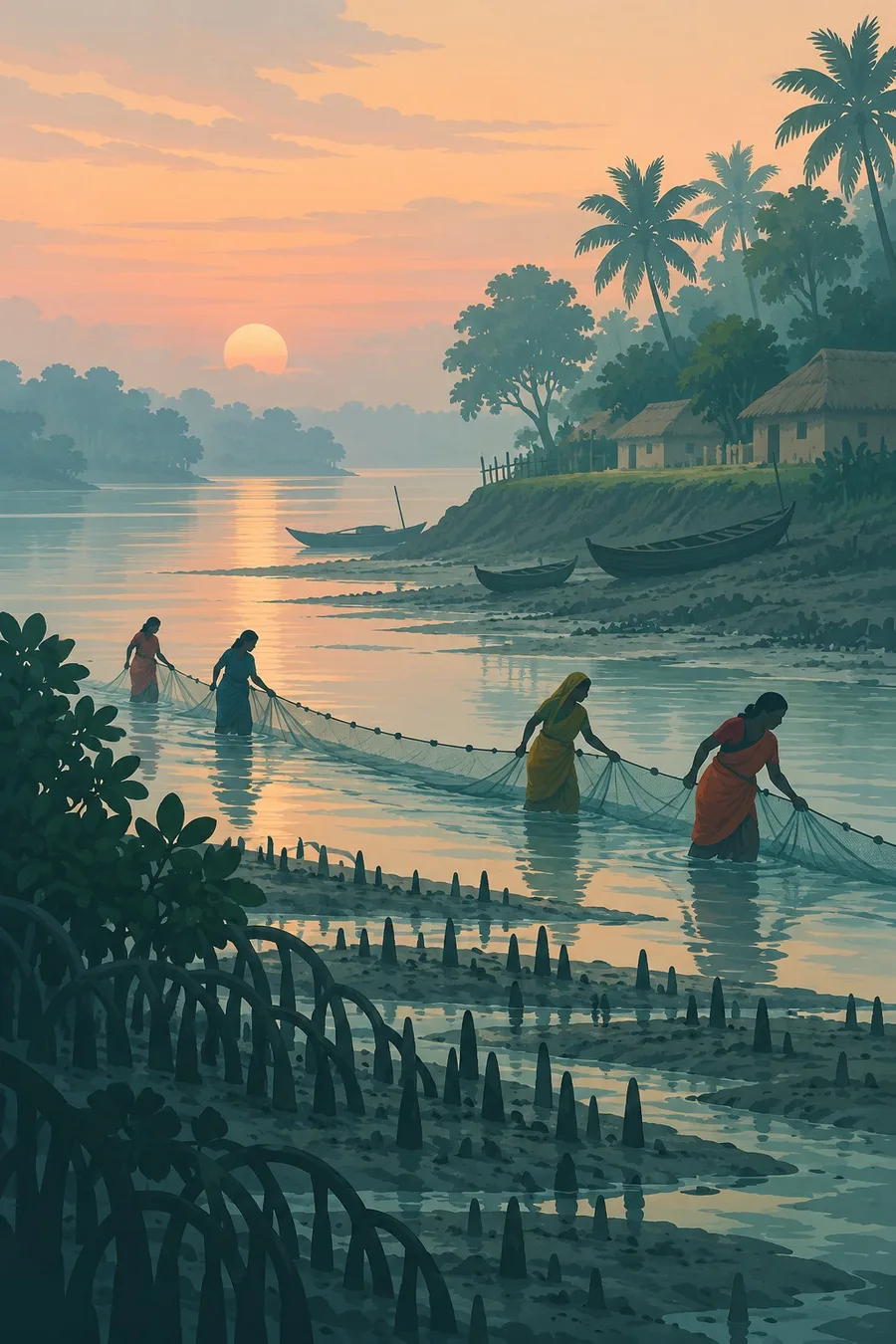
Illustrations made with AI in the style of the plates. They show life in general, not particular people or rites.
Seasons, celebrations and the sacred
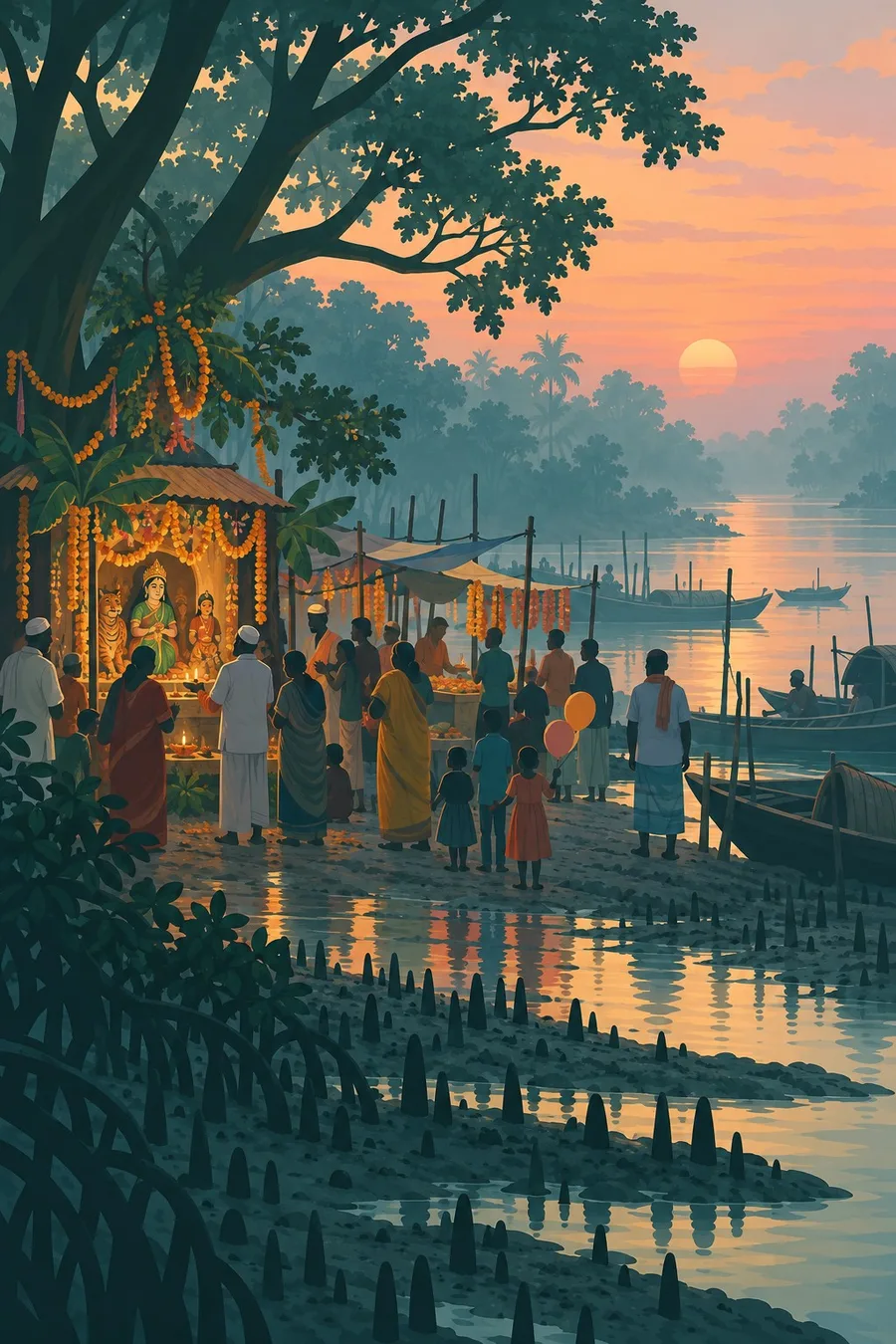
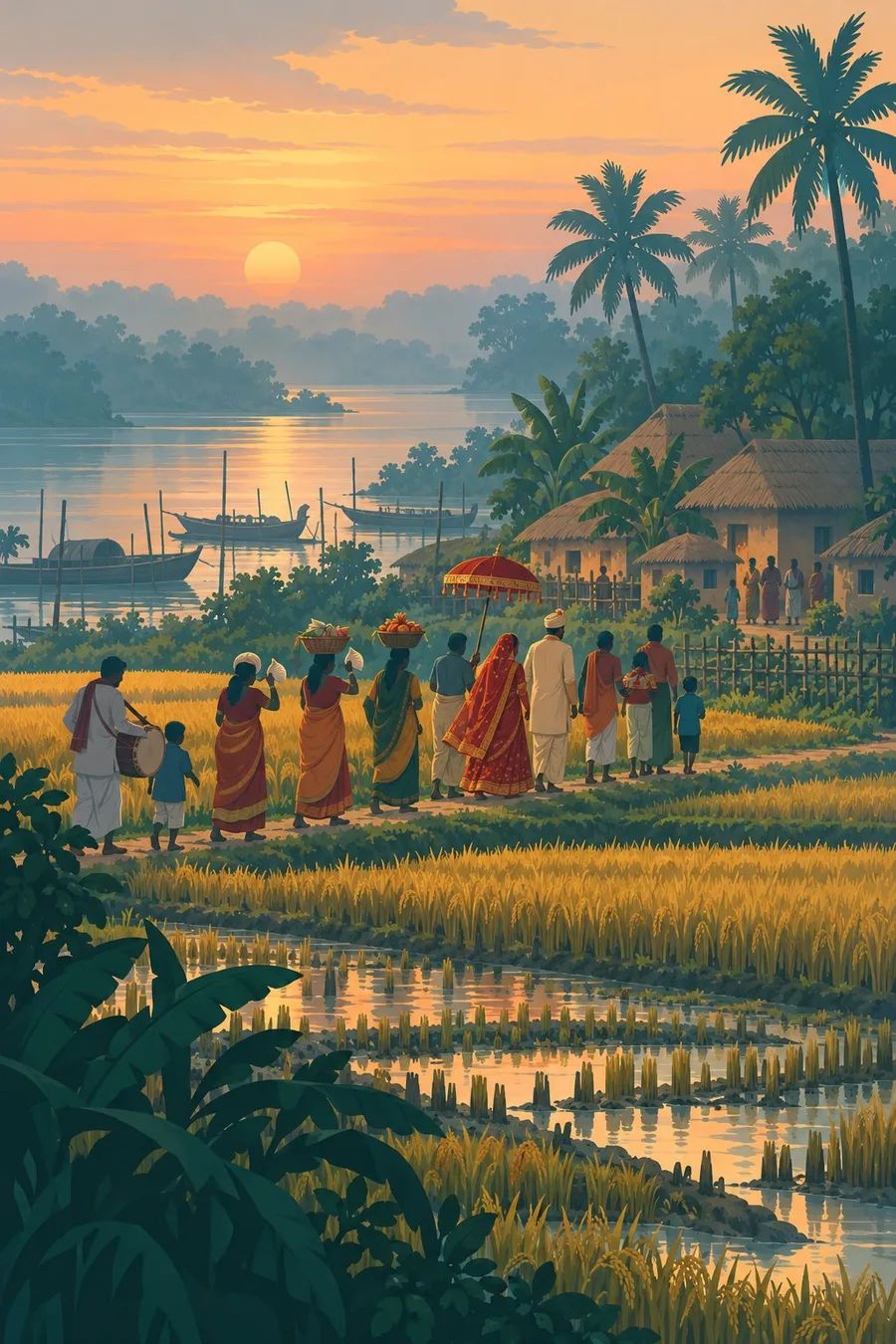
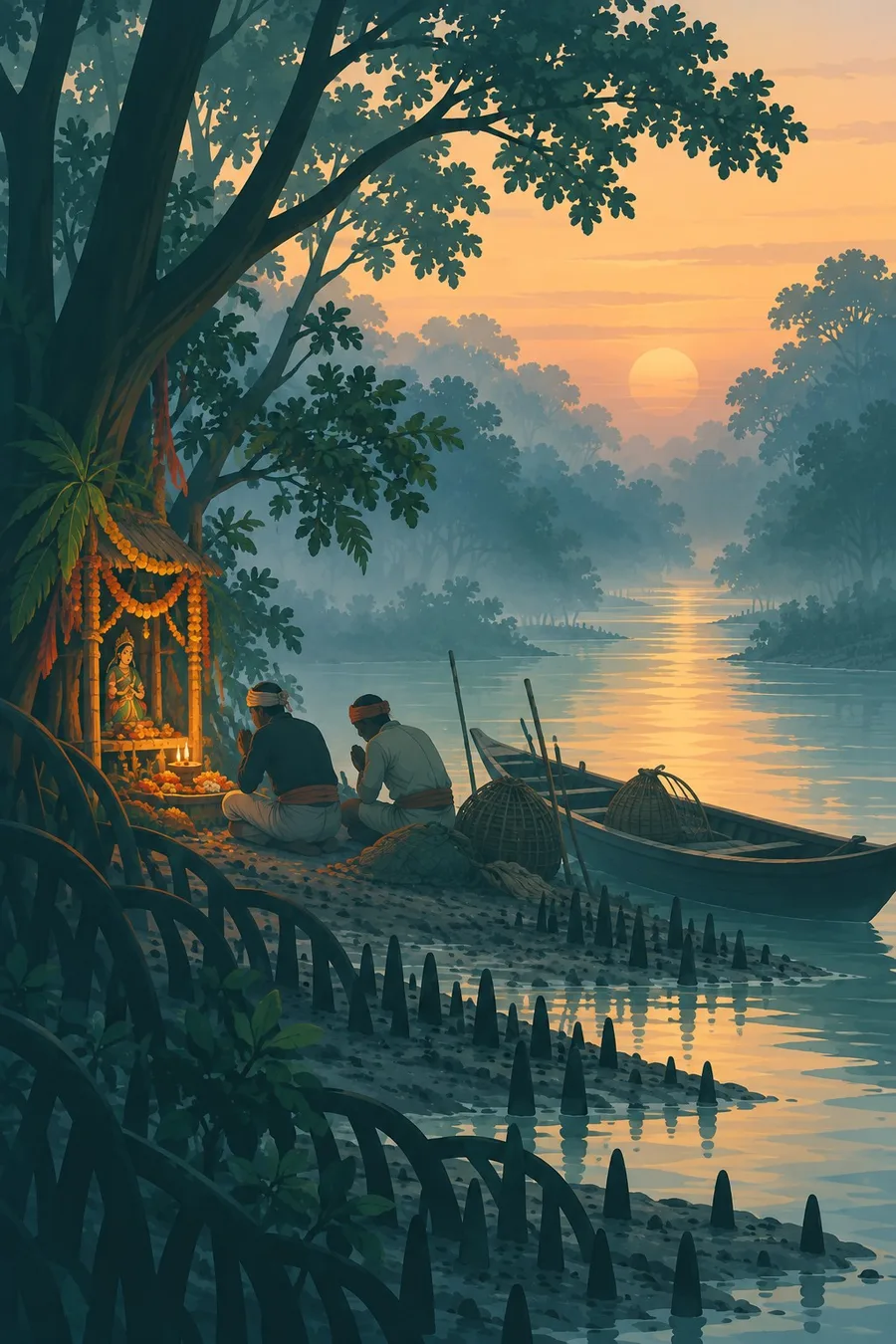
Illustrations made with AI in the style of the plates. They show life in general, not particular people or rites.
What it faces
Rising seas, stronger cyclones such as Sidr in 2007, Aila in 2009 and Amphan in 2020, and growing salinity threaten both forest and people. Upstream dams and barrages, including the Farakka Barrage on the Ganges, have reduced fresh water reaching the delta. Shrimp farming has cleared mangroves and salted farmland. Shipping lanes, an oil spill in 2014 and the Rampal coal power plant near the Bangladesh Sundarbans have raised concern from UNESCO and conservation groups. Poaching of tigers and deer continues. Both countries run patrols, mangrove planting and community programmes, and coastal people are increasingly forced to migrate away from the delta.
Sources
- UNESCO World Heritage Centre: Sundarbans National Park (India)
- UNESCO World Heritage Centre: The Sundarbans (Bangladesh)
- Sundarbans (Wikipedia)
- In India's Sundarbans, people and tigers try to coexist in a shrinking space (GBH/NPR)
- Bon Bibi: Sundarban (Drishti IAS)
Written for Regenerative Voices from the sources above. Spotted something wrong? Tell us.