
The place
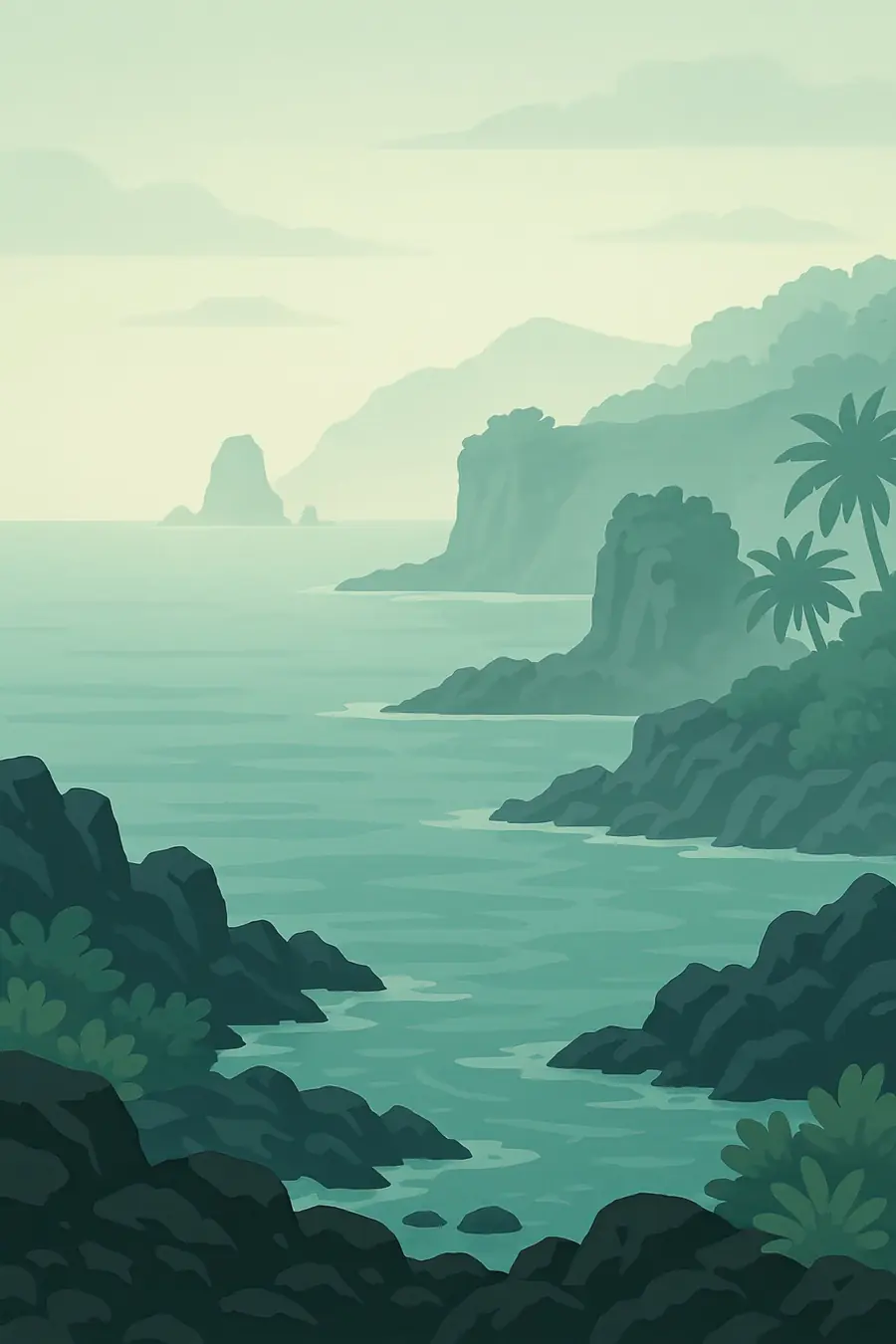
Hallasan, a broad shield volcano, rises to 1,950 metres in the centre of the island, with a crater lake at the top. Its slopes are dotted with hundreds of small volcanic cones called oreum. In the east, Seongsan Ilchulbong rises straight from the sea as a bowl-shaped crater formed by an eruption in shallow water. Underground, long tunnels left by flowing lava run beneath the forest, some with stone pillars, lava shelves and carbonate formations on their walls. Black basalt shows everywhere, in shore rocks, stone walls around fields and old houses. The island is warm, windy and often wet, and the sound of wind is a constant.
History
Jeju was built by eruptions over roughly the last two million years, and the lava tubes of the Geomunoreum system formed when lava flowed from that cone to the sea, between about 100,000 and 300,000 years ago. People have lived on the island for thousands of years. It was home to the kingdom of Tamna, which gradually came under the control of Korean states. Jeju was used as a place of exile and suffered under foreign rule, including Mongol occupation and Japanese colonial rule. Between 1948 and 1954, during the Jeju 4·3 events, government forces and anti-communist groups killed tens of thousands of islanders. UNESCO listed the volcanic sites in 2007.
Why it matters for the living world
Hallasan's slopes hold a clear sequence of vegetation, from warm-temperate evergreen forest near the coast to subalpine forest and shrubland near the top, with many plants found only on the island, such as the Korean fir. The gotjawal forests on rough lava fields are rich in ferns and mosses, and they let rain sink into the porous rock. This groundwater is the island's main source of drinking water. The lava tubes provide habitats for bats and cave invertebrates. The coastal waters, warmed by currents from the south, support soft corals, fish and the seaweed beds on which the island's diving women depend.
People of the place
Jeju people have their own dialect, often treated as a separate language, Jejueo, which UNESCO lists as critically endangered. Farming, fishing and citrus growing were the traditional livelihoods. Jeju is famous for the haenyeo, women divers who harvest shellfish and seaweed without breathing equipment; their culture was inscribed on UNESCO's list of Intangible Cultural Heritage in 2016. Divers follow shared rules on when and where to harvest. Today tourism dominates the economy. Many islanders remember the 4·3 events through ceremonies and a peace park, and local groups have been active in debates on military and airport development.
What it faces
Tourism has grown rapidly, bringing traffic, waste, building on farmland and pressure on water supply, which depends on limited groundwater. Golf courses, hotels and roads cut into gotjawal forests and oreum. A naval base built at Gangjeong, completed in 2016, damaged coastal rock and coral and divided the village. A planned second airport near Seongsan is contested. Warming seas are changing the marine life the haenyeo depend on, and the number of active divers is falling as they age. The island government has introduced protection for oreum and gotjawal, and limits access to fragile lava tubes, opening some only for special events.
Sources
- UNESCO World Heritage Centre: Jeju Volcanic Island and Lava Tubes
- Jeju Volcanic Island and Lava Tubes (UNESCO Silk Roads Programme)
- Jeju's lava tubes are opening for the World Heritage Festival (Korea JoongAng Daily)
Written for Regenerative Voices from the sources above. Spotted something wrong? Tell us.