
The place
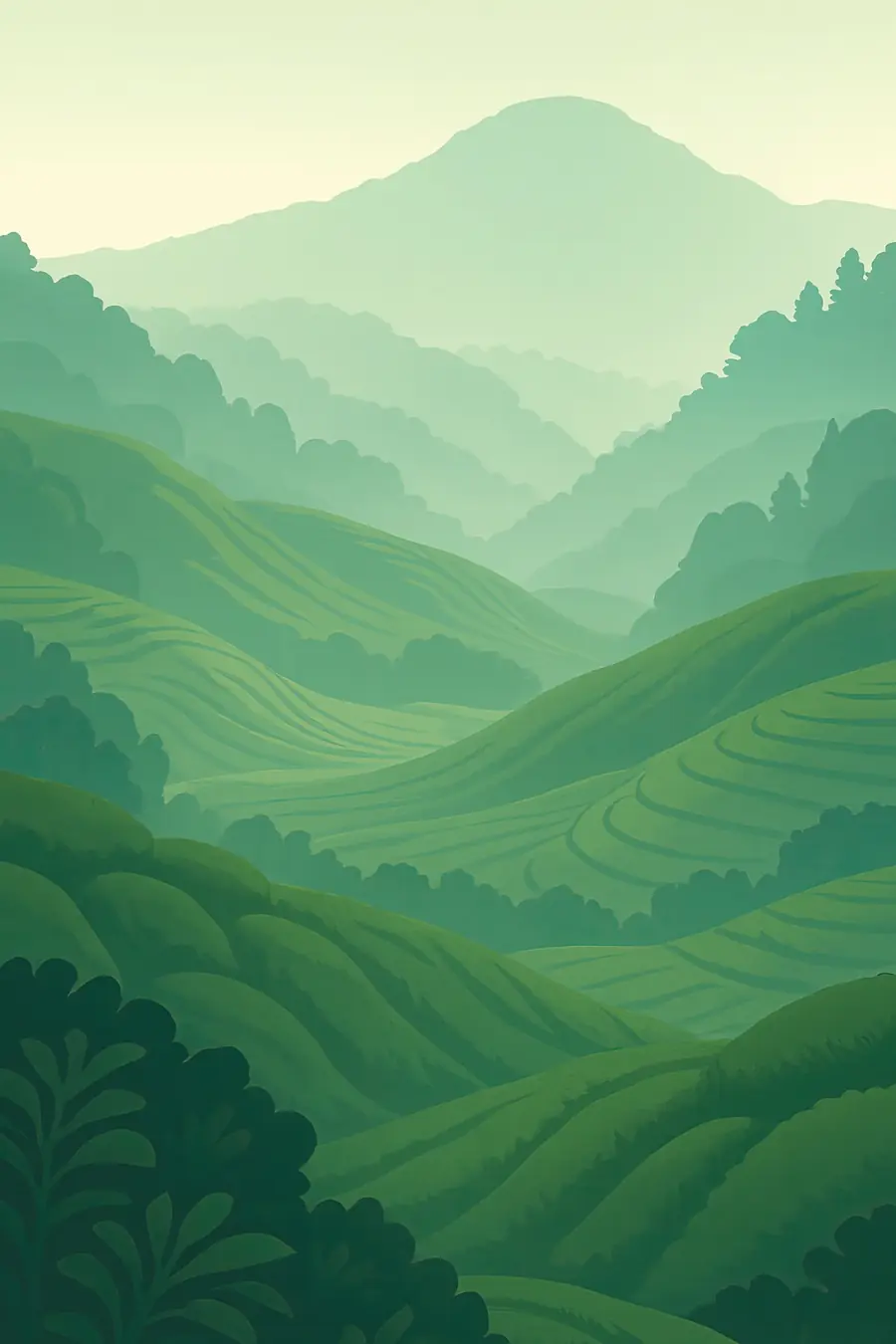
The highlands lie mostly between about 1,000 and 1,600 metres, with Gunung Brinchang rising to just over 2,000 metres. The air is cool and damp compared with the lowlands, and mist drifts through the valleys most mornings. Long green rows of tea cover the slopes around Brinchang and Ringlet, while elsewhere hillsides are cut into terraces and covered with the white plastic roofs of greenhouses. On the higher ridges, the mossy forest grows low and dense, its trunks wrapped in moss, ferns and pitcher plants. Rain falls often, streams run fast and brown after storms, and the forest is loud with cicadas and birds.
History
The Titiwangsa Range is built of granite formed deep underground and later lifted and weathered. Orang Asli peoples lived in these forests long before outsiders arrived. In 1885 the British colonial surveyor William Cameron mapped the plateau, and it was later named after him. In the 1920s and 1930s the British developed it as a hill station, with bungalows, roads and tea estates; the first big tea plantation was founded in 1929. Chinese and Indian workers came to clear land and work on estates and farms. After Malaysian independence in 1957, vegetable and flower farming grew rapidly, supplying much of the country and Singapore.
Why it matters for the living world
The montane forests of the highlands are part of the Central Forest Spine, the backbone of forest that runs down Peninsular Malaysia. Cloud forest and mossy forest hold many plants found only on these mountains, including orchids, rhododendrons and pitcher plants, and the forest supports gibbons, hornbills and other wildlife. Above all, the forest acts as a sponge: it catches mist and rain and releases it slowly into rivers that flow into both Pahang and Perak and supply water and hydropower to people downstream. When forest is cleared, that water arrives instead as floods carrying soil and farm chemicals.
People of the place
The Semai and Temiar, two Orang Asli peoples, live in villages in and around the highlands. They have long farmed, hunted, gathered forest products and kept customary territories, but much of that land has been cleared for farms and development without their consent, and many communities lack secure land titles. Some now work on farms or in tourism. Alongside them live Chinese farming families, Indian estate workers and Malay residents, with tourism, tea and vegetables as the main incomes. Orang Asli communities have protested and blockaded land clearing in their areas and continue to press for recognition of their land rights.
What it faces
Uncontrolled land clearing for vegetable and flower farms, much of it illegal, has caused heavy soil erosion, muddy rivers and landslides. Pesticide and fertiliser runoff pollutes streams that supply drinking water. Floods and mudslides in 2013 killed people in the Bertam Valley and drew national attention to the problem. Hotel and road building add to the pressure, and climate change brings heavier storms. In 2014 the government launched a large operation against illegal farms, and since then monitoring, replanting and stricter rules have been introduced, though enforcement is uneven. Orang Asli groups and environmental organisations keep watch and report clearing.
Sources
- The ravaging of Malaysia's Cameron Highlands (Al Jazeera)
- Cameron Highlands Pos Terisu clearing is legal, says Pahang MB (The Star)
- Perak puts a stop to land clearing activity near Orang Asli village (Malay Mail)
- Once upon a time, there were lush forests and clear rivers (The Star)
Written for Regenerative Voices from the sources above. Spotted something wrong? Tell us.