
The place
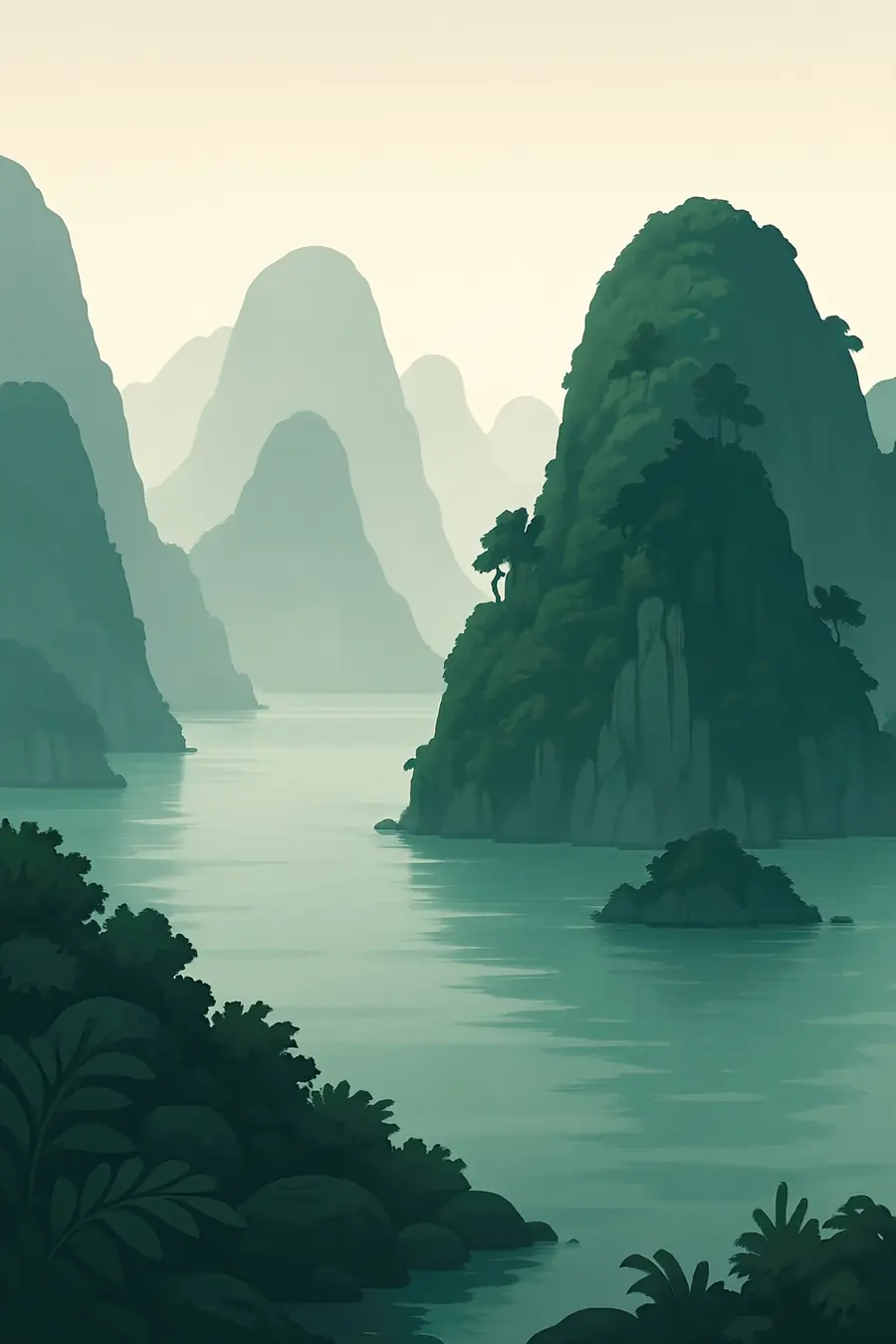
Nearly two thousand limestone islands and islets rise from the green water of the bay, many of them steep towers and domes covered in shrubs and trees. The sea has cut notches at their base, and inside many islands are caves and hidden lagoons. In winter and spring the bay is often grey with drizzle and mist, so the islands fade away one behind another; summer brings heat, clear days and typhoons. Wooden boats and tour vessels move between the islands. You hear engines, the slap of waves against the rock and, in quieter corners, birds and the call of fishermen.


History
The limestone was laid down on the floor of tropical seas hundreds of millions of years ago. Over millions of years rain and rivers dissolved it into towers and sinkholes, and when sea level rose after the last ice age, the sea flooded this karst landscape. People have lived on the islands for a very long time; archaeologists have found traces of prehistoric cultures in caves here. The name Ha Long means descending dragon, from a legend of dragons who spat out jewels that became islands to defend the coast. Nearby, on the Bach Dang River, Vietnamese forces defeated invading fleets in 938 and 1288. UNESCO listed the bay in 1994.
Why it matters for the living world
The bay and Cat Ba archipelago combine limestone island forests, caves, mangroves, coral reefs, seagrass beds and tidal flats. The limestone islands have many plants found only here. Cat Ba Island is the only home of the Cat Ba langur, one of the most endangered primates in the world, with fewer than a hundred individuals. The waters support fish, molluscs and shrimp that feed local fisheries, and mangroves protect the coast and store carbon. The karst also records geological history clearly, which was one reason for its World Heritage listing.
People of the place
For generations, fishing families lived in floating villages among the islands, such as Cua Van and Ba Hang, in houses built on rafts. In 2014 many were moved to the mainland as part of a government plan, which changed their way of life; some now work rowing visitors through the old village areas. On Cat Ba and the mainland coast, people fish, farm seafood in cages and work in tourism, which has become the main source of income in the region. Ha Long City has grown fast, with coal mining, ports and industry as other employers. Local residents take part in clean-up and protection work.
What it faces
Mass tourism brings boats, waste, sewage and building on the shore. Coal mining in Quang Ninh, ports, land reclamation and city growth have sent sediment and pollution into the bay. Floating fish farms and overfishing affect water quality and marine life. Plastic waste, including old foam floats from fish farms, is a large problem, and the province has replaced many of them. Typhoon Yagi in 2024 damaged boats and coasts. Climate change brings stronger storms and rising seas. Authorities have limited new construction, regulated boat routes and set up protection zones, while conservation groups work to protect the Cat Ba langur and its habitat.
Sources
- UNESCO World Heritage Centre: Ha Long Bay – Cat Ba Archipelago (maps)
- Ha Long Bay-Cat Ba Archipelago recognized as first inter-provincial world heritage site (The Investor)
- Ha Long Bay-Cat Ba Archipelago recognised as UNESCO's World Natural Heritage (Vietnam Tourism)
Written for Regenerative Voices from the sources above. Spotted something wrong? Tell us.