
The place
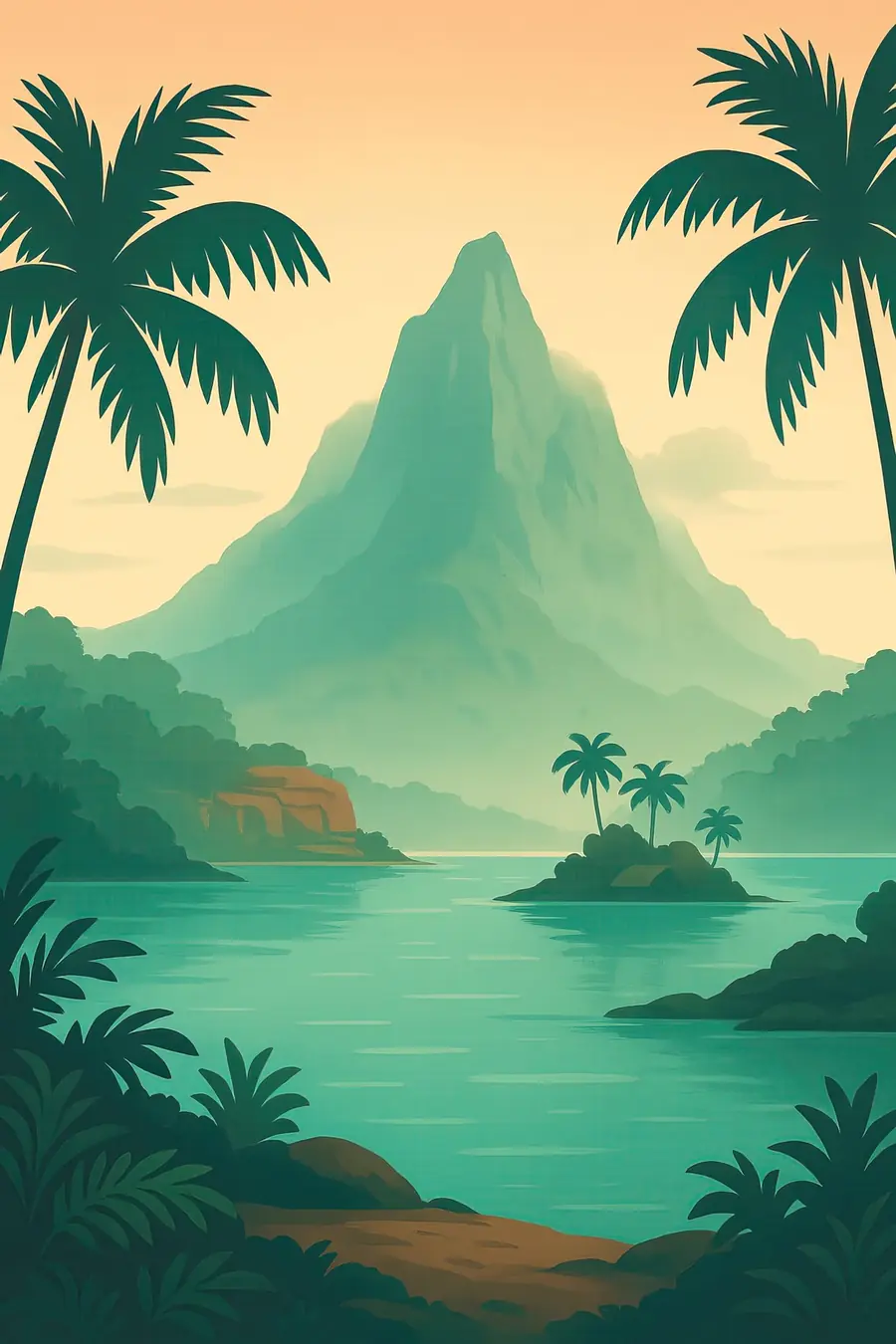
Bora Bora is the eroded remains of a volcano that was active roughly three million years ago. As the island slowly sank, coral grew upward around it, forming a barrier reef and a wide lagoon between reef and island. A ring of low sandy islets, called motu, sits on the reef. The central peaks, Mount Otemanu at 727 m and Mount Pahia, rise steeply, dark and forested, above shallow water in shades of turquoise and blue. One main pass connects the lagoon to the open ocean. The climate is tropical, warm and humid, with a wetter season from November to April.
History
Polynesian voyagers settled the island many centuries ago, and its old name, Porapora, is linked to the idea of being created or first born. Bora Bora was known for its warriors and chiefs, and marae, stone ceremonial sites, still stand on the island. Europeans sighted the island in the 18th century, including James Cook in 1769. The London Missionary Society arrived in 1820, and the island remained a kingdom until France annexed it in 1888. In 1942, the United States built a supply base and airstrip here; about 3,500 personnel arrived on an island of some 1,200 people. The base closed in 1946. The first overwater bungalows opened in 1970.
Why it matters for the living world
Bora Bora's reef and lagoon are a classic example of a barrier reef around a volcanic island, and Charles Darwin used it as a model for his theory of how reefs and atolls form. Researchers have since drilled into its reefs to study how sea level and subsidence shaped them over thousands of years. The lagoon holds corals, giant clams, rays, turtles and blacktip reef sharks, and shark fishing is banned. On land, most original lowland vegetation has been lost, and introduced predatory snails and flatworms wiped out several endemic land snails, one of which is likely extinct. The upper slopes still hold native forest.
People of the place
Around 10,000 people live on Bora Bora, most of them Polynesian, and Tahitian and French are spoken. The main village is Vaitape. Tourism, centred on luxury resorts built on the motu, now supports almost the entire economy, after earlier reliance on copra and fishing. Many residents work in hotels, boat services and crafts. Polynesian culture, dance, music and tattoo remain strong, and local families hold ties to particular lands and lagoon areas. Residents and the municipality have voiced concern about how to share the benefits of tourism and protect the lagoon, and some local groups run coral and lagoon care projects.
What it faces
Warming seas cause coral bleaching, and ocean acidification threatens reef growth. Rising sea levels and storms put the low motu, where most resorts stand, at risk of erosion and flooding. Resort construction, dredging, wastewater and heavy boat traffic affect water quality and coral health in the lagoon. Invasive species continue to damage native land ecosystems. Freshwater supply is limited on a small island with growing demand from tourism. Local authorities, the territorial government and resorts have taken steps such as wastewater treatment, lagoon zoning and coral restoration, but the island's dependence on tourism makes balancing growth and protection difficult.
Sources
- Bora Bora – Wikipedia
- Holocene reef and lagoon development of Bora Bora – DFG GEPRIS project
- Bora Bora's historical history – Tahiti Tourisme
Written for Regenerative Voices from the sources above. Spotted something wrong? Tell us.