
The place
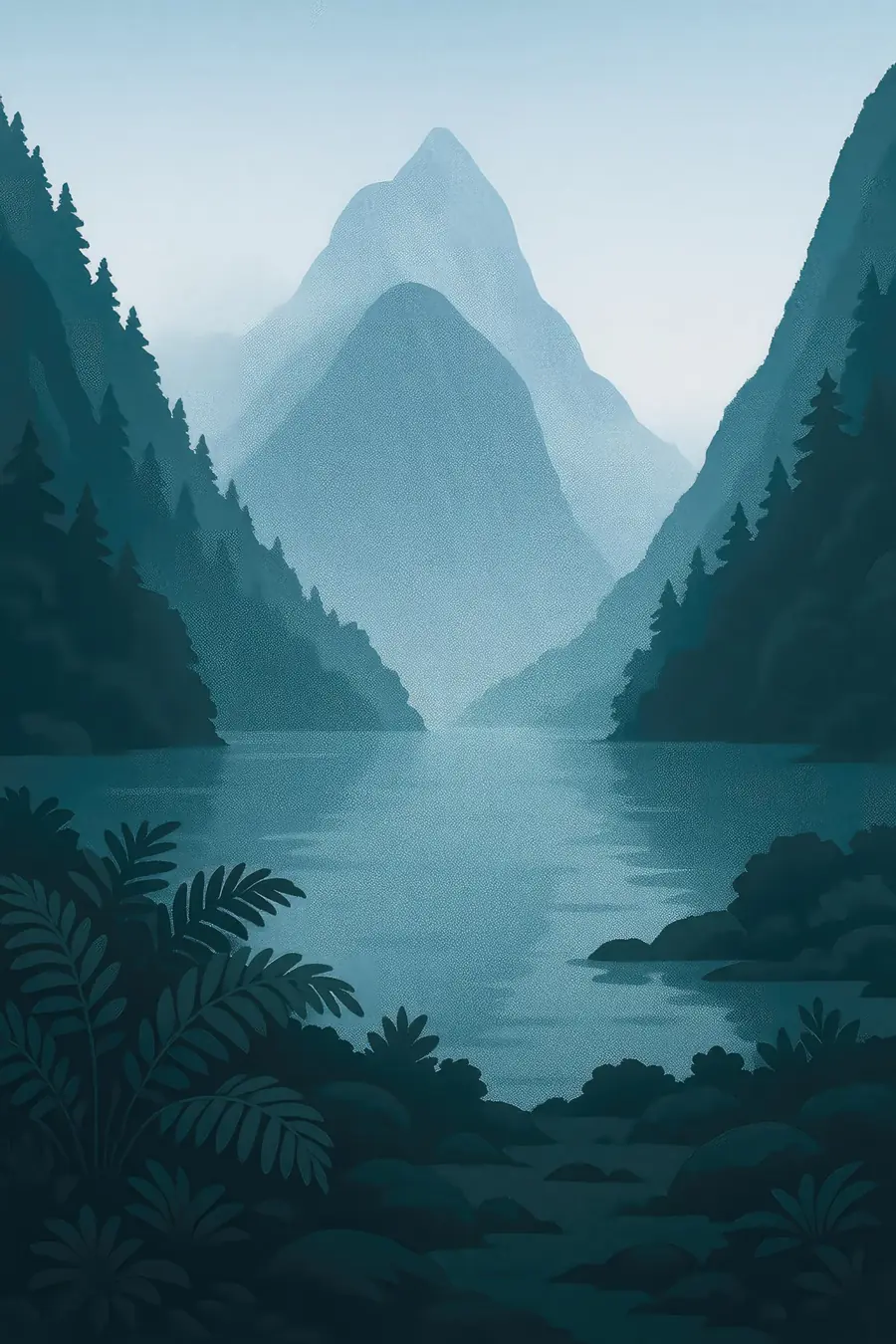
Fiordland is made of hard granite and gneiss, carved by glaciers into deep fiords that reach far inland, such as Milford Sound / Piopiotahi and Doubtful Sound / Patea. Sheer walls rise from dark water to mountains over 2,000 m. Moist westerly winds bring very high rainfall, often several metres a year, and after heavy rain hundreds of temporary waterfalls pour down the cliffs. A layer of fresh, tea-coloured water floats on the seawater in the fiords. Beech forest, ferns and mosses cover the slopes. Lakes such as Te Anau and Manapōuri lie on the eastern edge. Sandflies, birdsong and rain are part of every visit.
History
In Ngāi Tahu tradition, the fiords were carved by Tū Te Rakiwhānoa, who shaped the land with his adze. Māori travelled here to hunt birds, fish and gather pounamu, and seasonal camps were used along the coast. James Cook spent weeks in Dusky Sound in 1773, and sealers and whalers followed, nearly wiping out fur seals. In the 1890s, Richard Henry moved kākāpō and kiwi to Resolution Island to protect them from introduced predators. The national park was created in 1952, and in 1990 it became part of the Te Wāhipounamu World Heritage Area. The Save Manapōuri campaign of the early 1970s stopped a plan to raise the lake for hydropower.
Why it matters for the living world
Fiordland is one of the largest intact natural areas in New Zealand and a refuge for rare birds. The takahē, thought extinct, was rediscovered in the Murchison Mountains in 1948. Kākāpō survived longest in Fiordland, and the area still holds kiwi, kea, kākā, rock wren and mohua. The fiords host bottlenose dolphins, fur seals and the tawaki, or Fiordland crested penguin. Their unusual layering allows deep-water species such as black coral to grow at shallow depths. The rainforest and peatlands store large amounts of carbon, and the rivers and lakes feed hydropower and water systems for the south.
People of the place
Ngāi Tahu are mana whenua of Fiordland, and under the Ngāi Tahu Claims Settlement Act 1998, several places were given dual names, such as Milford Sound / Piopiotahi. Ngāi Tahu hold a strong relationship with the region's pounamu, birds and waters, and work with the Department of Conservation on species recovery. Few people live inside Fiordland; the town of Te Anau is the main gateway. Tourism, guiding, boat operations, fishing, conservation work and hydropower provide most local jobs. The Fiordland Marine Guardians, a group of fishers, iwi, tourism operators and scientists, help manage the marine area.
What it faces
Introduced predators such as stoats, rats and possums are the biggest threat to native birds, especially after beech mast years, when seed floods cause rat and stoat numbers to explode. Red deer browse the forest. The Department of Conservation and partners run large predator control operations and island sanctuaries. Heavy tourism at Milford Sound / Piopiotahi brings crowding, traffic, cruise ships and aircraft noise, and plans to manage visitor numbers are under discussion. Climate change may alter rainfall, glaciers and marine conditions, including the fresh water layer in the fiords. Invasive marine species and the freshwater alga didymo are further risks.
Sources
- Fiordland National Park – Wikipedia
- Te Wahipounamu – Wikipedia
- Periodic reporting: Te Wahipounamu – UNESCO World Heritage Centre
Written for Regenerative Voices from the sources above. Spotted something wrong? Tell us.