
The place
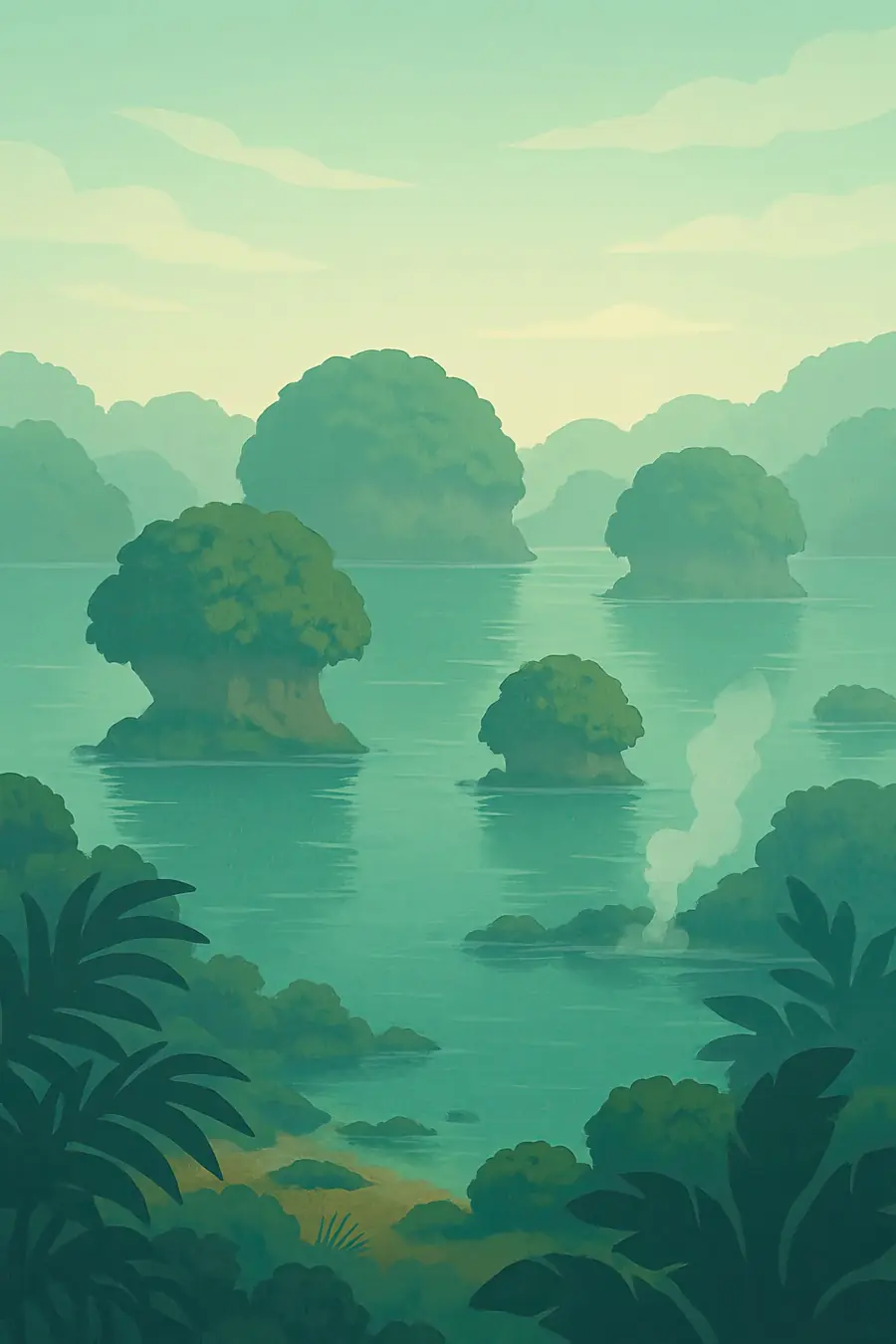
The Rock Islands are uplifted coral reefs that have been dissolved by rain and undercut by the sea, so many look like green mushrooms rising from turquoise water, with a notch at the waterline. Dense forest covers their sharp limestone. Between them lie sheltered channels, sandy coves, reefs and marine lakes, bodies of seawater trapped inside the islands and connected to the sea through cracks and tunnels. The World Heritage site covers about 100,200 hectares. The climate is hot and humid year-round, with heavy rain and occasional typhoons. Underwater, coral gardens and walls drop into deep blue water.
History
People have used the Rock Islands for thousands of years. Archaeological remains of stone villages, burial sites, rock art and middens show that communities lived on some islands before moving to larger islands, around the 17th and 18th centuries. These sites record how people adapted to small islands and changing resources. Palau later came under Spanish, German and Japanese rule, and was a battleground in the Second World War; wrecks of ships and aircraft lie in the lagoon. After the war, Palau was administered by the United States as part of a UN trust territory, and became independent in 1994 in free association with the United States.
Why it matters for the living world
The lagoon holds one of the highest concentrations of marine habitats in the world, with hundreds of species of coral, many reef fish, giant clams, dugongs, turtles, sharks and rays. Its 52 marine lakes are unusual natural laboratories: isolated for thousands of years, they hold animals that have evolved differently from those in the sea, and new species are still being discovered. The best known is Jellyfish Lake, Ongeim'l Tketau, home to millions of golden jellyfish, whose numbers crashed during a drought in 2016 and have since partly recovered. The forested islands host endemic birds, plants and land snails.
People of the place
Palauans have strong customary ties to the Rock Islands, which belong to Koror State and are managed by state rangers. Traditional practices such as bul, a moratorium on fishing or harvesting declared by chiefs, have long protected resources, and Palau has built modern conservation on this base. In 2015 Palau created a large national marine sanctuary, and since 2017, visitors sign the Palau Pledge in their passport, promising to act responsibly. Many Palauans work in tourism, diving, fishing and government. Fish, shellfish and the lagoon are central to food, identity and clan relationships.
What it faces
Warming seas have caused coral bleaching, notably in 1998, and future heatwaves are a serious risk. Droughts linked to El Niño affect the marine lakes and jellyfish. Tourism grew rapidly in the 2010s, bringing many boats, divers and snorkelers to a few popular sites, along with sunscreen pollution, anchor damage and waste. Palau has responded with visitor fees, a ban on certain reef-toxic sunscreens, permits and the closure of sensitive sites at times. Sea-level rise, stronger typhoons and coastal development around Koror add further pressure. Illegal fishing is a concern in the wider ocean.
Sources
- Palau wins World Heritage status – Scoop (IUCN release)
- Rock Islands Southern Lagoon – UNESCO World Heritage Centre document
- Rock Islands Southern Lagoon, Palau – WorldAtlas
Written for Regenerative Voices from the sources above. Spotted something wrong? Tell us.