
The place
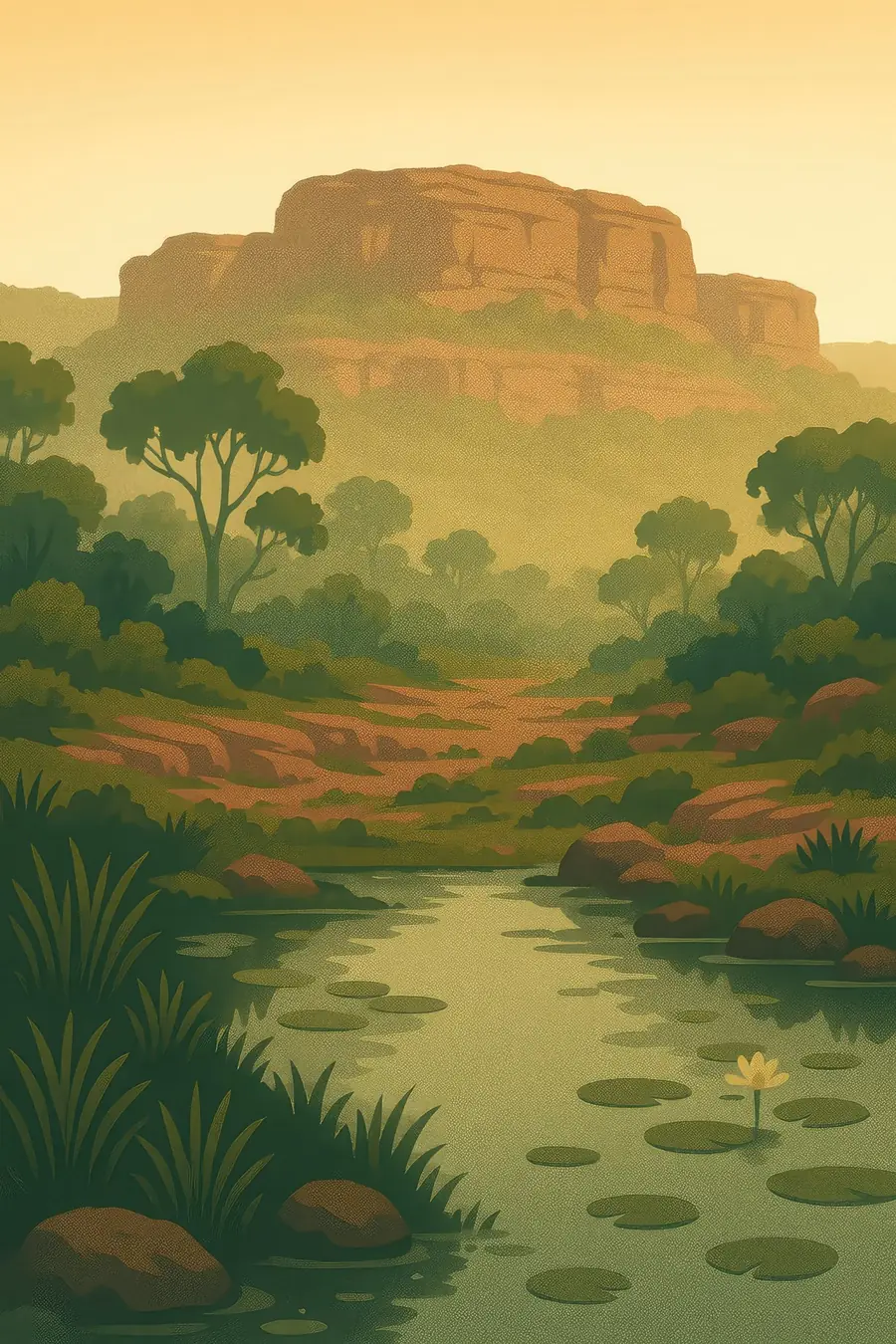
Kakadu stretches from sandstone plateau and the long cliff of the Arnhem Land escarpment, through woodlands and monsoon forest, to wide floodplains, tidal rivers and mangrove coast. The South Alligator River runs almost entirely within the park. The tropical monsoon climate brings a hot wet season from about November to March, when storms flood the plains and waterfalls pour off the escarpment, and a long dry season when the water draws back into billabongs. Local Bininj speak of six seasons rather than two. You hear magpie geese in their thousands, frogs at night and the slap of crocodiles in the water.
History
Aboriginal people have lived in this country for a very long time. At Madjedbebe, a rock shelter on the park's edge, archaeologists have found evidence of occupation dated to around 65,000 years ago. Rock art at sites such as Ubirr and Burrungkuy records animals, ancestral beings, people and contact with Macassan traders and Europeans. Colonisation brought buffalo hunters, missions and disease, and many people were displaced. Uranium was discovered in the region in the 1950s. Kakadu National Park was declared in stages from 1979, after Aboriginal land claims, and leased back by its Traditional Owners to the national parks agency. The Ranger uranium mine, surrounded by the park, operated until 2021.
Why it matters for the living world
Kakadu protects entire river systems and a wide range of habitats in one place. It is home to a large share of Australia's bird species, as well as saltwater and freshwater crocodiles, many fish, frogs, reptiles and bats. The floodplains host huge gatherings of waterbirds in the dry season, and the escarpment holds plants and animals found nowhere else. The park's wetlands are recognised under the Ramsar Convention. Fire has been part of this landscape for tens of thousands of years, and traditional burning practices create mosaics that protect biodiversity and reduce large, hot late-season fires that release more carbon.
People of the place
Bininj in the north and Mungguy in the south are the Traditional Owners of Kakadu, belonging to many clans and language groups, including Gundjeihmi, Kunwinjku and Jawoyn speakers. The park is jointly managed by a board with a majority of Traditional Owner members and Parks Australia. People continue to hunt, fish, gather, burn country and care for sacred sites, and many work as rangers and tourism guides. The Mirarr, Traditional Owners of the Ranger and Jabiluka uranium leases, led a long campaign against mining at Jabiluka, which was halted in the late 1990s and later rehabilitated. Bininj also share their culture with visitors through art and guided walks.
What it faces
Invasive weeds such as mimosa, para grass and gamba grass spread across floodplains and woodlands, and gamba grass fuels very hot fires. Cane toads, which arrived in the early 2000s, caused sharp declines in quolls, goannas and other predators. Feral pigs and buffalo damage wetlands. Rising sea levels push saltwater into freshwater floodplains, threatening paperbark forests and wetlands. Changes in fire patterns and the loss of small mammals are major concerns. The legacy of uranium mining requires the Ranger site to be rehabilitated to a standard fit for inclusion in the park. Joint management, ranger programmes and traditional burning are central to responses.
Sources
- Uranium mining in Kakadu National Park – Wikipedia
- State of conservation: Kakadu National Park – UNESCO World Heritage Centre
- Decision on Kakadu National Park – UNESCO World Heritage Committee
Written for Regenerative Voices from the sources above. Spotted something wrong? Tell us.