
The place
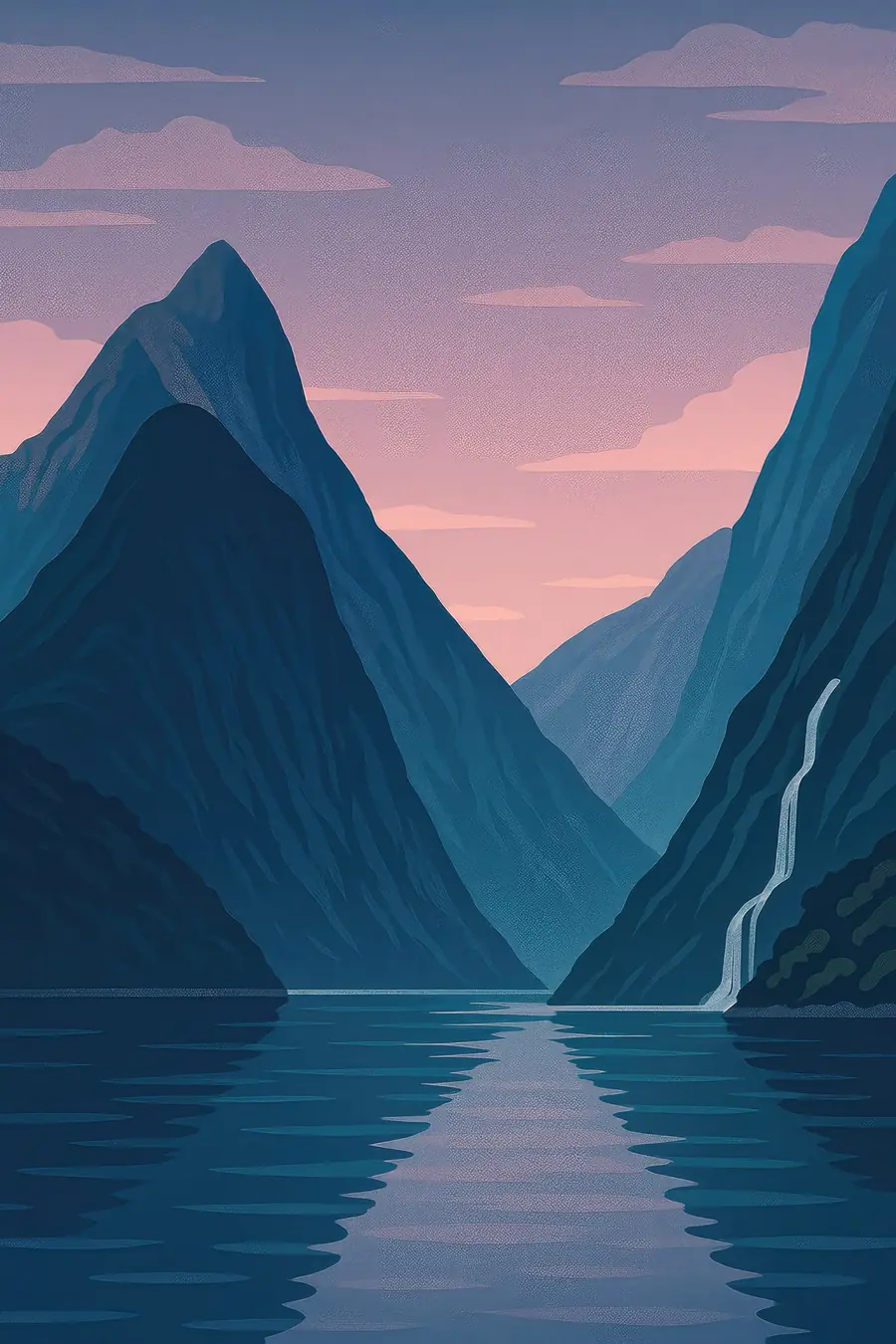
New Zealand sits on the boundary of the Pacific and Australian plates, which gives it active volcanoes, geothermal fields, earthquakes and the fast-rising Southern Alps. Its land is the exposed part of Zealandia, a largely submerged continent that separated from Gondwana tens of millions of years ago. The North Island has volcanic plateaus, rolling hills and warm northern coasts; the South Island has glaciers, fiords, braided rivers and high country tussock. Westerly winds bring heavy rain to the west and drier conditions to the east. Forests of beech, podocarp and kauri, along with wetlands and long coasts, complete a varied landscape.
History
New Zealand was one of the last large land masses settled by people. Polynesian voyagers, ancestors of Māori, arrived around the 13th century and named the land Aotearoa. They hunted moa, giant flightless birds that became extinct within a few centuries, cleared some forest with fire and developed a rich culture rooted in whakapapa, or genealogy, with land and sea. Abel Tasman arrived in 1642 and James Cook in 1769. In 1840, many rangatira signed Te Tiriti o Waitangi with the British Crown. Wars, land confiscations and large-scale land loss followed, and forests were cleared for farming. Since the 1970s, the Waitangi Tribunal and Treaty settlements have begun to address these wrongs.
Why it matters for the living world
After millions of years of isolation, New Zealand's wildlife evolved without land mammals except bats, so birds took many roles, including flightless kiwi, kākāpō and takahē. Most native plants, reptiles, insects and freshwater fish occur nowhere else. Wetlands, podocarp forests, peatlands and tussock grasslands store carbon and water, and the surrounding ocean is rich in seabirds, with more species breeding here than in any other country. Yet many native species are threatened or at risk of extinction, and a large share of original forest and most wetlands have been lost since human arrival, especially in the last two centuries.
People of the place
Māori are tangata whenua, the people of the land, organised in iwi and hapū with ancestral relationships to mountains, rivers and coasts. These relationships are now recognised in law in new ways: Te Urewera was given legal personhood in 2014, the Whanganui River, Te Awa Tupua, in 2017, and Taranaki Maunga in 2025. Iwi co-govern many places and lead restoration projects. About five million people live in New Zealand, most in cities. Farming, especially dairy and sheep, forestry, tourism and fishing are major industries, and many communities run predator trapping, planting and stream care projects.
What it faces
Introduced mammals, such as rats, stoats, possums, deer and goats, are the biggest threat to native wildlife and forests, and the national Predator Free 2050 goal aims to remove the most damaging predators. Intensive dairy farming has degraded rivers, lakes and groundwater through nitrogen and sediment. Wilding pines, invasive weeds, kauri dieback and myrtle rust threaten native ecosystems. Climate change is shrinking glaciers, warming seas and increasing floods and droughts. Coastal development and fishing affect marine life. Responses include Treaty-based co-management, catchment restoration, predator-free sanctuaries, marine protection and community conservation across the country.
Sources
- Biodiversity information sheet – The Aotearoa Circle
- Support growing for granting ecosystems legal personhood – RNZ
- Reversing the decline in New Zealand's biodiversity: empowering Māori within reformed conservation law – BioHeritage
Written for Regenerative Voices from the sources above. Spotted something wrong? Tell us.