
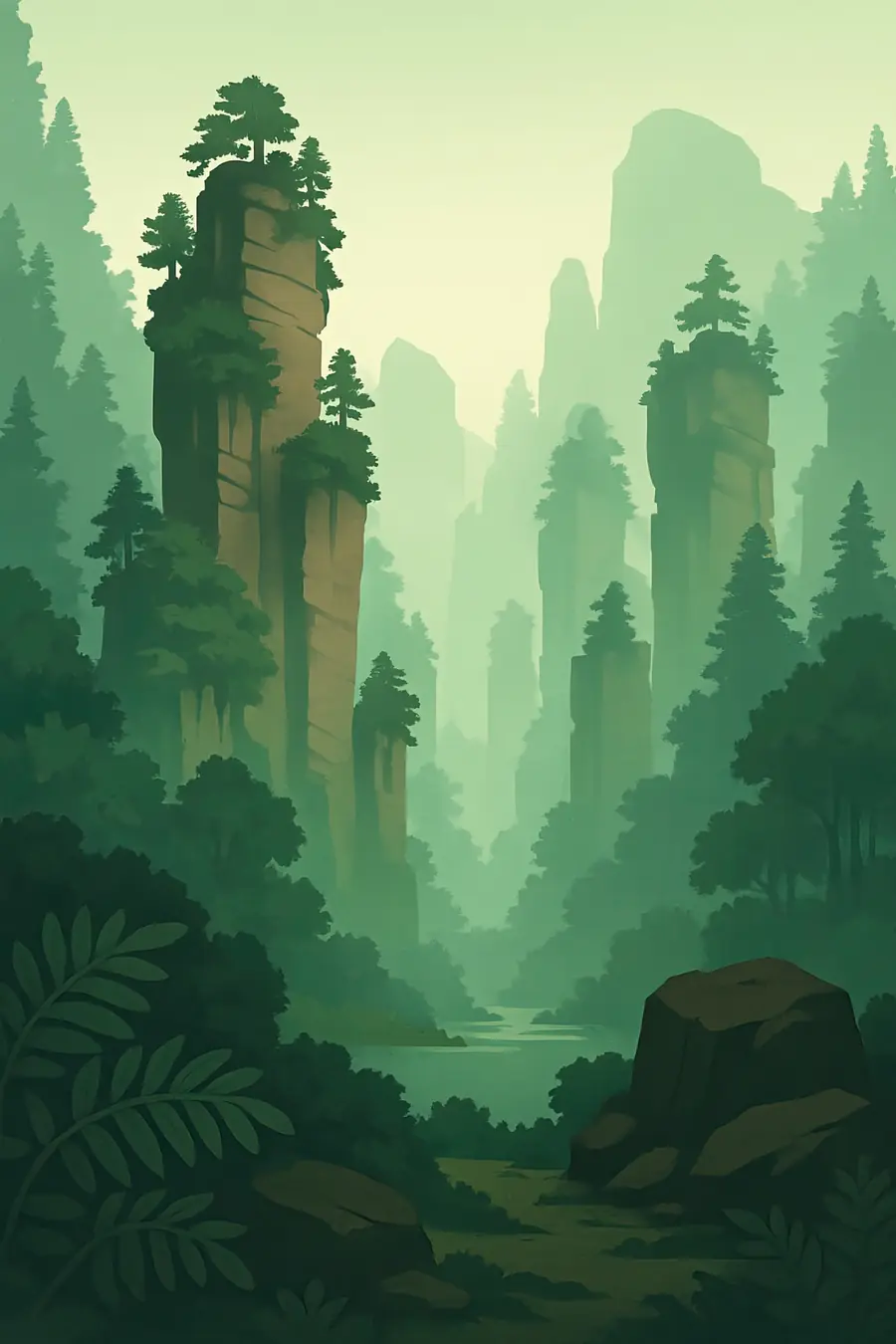
The place
More than three thousand narrow pillars of quartz sandstone rise from the forest, many of them over 200 metres tall, with trees and shrubs clinging to their tops and sides. Between them run deep ravines, streams and pools, natural bridges and waterfalls. In the east, limestone gives way to karst caves such as Huanglong Cave. The climate is mild and wet, and the pillars often stand in drifting cloud, appearing and disappearing. In spring and summer the forest is green and dense; in winter the peaks may be dusted with snow. You hear running water, birds, rhesus macaques calling and, in busy places, the voices of many visitors.
History
The sandstone was laid down in shallow seas roughly 380 million years ago, then lifted and cracked along regular joints. Over a long time, water, frost and plant roots widened these cracks, leaving pillars standing where the rock held firm. Human history here is long and mostly rural: the Tujia, Bai and Miao peoples farmed the valleys and lived in villages tucked between the peaks. The area was remote and little known outside Hunan until the late twentieth century. After Zhangjiajie National Forest Park opened in 1982, the surrounding reserves were combined, and in 1992 Wulingyuan was inscribed by UNESCO for its natural beauty.
Why it matters for the living world
Wulingyuan is covered mainly by subtropical forest, which protects the steep slopes from erosion and keeps the streams clear. Its forests and ravines contain many plant species, including rare and relict trees, and they shelter wildlife such as rhesus macaques, Asian black bears and many birds. The streams are home to the Chinese giant salamander, the largest amphibian in the world and critically endangered. The site is also a textbook example of how sandstone landscapes form, which is why it is part of a UNESCO Global Geopark. Its forests store carbon and regulate water flowing to the Lishui River.
People of the place
The Tujia make up a large part of the local population, along with Bai, Miao and Han Chinese. Tujia culture includes stilt houses, songs, the hand-waving dance and festivals still celebrated in the area. Before tourism, families farmed rice, maize and tea and gathered forest products. Today tourism is the main economy, and many residents work as guides, porters, drivers, sedan-chair carriers, hotel staff and craft sellers. Some villagers were moved out of the core zones of the site to reduce building inside it, which brought compensation but also loss of land and community ties.
What it faces
Tourism is the main pressure. In 1998 a UNESCO mission criticised the many hotels, shops and other buildings inside the site, and authorities later demolished a large number of them. Large projects remain, such as the Bailong Elevator built on a cliff face and many cable cars. Visitor numbers are very high, bringing waste, sewage and pressure on water. Litter and pollution have affected streams such as Golden Whip Stream. Climate change and heavy rain may increase landslides. Management now includes limits on construction in the core area, shuttle buses instead of private cars, and monitoring of water quality and wildlife.
Sources
- IUCN World Heritage Outlook: Wulingyuan Scenic and Historic Interest Area
- Wulingyuan (Wikipedia)
- Wulingyuan Scenic and Historic Interest Area (WorldHeritageSite.org)
- UNEP-WCMC World Heritage data sheet: Wulingyuan
Written for Regenerative Voices from the sources above. Spotted something wrong? Tell us.