
The place
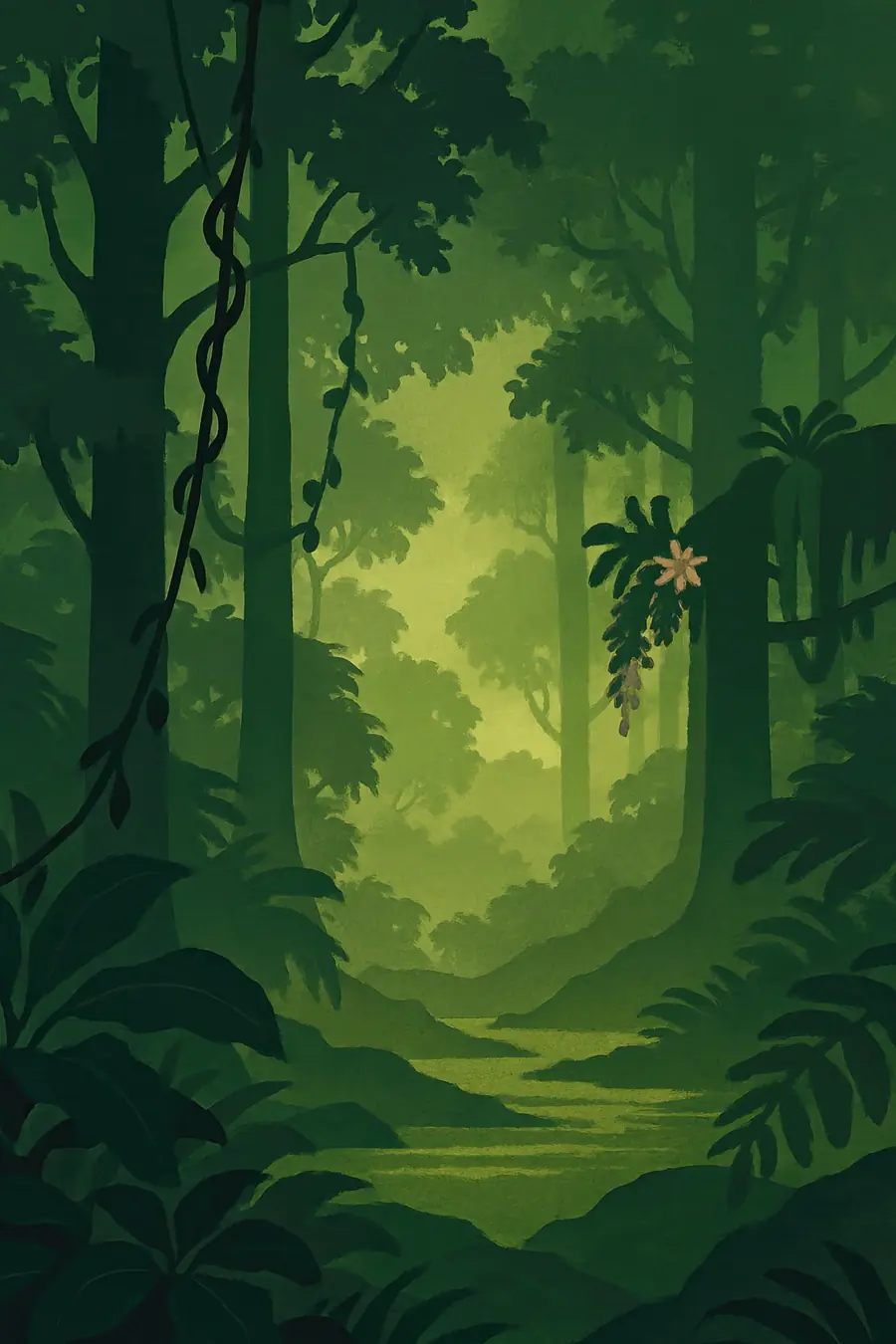
Yasuní lies where the eastern foothills of the Andes give way to the flat lowlands of the upper Amazon, close to the equator. It is a landscape of unbroken tropical forest on low hills, cut by black-water and white-water rivers, oxbow lakes and palm swamps. Rain falls through most of the year and the air stays warm and wet. The canopy rises high, with emergent ceibas above it. The sound changes through the day: macaws and parrots at clay licks in the morning, the rumble of howler monkeys, and at night a steady wall of frogs and insects. Oil roads and pipelines cut into its northern edge.
History
The western Amazon close to the Andes remained warm and wet through ice-age dry periods, which may help explain why it is so rich in species. The Waorani have lived in this forest for many generations and resisted outsiders until missionaries made contact in the 1950s. Oil exploration followed from the 1970s, and Yasuní became a national park in 1979 and part of a UNESCO biosphere reserve in 1989. In 2007 Ecuador proposed the Yasuní-ITT Initiative, offering to leave the oil under Block 43 untouched in return for international payments. Too little money came, and drilling was approved in 2013. Citizens' group Yasunidos gathered signatures for a vote, and on 20 August 2023 about 59 percent of voters chose to stop oil extraction in Block 43.
Why it matters for the living world
Yasuní is among the most species-rich places measured on Earth for trees, amphibians, bats and insects. Amazon Watch, citing park records, lists 610 bird species, 139 amphibians and 121 reptiles. Jaguars, giant otters, white-bellied spider monkeys, harpy eagles and Amazon river dolphins live here, and a single hectare can hold hundreds of tree species. The park sits at the meeting point of the Andes, the Amazon and the equator, where rainfall stays high even in drier years, which may make it a climate refuge for many species. Its intact forest stores a large amount of carbon, and keeping the oil under Block 43 unburned also keeps those emissions out of the atmosphere.
People of the place
The park lies within the ancestral territory of the Waorani, who call themselves Waorani, meaning human beings, and whose territory overlaps the park. Kichwa communities live along its rivers. Two Waorani-related groups, the Tagaeri and Taromenane, live in voluntary isolation in and around the park, and Ecuador created the Tagaeri-Taromenane Intangible Zone in 1999 to keep extraction away from them. Waorani people are divided over oil: some communities rely on company jobs and services, while others, through organisations such as NAWE and leaders such as Nemonte Nenquimo and Nemo Guiquita, lead campaigns against drilling. Yasunidos, a mostly young urban movement, worked with Indigenous groups to bring the referendum.
What it faces
Oil is the main threat. Roads built for oil open the forest to settlers, logging and hunting, and spills and gas flaring pollute water and air. After the 2023 vote, the Constitutional Court gave the government one year to dismantle Block 43. A year later, Mongabay reported that little had been done: Petroecuador was still producing about 50,000 barrels a day, an oversight committee had been formed with no plan or timeline and without Indigenous members, and President Daniel Noboa had floated a moratorium on the result, citing the oil economy. Indigenous federations such as CONAIE and CONFENIAE, together with Yasunidos, continue to press for full compliance and for protection of the peoples in isolation.
Sources
- One year after oil referendum, what's next for Ecuador's Yasuní National Park? (Mongabay, 2024)
- Ecuadorians reject oil drilling in the Amazon, ending operations in a protected area (Amazon Watch, 2023)
- Yasuní: the significance of a victory (World Rainforest Movement)
Written for Regenerative Voices from the sources above. Spotted something wrong? Tell us.