
The place
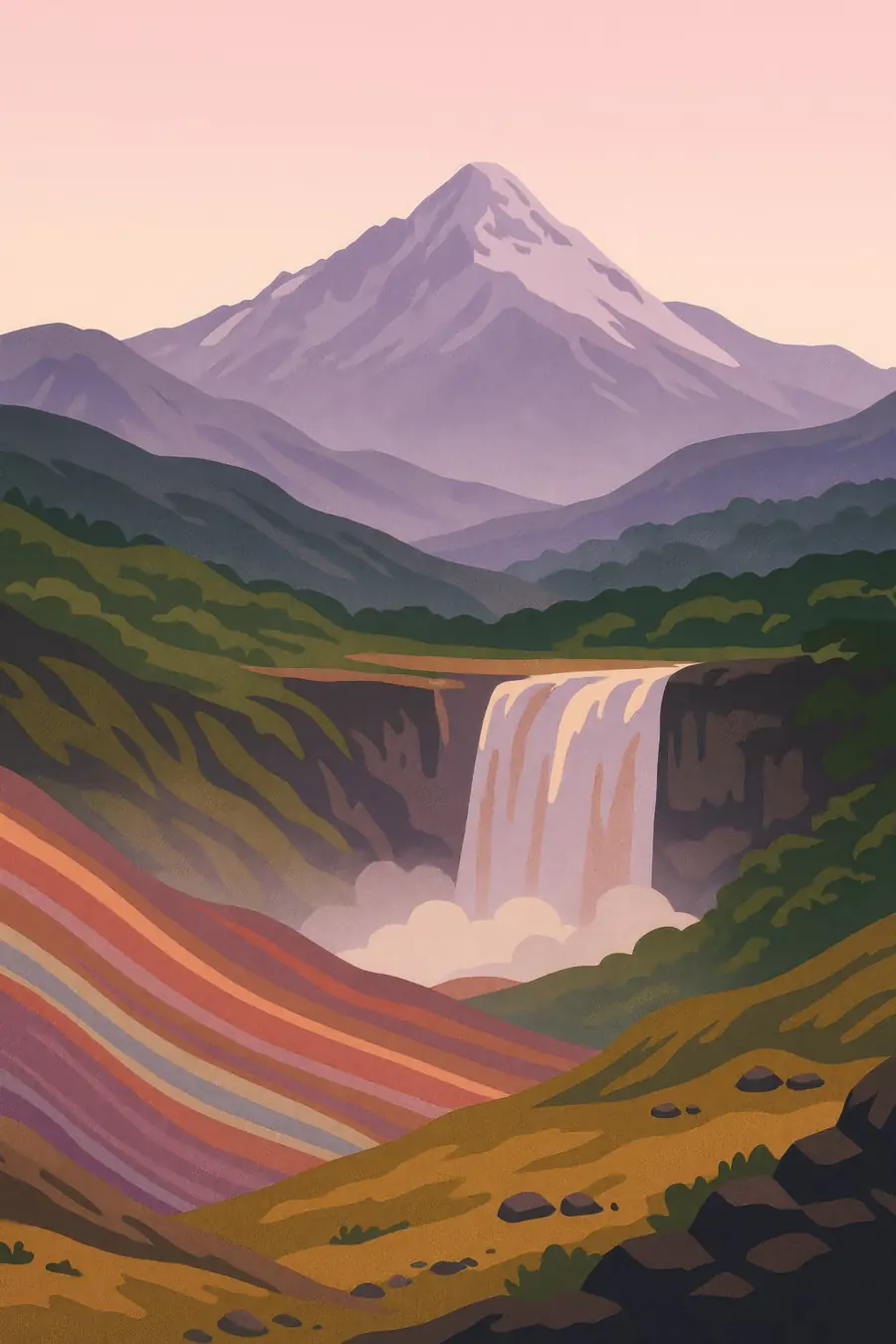
Ausangate rises as a broad white massif above high grasslands at around 4,500 metres. Hanging glaciers spill down its faces, and meltwater feeds turquoise and red lakes and wide, boggy pastures. The trekking circuit around it crosses passes above 5,000 metres. Nearby, banded red, ochre and green hills, made of mineral-rich sediments, have become famous as Vinicunca or Rainbow Mountain. The weather is cold and changeable: sun and strong ultraviolet light by day, frost at night, and snow or hail in the wet season from about December to March. Sounds are few: wind, water, the bells of alpaca herds and the calls of Andean geese.
History
The Vilcanota range was lifted with the Andes and carved by glaciers into deep valleys. People have herded llamas and alpacas in these highlands for thousands of years. Under the Inca, Ausangate was among the most important apus, or mountain lords, of the Cusco region, and its worship continued after the Spanish conquest, often woven into Catholic practice. The pilgrimage of Quyllurit'i, meaning star snow in Quechua, grew from the eighteenth century around a shrine in the Sinakara valley, on the slopes of a neighbouring glacier, and it is held each year in the week before Corpus Christi. Mountaineers first climbed Ausangate in 1953. The north face was first climbed in 2023.
Why it matters for the living world
The glaciers of the Vilcanota range are a water tower for the region, feeding the Vilcanota and other rivers that flow toward the Amazon. Below the ice, wetlands called bofedales store water and carbon and provide year-round grazing. Puna grasslands host vicuñas, vizcachas, Andean foxes, condors and Andean geese, and Polylepis woodlands survive in sheltered spots. Glacier retreat in recent decades is exposing new ground, forming new lakes and changing when and how much water reaches the valleys. Scientists use the Vilcanota and the nearby Quelccaya ice cap to track climate change in the tropical Andes, because these tropical glaciers respond quickly to warming.
People of the place
Quechua herding communities live around Ausangate, in the districts of Ocongate and Pitumarca. They keep alpacas and llamas, weave textiles, and trade wool and meat with farming villages lower down. For them Ausangate is a living being, an apu who protects the herds, and offerings called despachos are made to the mountain and to Pachamama. Each year tens of thousands of pilgrims, organised in dance groups called nations, walk to the Quyllurit'i shrine. Ukukus, figures dressed as bears, traditionally climbed the glacier at night. Communities also earn income from tourism by running lodges and offering horses and guiding on the Ausangate circuit and at Vinicunca.
What it faces
Glacier retreat is the most visible change. The ice that Quyllurit'i pilgrims once cut and carried down has thinned so much that the Ukuku ice ritual has been stopped, and the ceremony has moved onto bare rock. Shrinking glaciers threaten future water supply for herders and towns downstream. Mass tourism at Vinicunca, which drew large crowds after the snow cover vanished in the 2010s, brings erosion, waste and conflict between communities over income. Mining concessions in the area have caused protests, and a concession at Vinicunca was dropped after public pressure. Communities are setting their own rules for tourism, and Peru is studying glacier lakes to reduce flood risk.
Sources
- Ausangate (Wikipedia)
- How melting glaciers threaten Peru's biggest Indigenous festival (Culture Trip)
- The discovery of Peru's Rainbow Mountain has an unfortunate truth (Culture Trip)
Written for Regenerative Voices from the sources above. Spotted something wrong? Tell us.