
The place
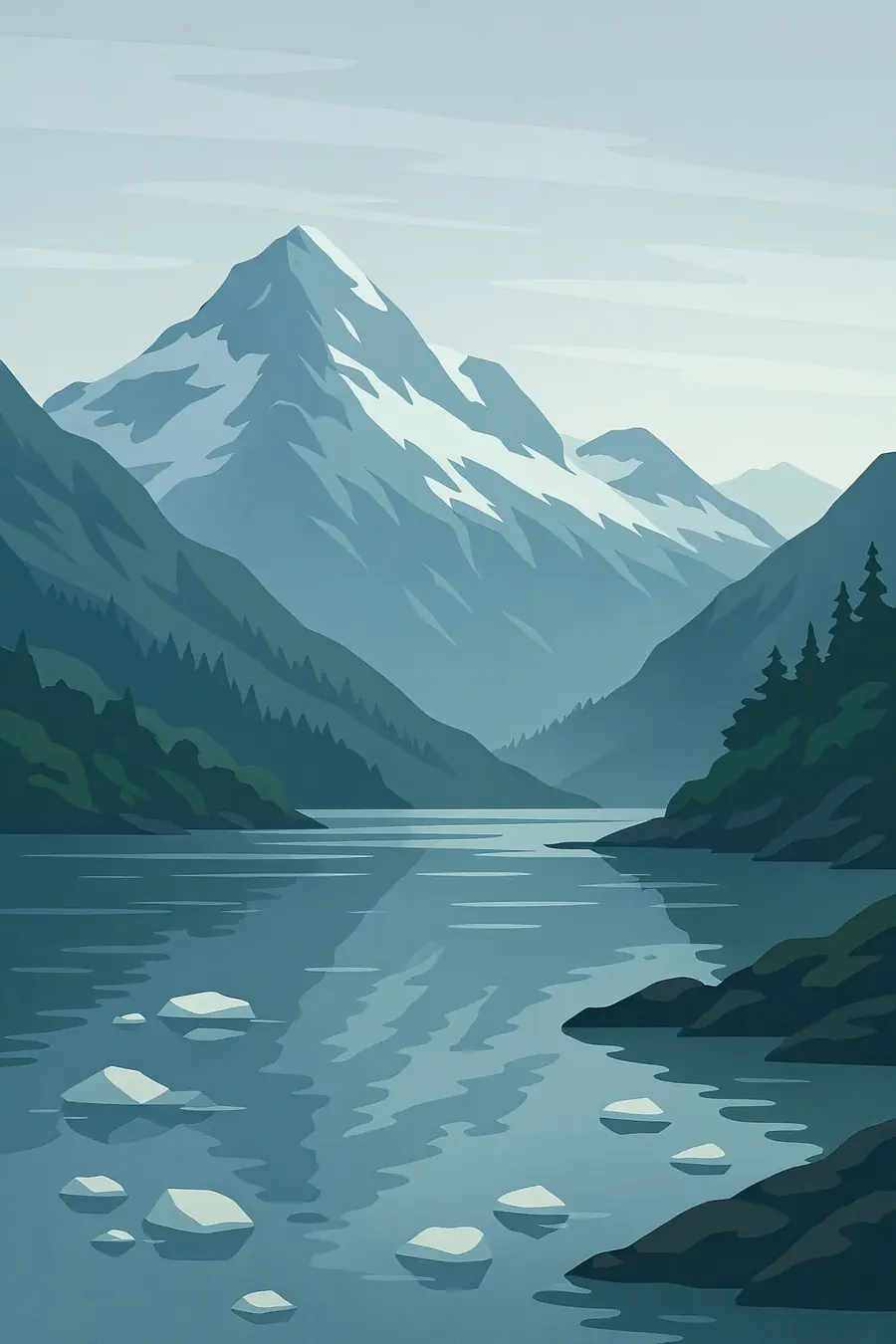
The range rises steeply from the sea to peaks above 2,000 metres, the highest in Tierra del Fuego, among them Monte Shipton, Monte Darwin and, at its western end, Monte Sarmiento. An icefield of more than 2,300 square kilometres caps the summits and sends tidewater glaciers into the fjords. Along the Beagle Channel, the so-called Avenue of the Glaciers includes the España, Romanche, Alemania, Italia, Francia and Holanda glaciers. The climate is cold, wet and windy, with clouds hiding the peaks for days at a time. Below the ice grow dense, wind-bent forests of southern beech. You hear calving ice, waterfalls and the cries of seabirds.
History
The mountains are made of old metamorphic rocks lifted where the Andes bend east toward the Scotia Arc. Ice-age glaciers carved the fjords and channels that the range now overlooks. The Yaghan, or Yámana, lived along these channels for about 10,000 years, moving by canoe and living from the sea; the Selk'nam, Haush and Kawésqar lived nearby. The range is named after Charles Darwin, who passed through the Beagle Channel with HMS Beagle in the 1830s. Missionaries, gold seekers and sheep farmers followed in the late nineteenth century, bringing disease and violence that devastated the canoe peoples. Chile created Alberto de Agostini National Park in 1965, named after an Italian priest-explorer who mapped the area.
Why it matters for the living world
The Darwin icefield is one of the largest bodies of ice in the southern Andes outside the Patagonian icefields, and its glaciers feed fjords rich in nutrients. Marine life thrives in these cold waters: South American sea lions, southern elephant seals, leopard seals, Chilean dolphins and humpback whales use the channels, along with the endangered marine otter. Magellanic woodpeckers and austral thrushes live in the beech forests, while albatrosses and petrels feed offshore. Peat bogs in the lowlands store large amounts of carbon. Because the range is almost roadless and rarely visited, it serves as a reference landscape for studying how glaciers and southern ecosystems respond to a warming climate.
People of the place
The Yaghan, whose descendants live mainly in Villa Ukika near Puerto Williams on Navarino Island, consider these channels their ancestral home. Yaghan organisations take part in debates on fishing, salmon farming and the management of the Cabo de Hornos Biosphere Reserve, and they keep alive canoe-building, basketry and language. Selk'nam descendants in Chile and Argentina are organising for recognition after being long described as extinct. Few people live inside the range today. Visitors come mostly by expedition cruise ship and yacht, and a handful of mountaineering expeditions each year attempt its peaks. Chilean park rangers and scientists from Punta Arenas and Puerto Williams monitor the area.
What it faces
Climate change is the main threat. Several glaciers, including the Marinelli, have retreated for decades, while a few others are stable or advancing. Retreat changes freshwater flow into the fjords and affects marine life. Invasive North American beavers and American mink have spread from northern Tierra del Fuego, damaging forests and killing ground-nesting birds. Salmon farming has expanded in southern Chile, and Yaghan communities and scientists have pushed to keep it out of the Beagle Channel. Cruise and yacht traffic is rising. The area's remoteness gives it strong de facto protection, and the biosphere reserve offers a framework for planning together with Indigenous and local residents.
Sources
- Cordillera Darwin (Wikipedia)
- Alberto de Agostini National Park (Wikipedia)
- The Beavercene: eradication and settler-colonialism in Tierra del Fuego (Arcadia, Environment & Society Portal)
Written for Regenerative Voices from the sources above. Spotted something wrong? Tell us.