
The place
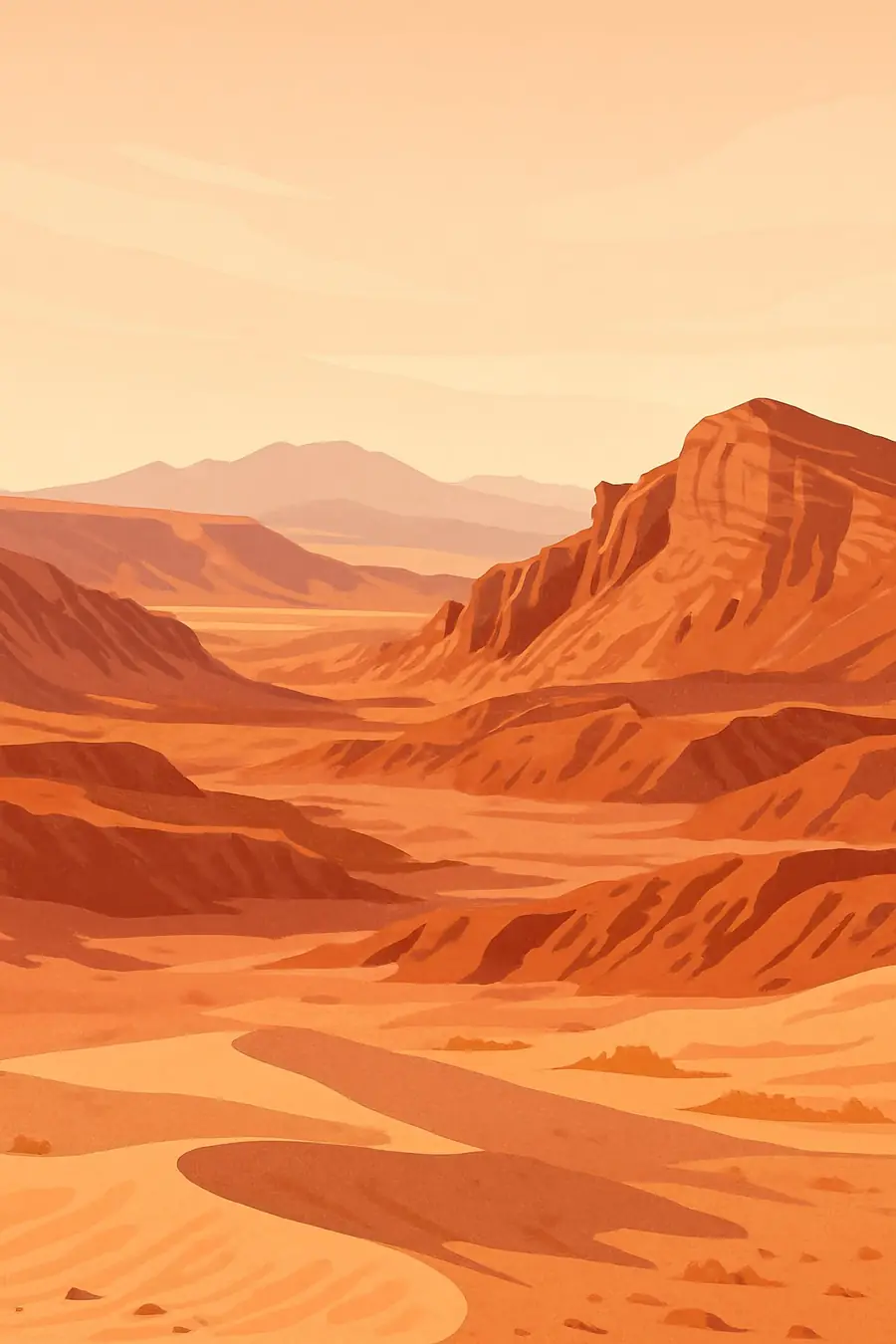
The desert stretches for roughly a thousand kilometres along the Pacific. It is dry because it lies between two rain barriers: the cold Humboldt Current offshore and the Andes to the east. Some weather stations have recorded almost no rain for years. On the coast, fog called camanchaca rolls in from the sea. Inland are gravel plains, dunes, nitrate flats and the salt-crusted basin of the Salar de Atacama, ringed by volcanoes over 5,000 metres high. The light is hard and bright, and the night sky so clear that large observatories are built here. After rare rains, the southern Atacama bursts into a short-lived flowering.
History
The Atacama has been arid for millions of years, and in places for longer than any other desert on Earth. People lived in its oases and along its coast for many thousands of years. The Chinchorro people of the coast mummified their dead about 7,000 years ago, earlier than the Egyptians. Around San Pedro de Atacama, the Lickanantay, also called Atacameños, built irrigated oases, trade routes with llama caravans and fortresses such as Pukará de Quitor. The Inca and then the Spanish took control. In the War of the Pacific (1879–1884), Chile took the nitrate-rich desert from Bolivia and Peru. Copper and nitrate mining followed, and since the 1980s, lithium from the salar's brine.
Why it matters for the living world
Life in the Atacama clings to water. Fog oases on coastal hills support cacti and shrubs found nowhere else. In the high basins, lagoons such as Chaxa and Miscanti feed Chilean, Andean and puna flamingos, while vicuñas graze on the edges. The brine under the salar is ancient water, and microbial mats in it are studied as clues to early life on Earth and possibly Mars. Because rain is so scarce, groundwater, springs and wetlands are recharged very slowly, which means that pumping takes water out faster than it can return. A 2022 study linked a drop in flamingo numbers since the 1980s to declining water in the salar's lagoons.
People of the place
The Lickanantay, or Atacameño, people are the Indigenous people of the Salar de Atacama, and their language, Kunza, is being revived. Eighteen Lickanantay communities around San Pedro de Atacama, Toconao and other oases farm, herd, run tourism and care for places such as the Laguna Chaxa reserve. For many, water and brine are sacred, part of a living landscape rather than a resource. Aymara and Quechua communities live further north. Many people in the region work in mining or tourism. The Consejo de Pueblos Atacameños, representing the eighteen communities, has gone to court against lithium producer SQM over water withdrawals and the lack of free, prior and informed consent.
What it faces
Mining is the main pressure. Lithium in the Salar de Atacama is produced by SQM and Albemarle by pumping brine into vast evaporation ponds. A government-commissioned study estimated that the salar's water balance is losing about 1,750 to 1,950 litres per second, much of it due to brine extraction. Copper mines also draw heavily on aquifers. Lickanantay communities have challenged new projects in court, and some have been withdrawn. In 2024 Chile's state copper company Codelco agreed a partnership with SQM that extends lithium production in the salar to 2060, which led to road blockades by Indigenous communities. Climate change, tourism growth and waste dumping, including discarded clothing, add further strain.
Sources
- Atacama, Chile: lithium (Earthworks)
- Surviving the white gold rush: life in South America's lithium triangle (Al Jazeera, 2024)
- The Lickanantay: 'We don't want to be a sacrifice zone' (Esperanza Project)
Written for Regenerative Voices from the sources above. Spotted something wrong? Tell us.