
The place
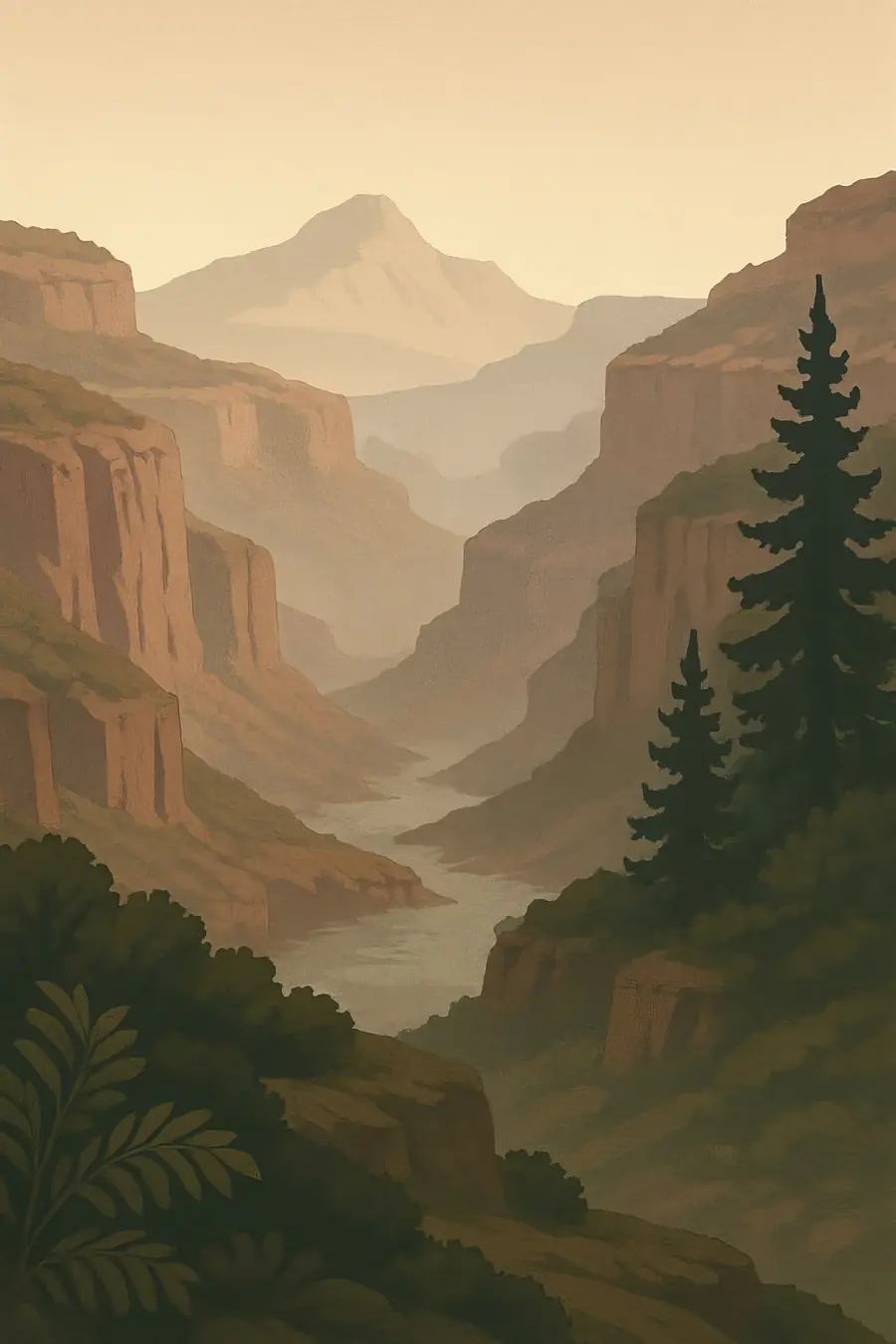
Six rivers have cut down through thick layers of volcanic rock to form a network of canyons covering about 65,000 square kilometres, some sections deeper than the Grand Canyon. Their waters join the Río Fuerte and flow west to the Gulf of California. On the rims, at well over 2,000 metres, there are pine and oak forests with cold winters and frost. In the canyon bottoms it is warm and humid all year, with fig trees, palms and tropical scrub. Waterfalls such as Basaseachi drop from the rim. Summer rains begin in July after a long dry spring. The copper-green colour of some canyon walls gave the place its name. A railway, the Chepe, crosses the sierra on bridges and tunnels.
History
The Rarámuri have lived in these mountains for centuries, moving between highland and canyon homes with the seasons. Spanish explorers, missionaries and miners arrived in the 1600s searching for silver and souls. They called the people Tarahumara. Mining towns such as Batopilas were founded around silver veins, and some Rarámuri were forced into labour. Uprisings were put down, and many Rarámuri withdrew to the remote canyons and cliffs to keep their independence. Jesuit and later Franciscan missions left churches across the sierra. In the twentieth century logging companies cut most of the old-growth forest, and the Chihuahua-Pacific railway, completed in 1961 after decades of work, opened the region to timber trade and tourism.
Why it matters for the living world
Because the canyons span from cool pine forest to tropical lowland in a short distance, they hold a wide range of plants and animals. Mexican Douglas fir and pines grow on the heights, oaks and madrones on the slopes, and figs and palms below. Cougars, black bears, coatis and many bird species live here. Some species have already been lost: the imperial woodpecker, which needed large old pines, is believed extinct, and the Mexican wolf disappeared from the area. Only a small fraction of the original old-growth forest remains. The sierra's forests and soils feed the rivers that water farms on the coastal plain of Sinaloa and Sonora.
People of the place
The Rarámuri, numbering in the tens of thousands, are the main Indigenous people of the sierra, alongside the Ódami, Warijó and O'oba. Rarámuri families grow corn, beans and squash on small plots, keep goats and cattle, and move between canyon and highland homes. Their running tradition, including the rarajípari race in which a wooden ball is kicked over long distances, is widely known. Communities hold their land through ejidos and Indigenous councils, but many lack secure title. Rarámuri communities have taken tourism and timber projects to court to defend their territory, including at Divisadero near the canyon rim. Several Rarámuri land and forest defenders, among them Isidro Baldenegro and Julián Carrillo, have been murdered.
What it faces
Logging, much of it illegal, continues to clear forests and erode soils. Drug cartels control parts of the sierra, force communities to grow opium poppy and cannabis, and use violence against those who resist. Herbicide spraying aimed at drug crops harms other plants and animals. Open-pit gold, silver and copper mines pollute water and air. Dams on every major river system have changed water flows, and drought has hit Rarámuri farms hard, causing hunger in some years. Tourism projects such as cable cars and hotels on the rim have been built on contested land. Rarámuri organisations, Jesuit missions and local groups support land rights claims, forest management and food security.
Sources
- Copper Canyon (Wikipedia)
- Divisadero: native Rarámuri land (Intercontinental Cry)
- Copper Canyon (Geo-Mexico)
- Barranca del Cobre: Mexico's Grand Canyon (Arizona Highways)
Written for Regenerative Voices from the sources above. Spotted something wrong? Tell us.