
The place
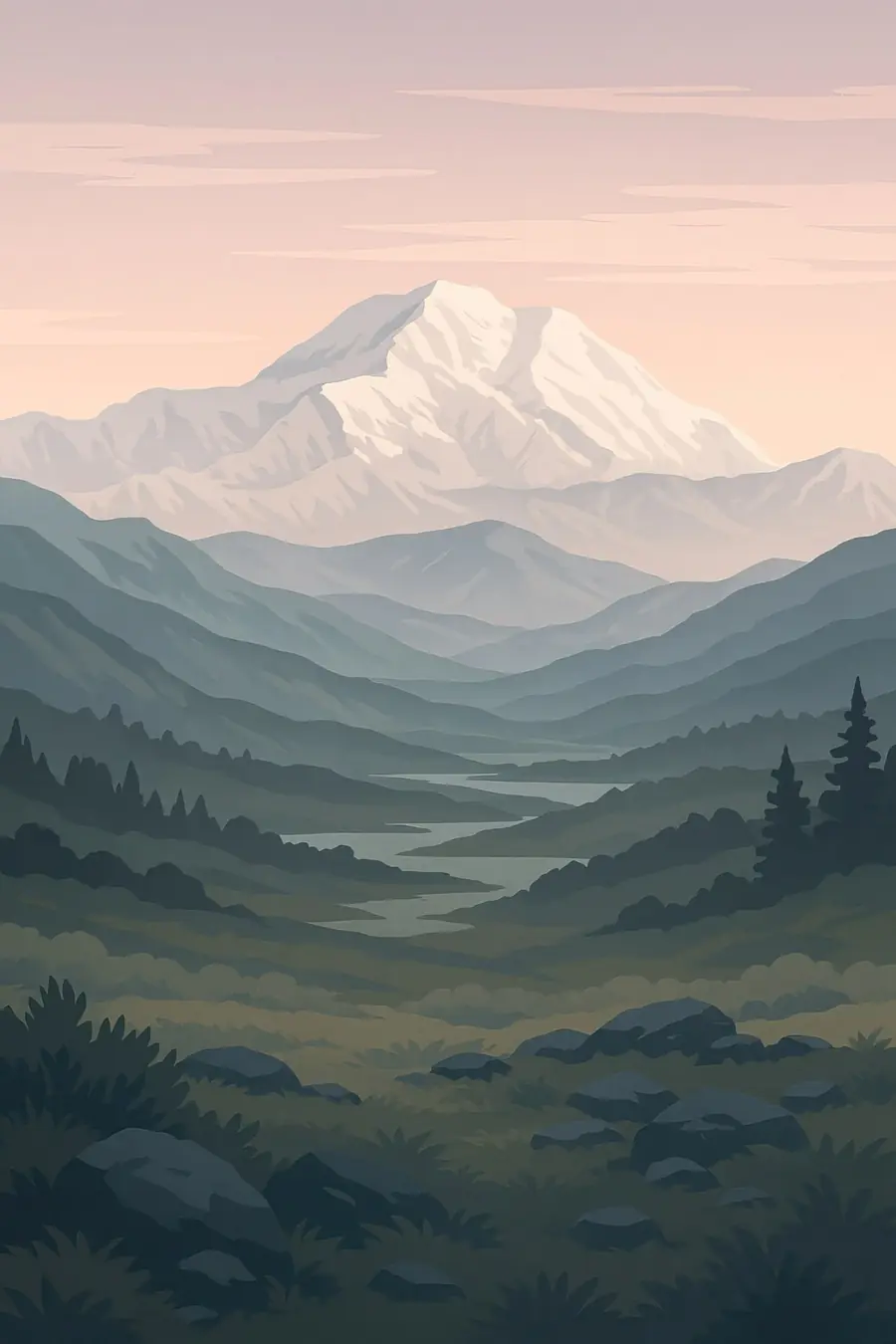
Denali rises to 6,190 metres, a great block of granite lifted along the Denali Fault, and it stands far above the lowlands around it. It rises about 5,500 metres above the lowlands at its base, one of the largest base-to-summit rises of any mountain on land. Glaciers flow from the range on all sides. To the north lie wide braided rivers, rolling tundra in green, red and gold, and patches of spruce forest on permafrost. Weather is harsh and changeable, and the summit is often hidden in cloud. Winters are long, dark and very cold, summers short with near-endless light. One gravel road runs about 150 kilometres into the park. You hear wind, rushing rivers and the calls of ptarmigan.
History
Archaeological sites in the park show that people have lived in and passed through this region for well over ten thousand years. Athabascan peoples knew the mountain by many names. The Koyukon name Deenaalee and related names mean roughly "the high one" or "the tall one". In 1896 a gold prospector named it after William McKinley, then a presidential candidate. Hunters and miners came with the gold rushes, and market hunting depleted sheep and caribou. The naturalist Charles Sheldon pushed for protection, and Mount McKinley National Park was created in 1917. The park was greatly expanded and renamed Denali in 1980. The mountain itself was officially renamed Denali in 2015, though in 2025 the federal government reverted its official name to Mount McKinley.
Why it matters for the living world
Denali protects a whole subarctic ecosystem with little human change. Grizzly bears, wolves, caribou, moose and Dall sheep range across it, and the long-term study of its wolves is one of the oldest of any large predator in North America. Many bird species arrive each summer to nest, some of them migrating from as far as Africa, Asia and South America. Its permafrost holds large amounts of carbon in frozen soils. The park's glaciers and rivers shape the land through constant erosion and deposit. Because hunting is not allowed in the original park area, it serves as a baseline for understanding how northern wildlife lives without heavy human pressure.
People of the place
Several Athabascan peoples have ties to the land around Denali, including the Koyukon, Lower Tanana, Upper Kuskokwim, Dena'ina and Ahtna. They hunted caribou, moose and sheep, fished, and moved with the seasons through what is now the park. Their names for the mountain carry meanings that predate the English name by centuries, and Alaska Native leaders pressed for decades for the name Denali to be restored. In the preserve areas and parts of the 1980 additions, local rural residents continue subsistence hunting, trapping and gathering under federal law. Small communities such as Cantwell, Healy and Nikolai lie near the park. Tourism, guiding and park work provide jobs in summer.
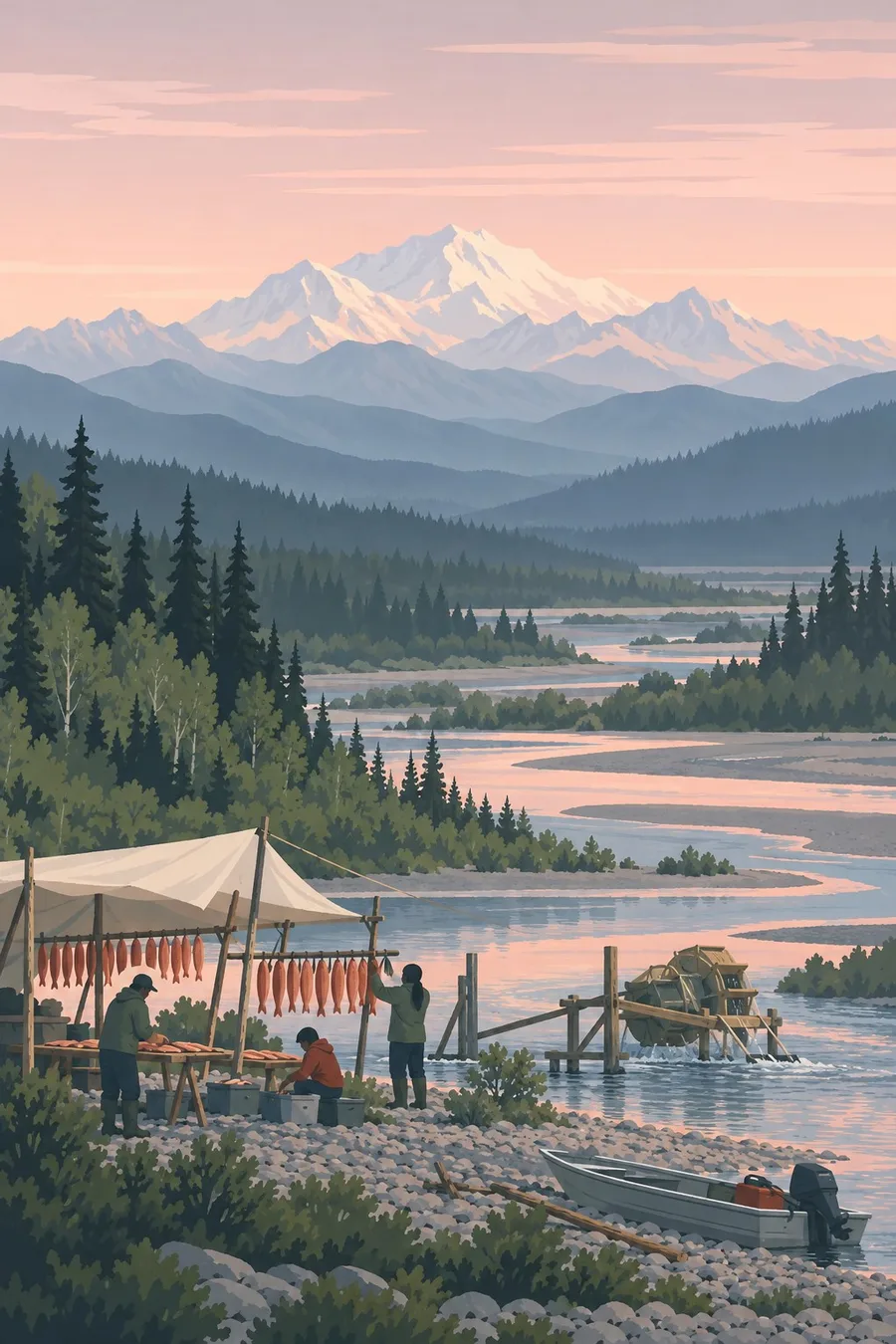
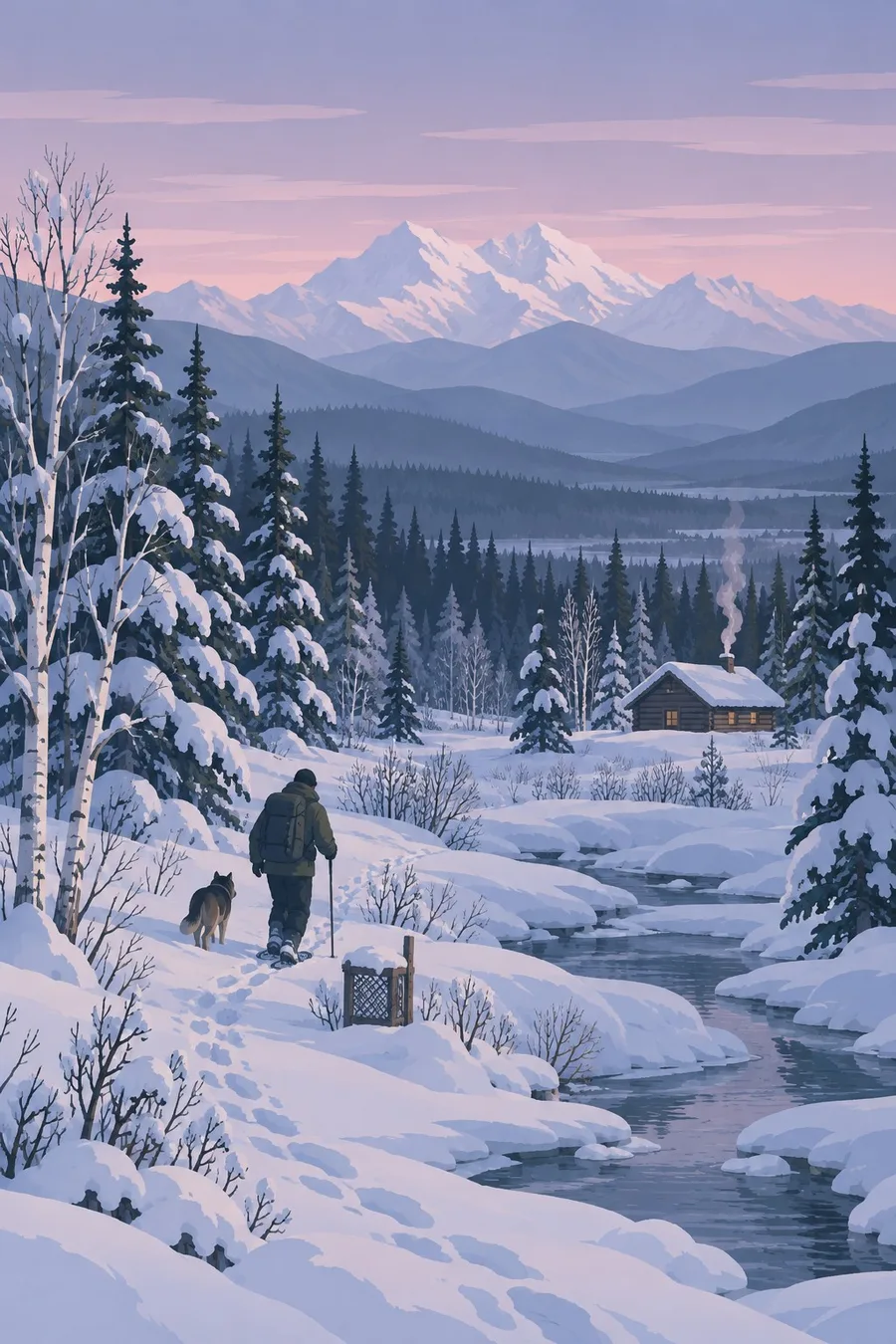
Illustrations made with AI in the style of the plates. They show life in general, not particular people or rites.
Seasons, celebrations and the sacred
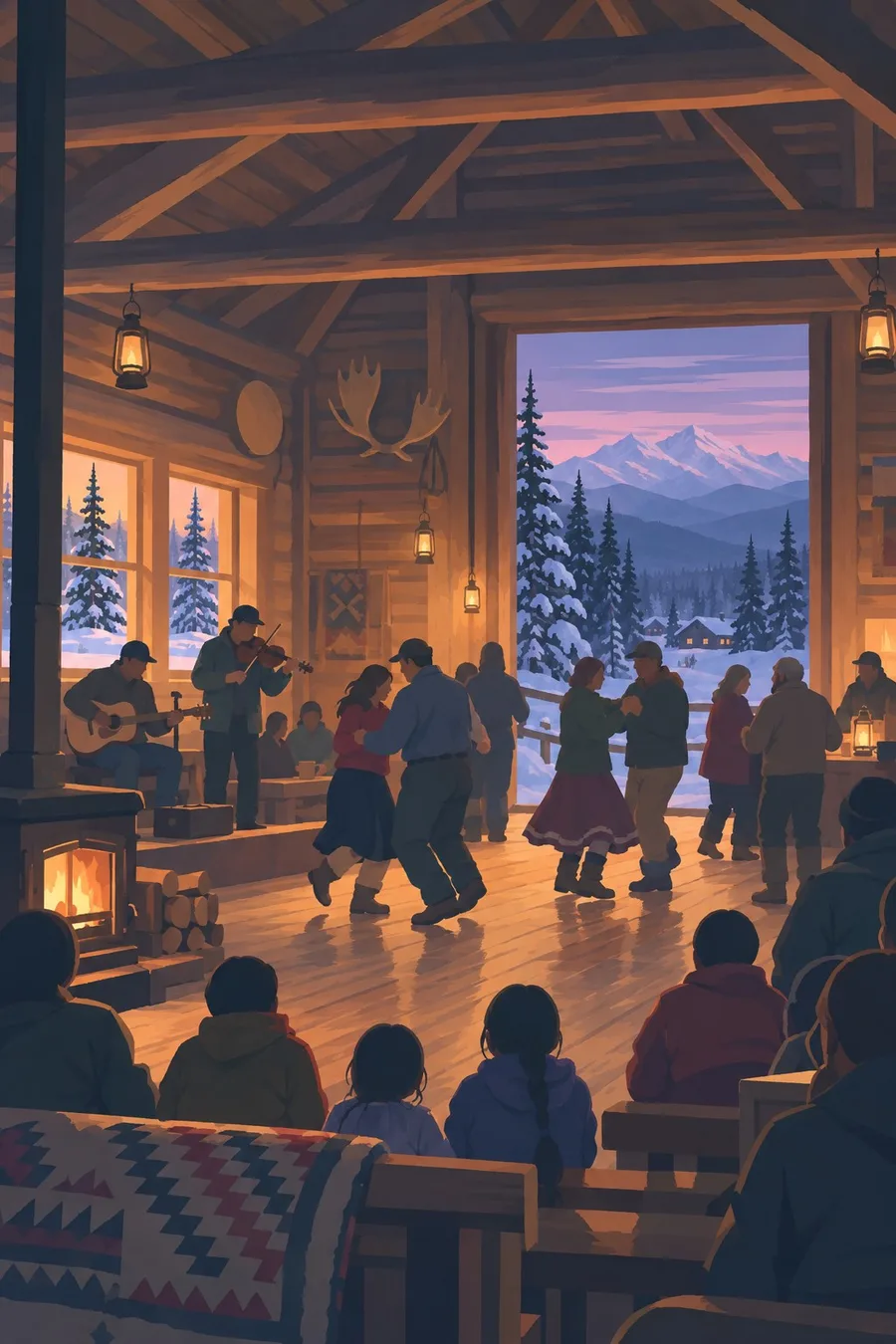
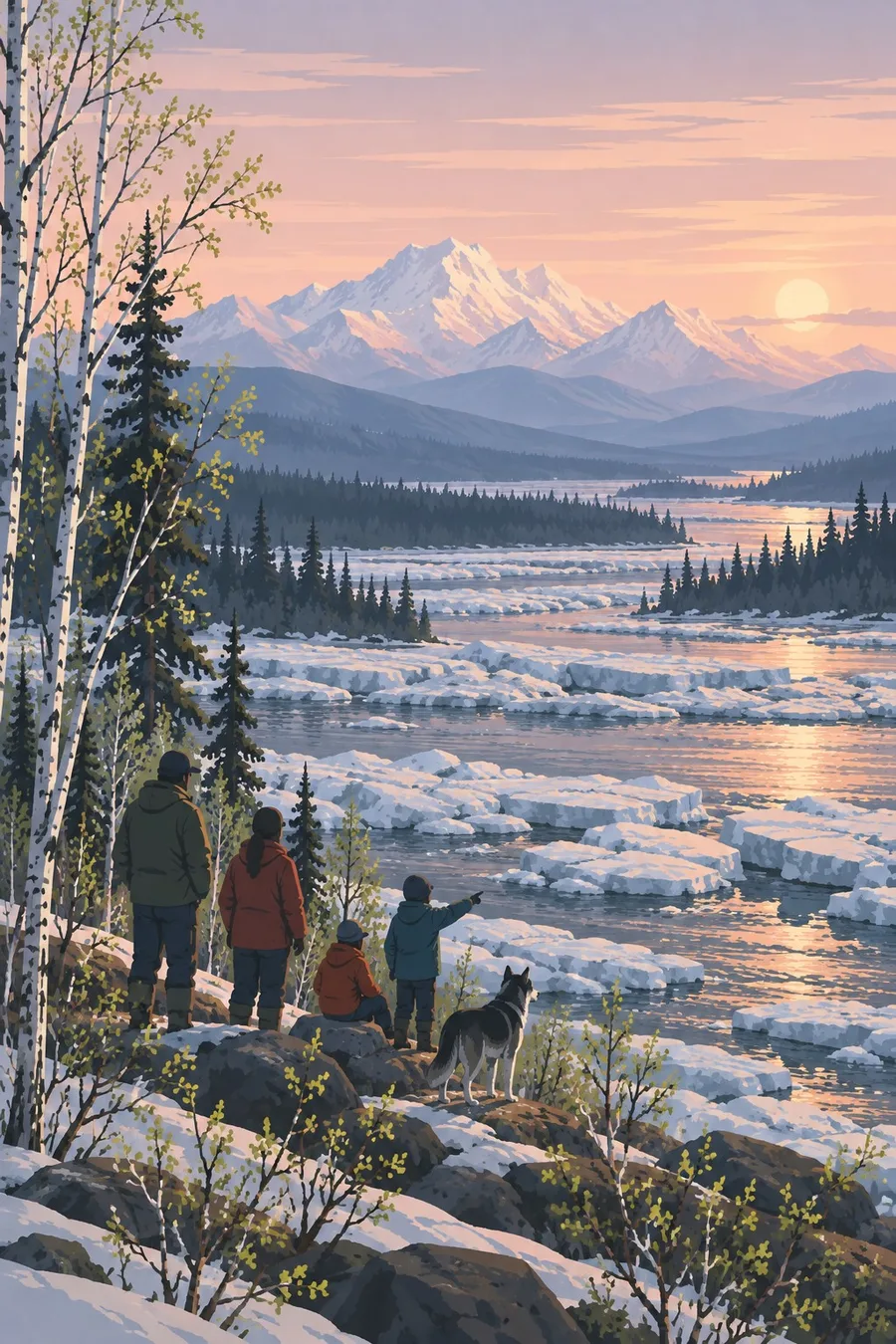
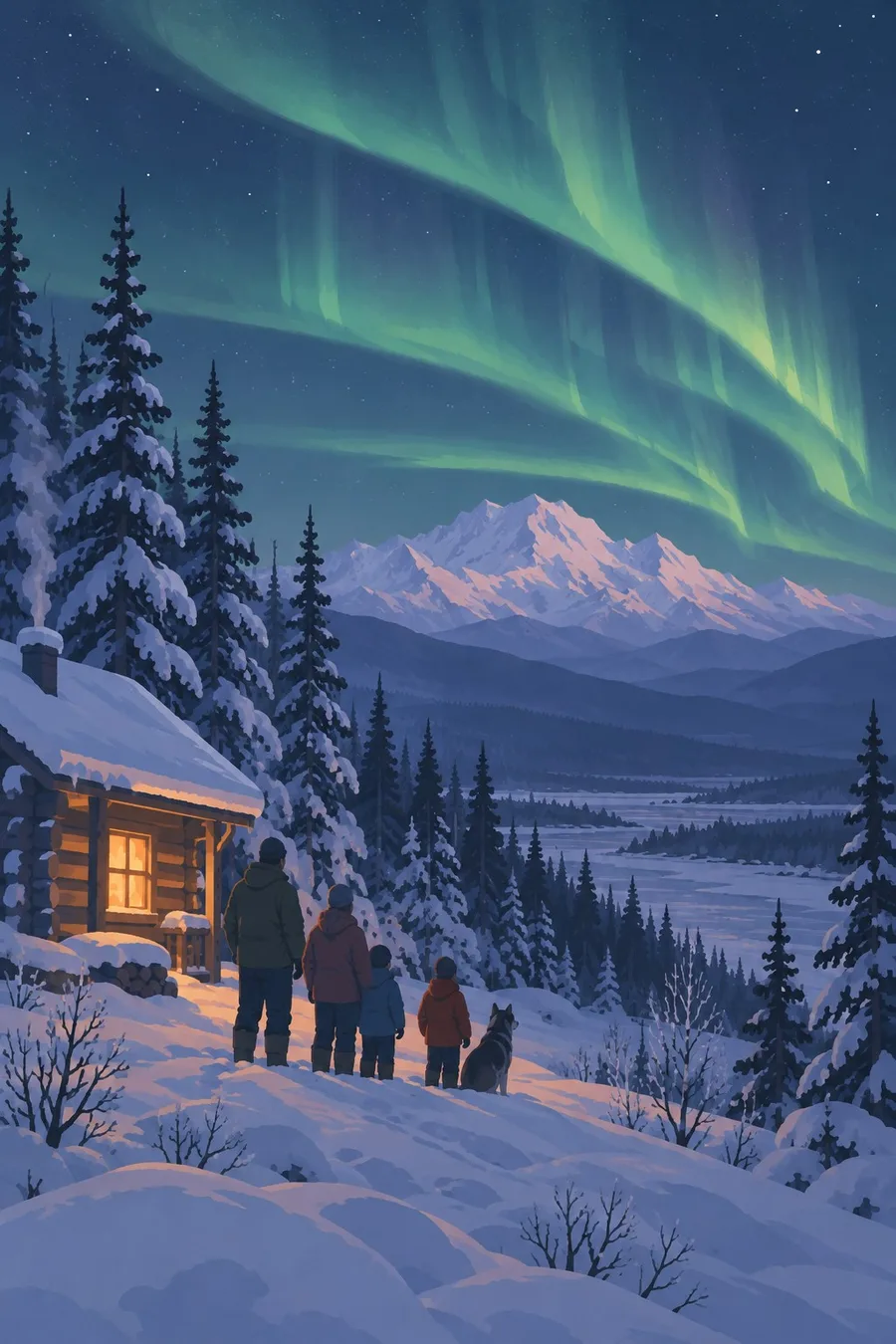
Illustrations made with AI in the style of the plates. They show life in general, not particular people or rites.
What it faces
Climate change is thawing permafrost across the park, which has caused landslides and slumping ground. The Pretty Rocks landslide closed the park road at its midpoint in 2021, and a bridge is being built over the slide. Glaciers are shrinking, and shrubs and trees are spreading into tundra, changing habitat for caribou and other animals. Wildfire seasons are growing longer. Visitor numbers are high in summer, and the park limits private vehicles on its road to reduce disturbance to wildlife. Hunting and trapping of wolves on state lands next to the park has been debated for years. The park runs long-term monitoring of wildlife, glaciers and permafrost to guide its response.
Sources
- Senate hearing testimony on S. 319, Denali naming (U.S. Department of the Interior)
- Why 'Denali?' Explaining Mount McKinley's New (Old) Name (Live Science)
- Denali-Mount McKinley naming dispute (Wikipedia)
- Denali National Park (Wikiwand)
Written for Regenerative Voices from the sources above. Spotted something wrong? Tell us.