
The place
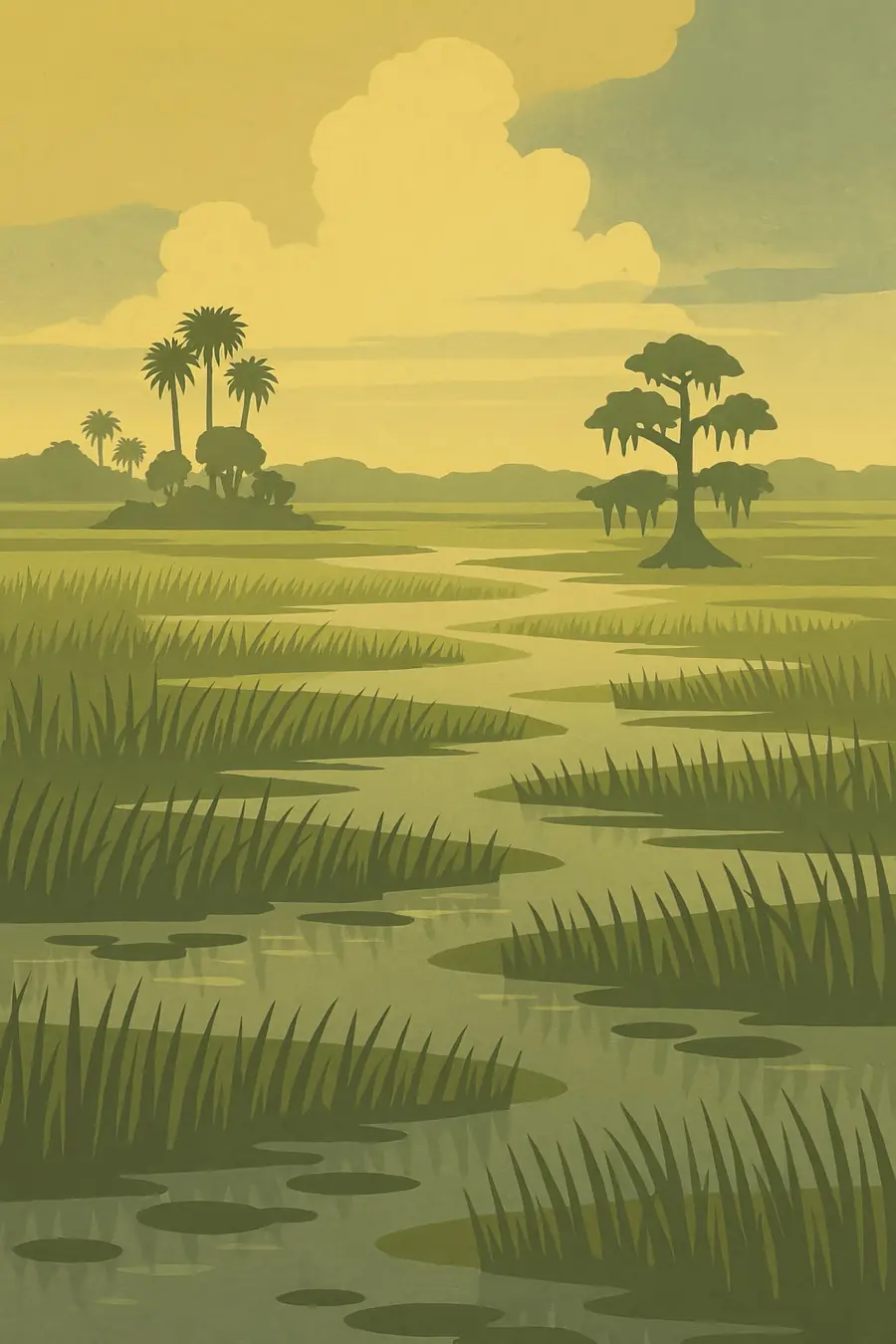
The Everglades is a slow, shallow sheet of fresh water that once spread south from Lake Okeechobee across a nearly flat bed of limestone, moving only a few hundred metres a day. Sawgrass marshes stretch to the horizon, broken by tree islands of hardwood hammock, cypress domes and pinelands on higher rock. Toward the coast, the fresh water meets the sea in a broad band of mangrove forest and the shallow, bright waters of Florida Bay. The climate is subtropical, with a hot, rainy summer and a mild, dry winter, and hurricanes cross it often. You hear the rustle of sawgrass, frogs, mosquitoes, alligators bellowing in spring and wading birds at their roosts.
History
People have lived in the Everglades region for thousands of years. The Calusa on the southwest coast and the Tequesta in the southeast built large shell mounds and complex societies before European diseases and conflict destroyed them. In the 1700s and 1800s Creek and other peoples moving south became known as the Seminole. During the Seminole Wars the United States tried to force them west, and some families retreated deep into the Everglades and were never removed. From the late 1800s, Florida dug canals and built levees to drain the marsh for farming and towns. Marjory Stoneman Douglas published The Everglades: River of Grass in 1947, the same year the national park was dedicated.
Why it matters for the living world
The Everglades is the largest subtropical wilderness in the United States and the only place in the world where American alligators and American crocodiles live side by side. It shelters the Florida panther, West Indian manatee, wood storks, roseate spoonbills and dozens of other threatened species. Its peat soils and mangrove forests store large amounts of carbon. The wetlands recharge the Biscayne Aquifer, which supplies drinking water to millions of people in South Florida. Florida Bay depends on fresh water from the marsh to keep its seagrass beds, fisheries and coral reefs healthy. Roughly half of the original Everglades has been lost to drainage and development.
People of the place
The Seminole Tribe of Florida and the Miccosukee Tribe of Indians of Florida are descendants of those who held out in the Everglades and Big Cypress swamp. The Miccosukee live along the Tamiami Trail and hold land in the heart of the Everglades, and the Seminole have reservations at Big Cypress, Brighton, Hollywood and elsewhere. Both tribes have gone to court many times over water quality and flows, and they take part in restoration planning. Fishing guides, airboat operators, farmers and towns such as Everglades City and Flamingo are tied to the wetland. Millions of people in Miami and the Florida Keys depend on it for water, fisheries and protection from storms.
What it faces
Drainage, canals and levees have cut the natural flow of water, starving the southern marshes and Florida Bay while sending polluted runoff elsewhere. Fertiliser runoff from sugar cane farms and cities has changed plant communities. Burmese pythons and other invasive species have caused steep declines in small mammals. Sea-level rise is pushing salt water into freshwater marshes and the aquifer. The site has been on UNESCO's list of World Heritage in Danger since 2010. The Comprehensive Everglades Restoration Plan, approved by Congress in 2000, aims to restore flows through reservoirs, treatment marshes and bridges along the Tamiami Trail, though progress has been slow and costly.
Sources
- Everglades National Park - IUCN World Heritage Outlook
- State of Conservation: Everglades National Park (UNESCO World Heritage Centre)
- Everglades report highlights restoration progress, areas for improvement (Key West Citizen)
Written for Regenerative Voices from the sources above. Spotted something wrong? Tell us.