
The place
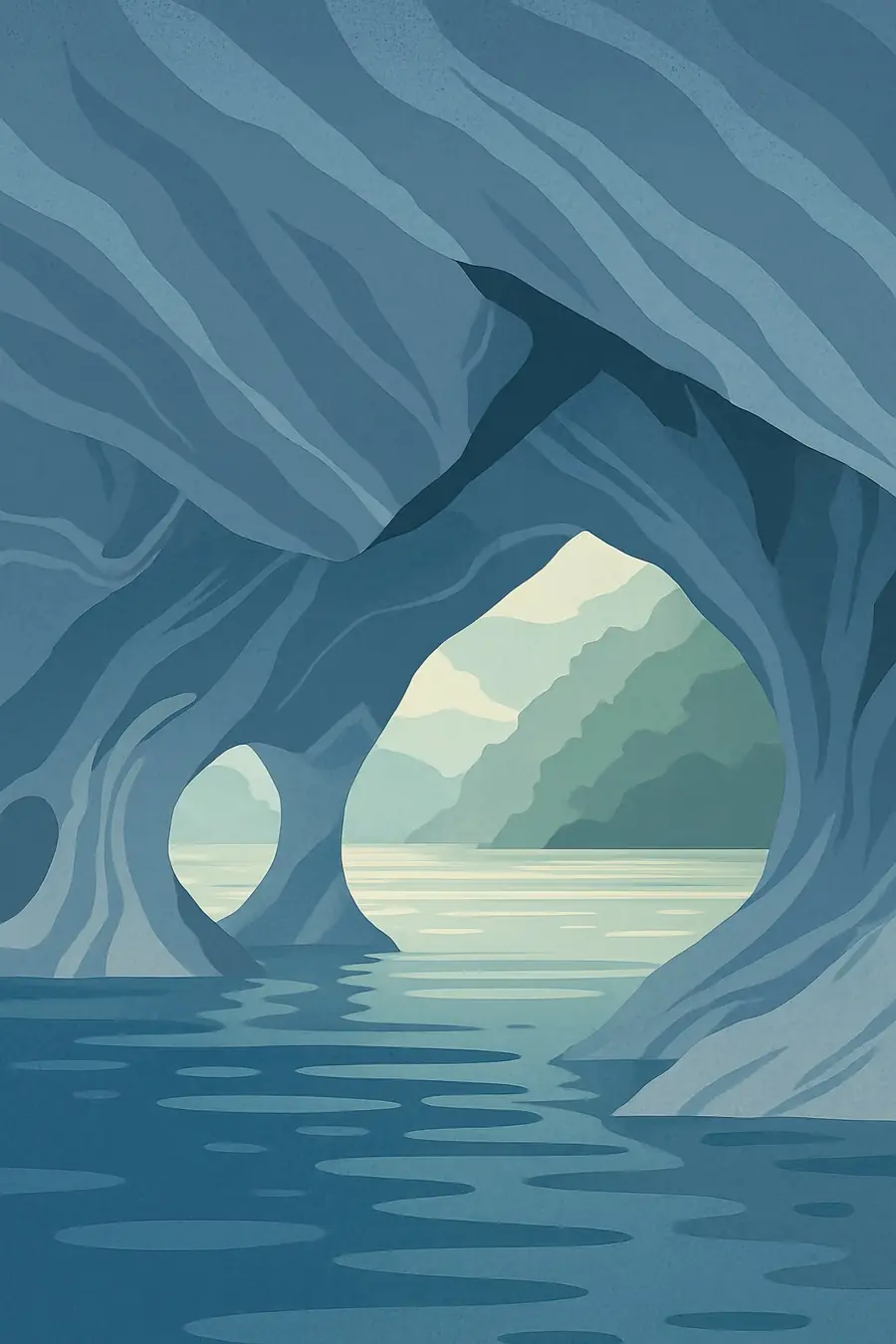
General Carrera Lake is a large glacial lake on the eastern side of the Andes, shared by Chile and Argentina. Along its western shore, small headlands of marble rise from water that is turquoise in summer, coloured by fine glacial silt. Waves have carved these outcrops into caves, columns and arches with smooth, swirled walls of white, grey and blue. The three best known are the Cathedral, the Chapel and the Cave. The colours shift with the light, the season and the water level. Around the lake, steppe meets forest under a climate milder and drier than the coast. The only sounds are lapping water, wind and boat engines.
History
The marble was formed deep underground from older limestone and then lifted with the Andes. Ice-age glaciers carved out the basin of General Carrera Lake. As the ice retreated, waves began to wear into the marble, a process that has been running for thousands of years. Tehuelche (Aónikenk) hunters moved through the region in the past, and rock art survives in nearby valleys. Settlers from Chile and Argentina arrived in the early twentieth century, raising sheep and cattle and working in small mines. The lake was renamed in honour of the Chilean independence leader José Miguel Carrera. The building of the Carretera Austral from the 1980s opened the area to visitors.
Why it matters for the living world
The caves themselves are bare rock, but they sit in a lake that is one of the largest freshwater bodies in South America and part of the Baker River system, the largest river in Chile by volume. Its water is cold, clear and low in nutrients. The shores hold a mix of Patagonian steppe, scrub and southern beech forest, and the region is home to huemul deer, guanacos, condors and many waterbirds. The lake's microclimate allows fruit growing in Chile Chico on the southern shore. Because the caves are fragile and slowly dissolve and erode, they are protected as a nature sanctuary.
People of the place
Puerto Río Tranquilo is a small village of a few hundred people on the lake's western shore. Its economy has shifted from ranching to tourism, with families running boat trips, kayak tours, guesthouses and cafés. Most visitors arrive by the Carretera Austral from Coyhaique. Local operators work together on safety and on limiting the number and size of boats near the caves. Across the region, Aysén's residents have a strong local identity shaped by isolation, ranching and self-reliance. Many took part in the long, successful campaign against the HidroAysén dam project in the late 2000s and early 2010s, which would have flooded valleys on the Baker and Pascua rivers.
What it faces
Growing tourism is the main pressure. More boats and kayaks bring noise, fuel and the risk of touching or damaging the marble, and Puerto Río Tranquilo has limited water and waste services. Climate change affects glaciers that feed the lake, which may change water levels and colour. Large hydropower plans on the Baker River, including the HidroAysén project, were cancelled in 2014 after strong local and national opposition, but proposals for dams and mining in the region still return. Local groups and authorities are working on visitor limits, boat rules and better wastewater treatment, and the nature sanctuary status gives a legal basis for controlling use.
Sources
- Catedral de Mármol – Capillas de Mármol – Cuevas de Mármol (Showcaves.com)
- All you have to know to go to the Marble Chapels (GoChile)
- Capilla de Mármol nature sanctuary (Public Lands)
Written for Regenerative Voices from the sources above. Spotted something wrong? Tell us.