
The place
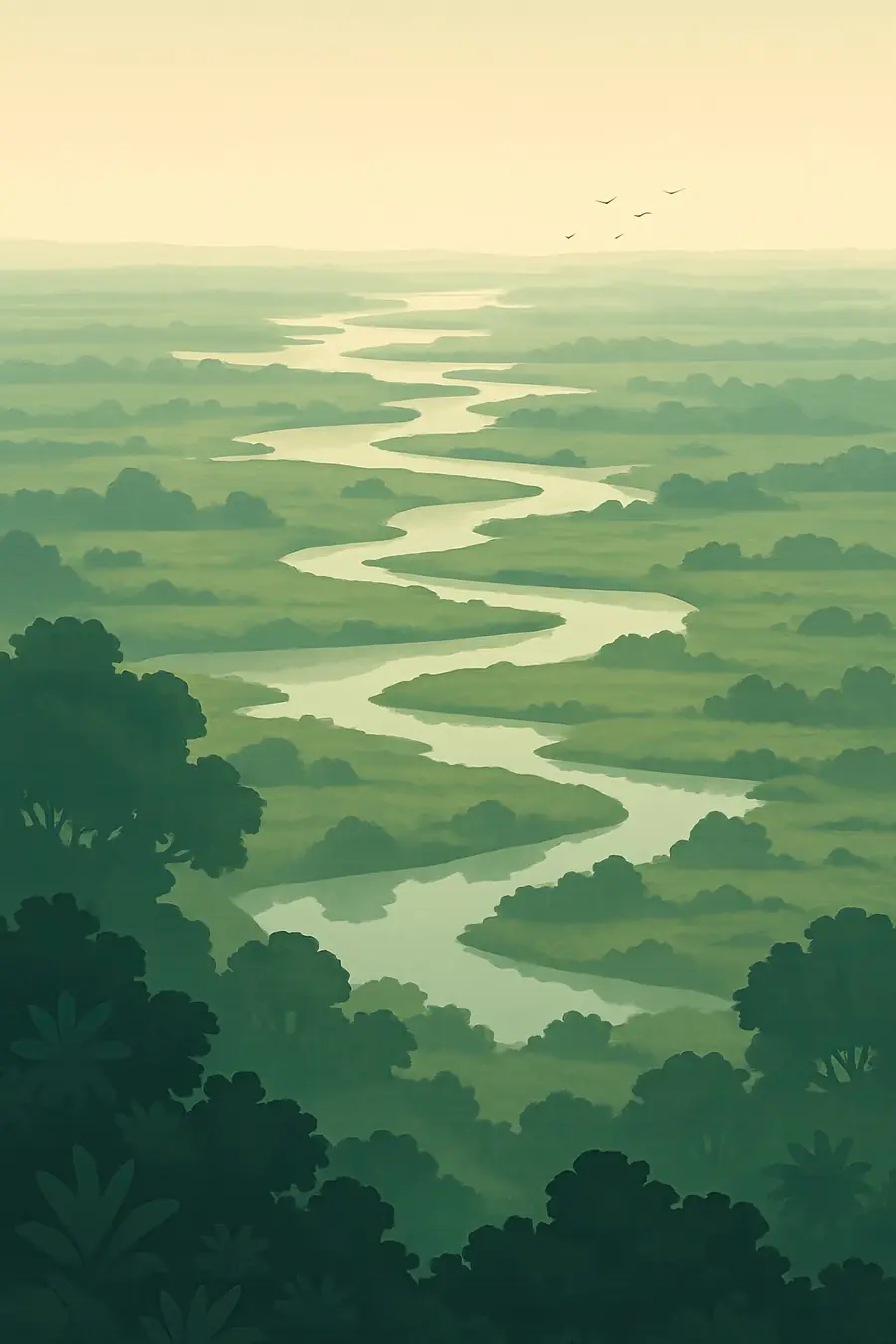
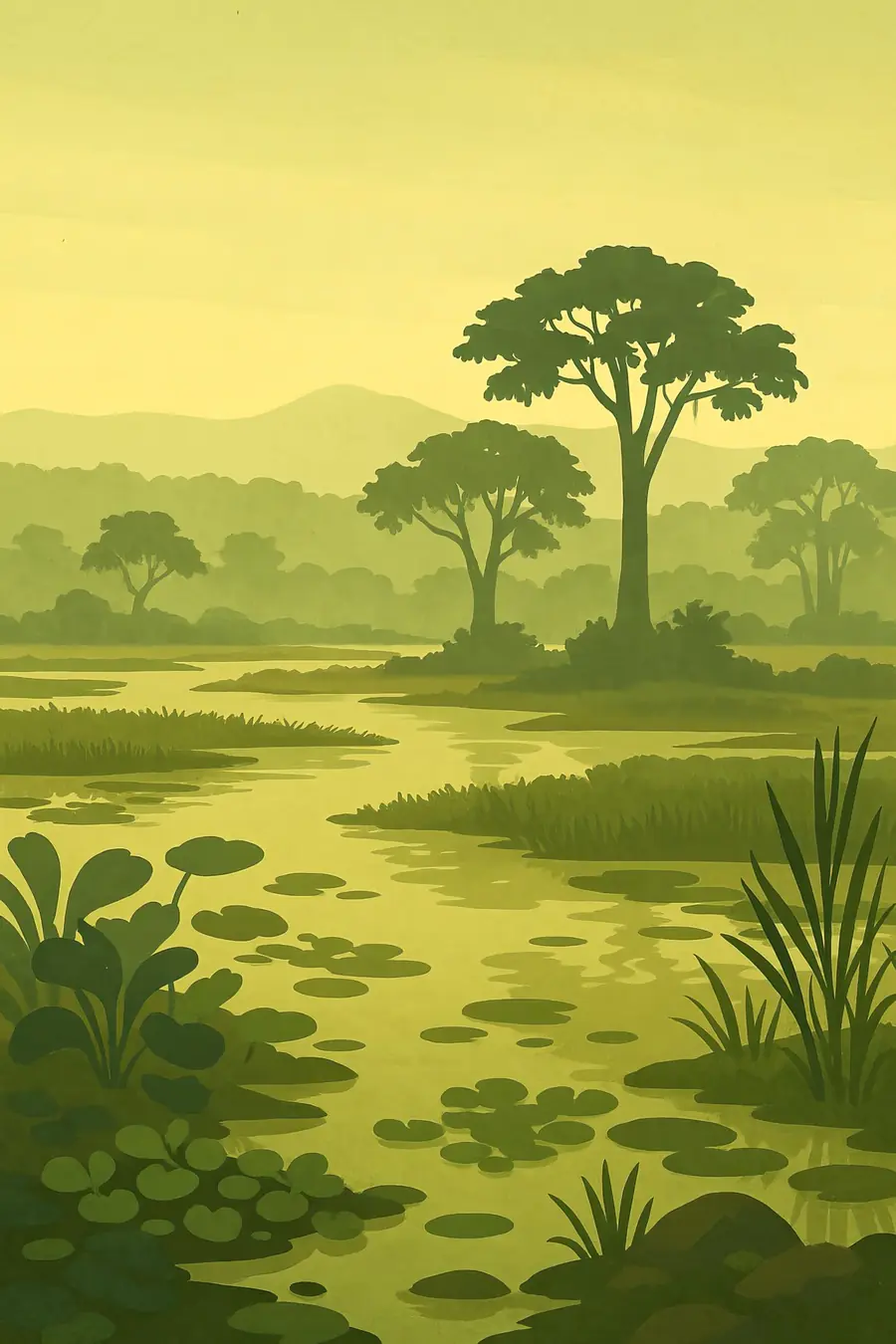
The Pantanal is a huge, low, nearly flat basin ringed by higher plateaus. Each wet season, from about November to March, rain and rivers flowing down from the plateaus spill across the plain, and the slow-draining Paraguay River backs up, so that much of the land is under water for months. In the dry season, the water retreats into rivers, lagoons and swamps, leaving grassland, palm groves and islands of forest. The light is wide and open, and the land changes with the water. You hear the calls of hyacinth macaws and chachalacas, the splash of caimans and, at night, a chorus of frogs.
History
The Pantanal basin began to sink when the Andes rose, and it has filled with sediments ever since. People lived here for thousands of years, building mounds above the flood; the Guató, a canoe people, are among its oldest known inhabitants. Other groups such as the Terena, Kadiwéu and Bororo lived around its edges. Spanish and Portuguese explorers crossed the region from the sixteenth century, and gold rushes in Mato Grosso in the eighteenth century brought settlers. Cattle ranching on the natural grasslands began in the nineteenth century and shaped the culture of the pantaneiros. The Paraguayan War (1864–1870) was also fought in part across the region.
Why it matters for the living world
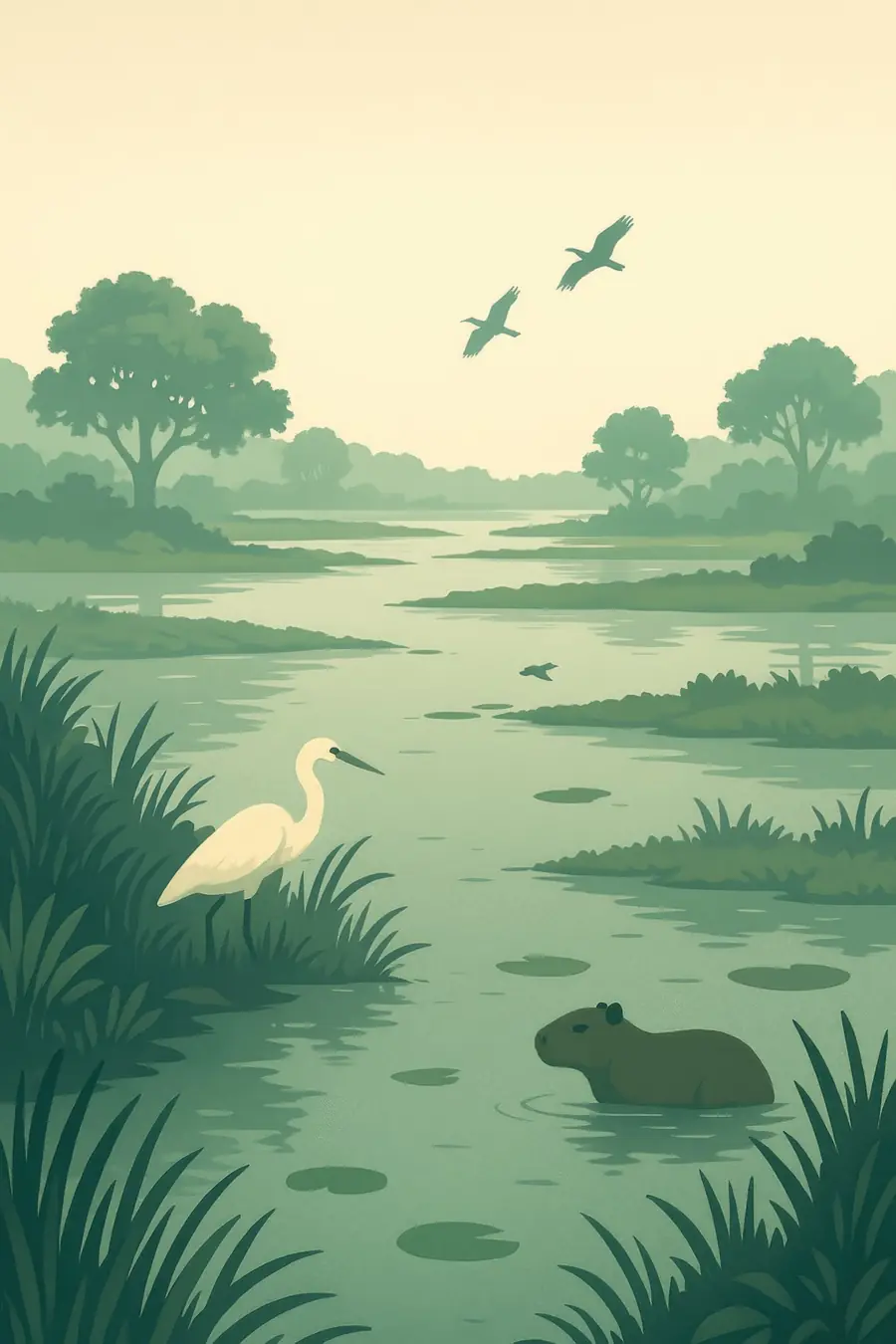
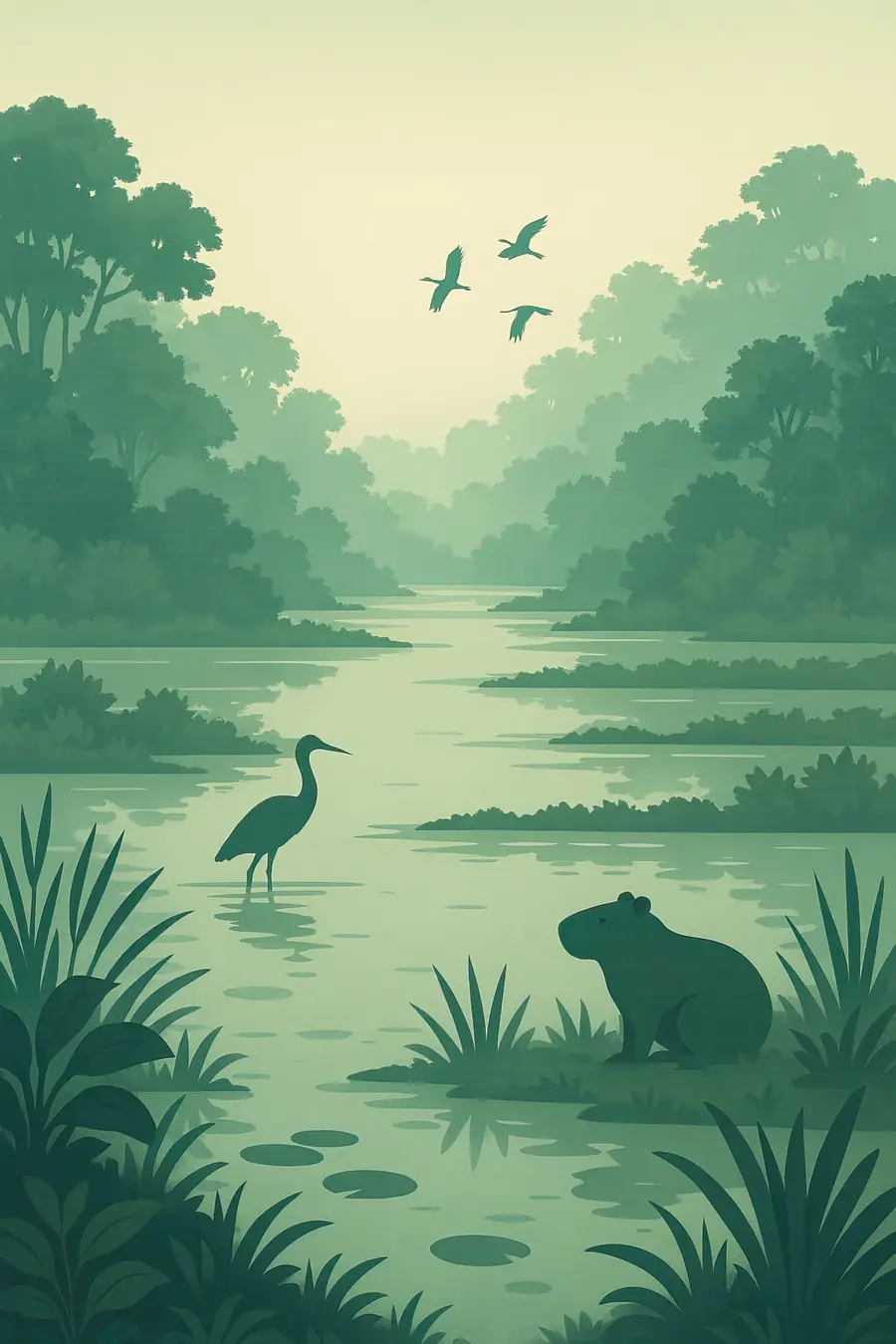
The Pantanal holds one of the highest densities of wildlife in the Americas. Jaguars, giant otters, marsh deer, capybaras, tapirs and yacare caimans live here in large numbers, along with hundreds of bird species, including hyacinth macaws, jabirus and roseate spoonbills. Its seasonal floods drive the whole system: fish spread into the flooded plain to breed, and birds and predators follow them. The wetland acts like a sponge, storing flood water and releasing it slowly downstream to the Paraguay and Paraná rivers. In 2020, fires burned nearly a third of the Pantanal, and a 2022 study found that jaguars were among the animals worst affected.
People of the place
The Guató, Terena, Kadiwéu, Bororo and other Indigenous peoples live in and around the Pantanal, and some Guató families still live on islands such as Ínsua. Most of the wetland is privately owned, with traditional cattle ranches covering much of the land. The pantaneiros, ranch hands and cowboys known for moving herds through floodwater, have a distinct culture of songs, food and knowledge of the water. Riverside fishing communities depend on the seasonal flood. In recent decades ecotourism, especially jaguar watching along the Transpantaneira road and the Cuiabá River, has become an important source of income and a reason for ranchers to protect wildlife.
What it faces
Fire is the most visible threat. Record fires in 2020 and again in 2024, during deep droughts, burned millions of hectares and killed huge numbers of animals. Climate change is drying the region, and the wet season floods are shrinking. Clearing of forest and savanna on the surrounding plateaus for soy and cattle changes how water and sediment reach the wetland. Proposed dams on rivers that feed the Pantanal and plans to dredge the Paraguay River into an industrial waterway, the Hidrovia, would change the flood pulse. Responses include fire brigades, a Pantanal protection law passed in Mato Grosso do Sul in 2023, private reserves, and jaguar tourism that pays to keep land wild.
Sources
- Pantanal Conservation Area (UNESCO World Heritage Centre, state of conservation)
- Pantanal fires threaten unique biodiversity (Wetlands International)
- Wildfires disproportionately affected jaguars in the Pantanal (Communications Biology, 2022)
- The world's largest wetland is burning and rare animals are dying (WLRN, 2024)
Written for Regenerative Voices from the sources above. Spotted something wrong? Tell us.