
The place
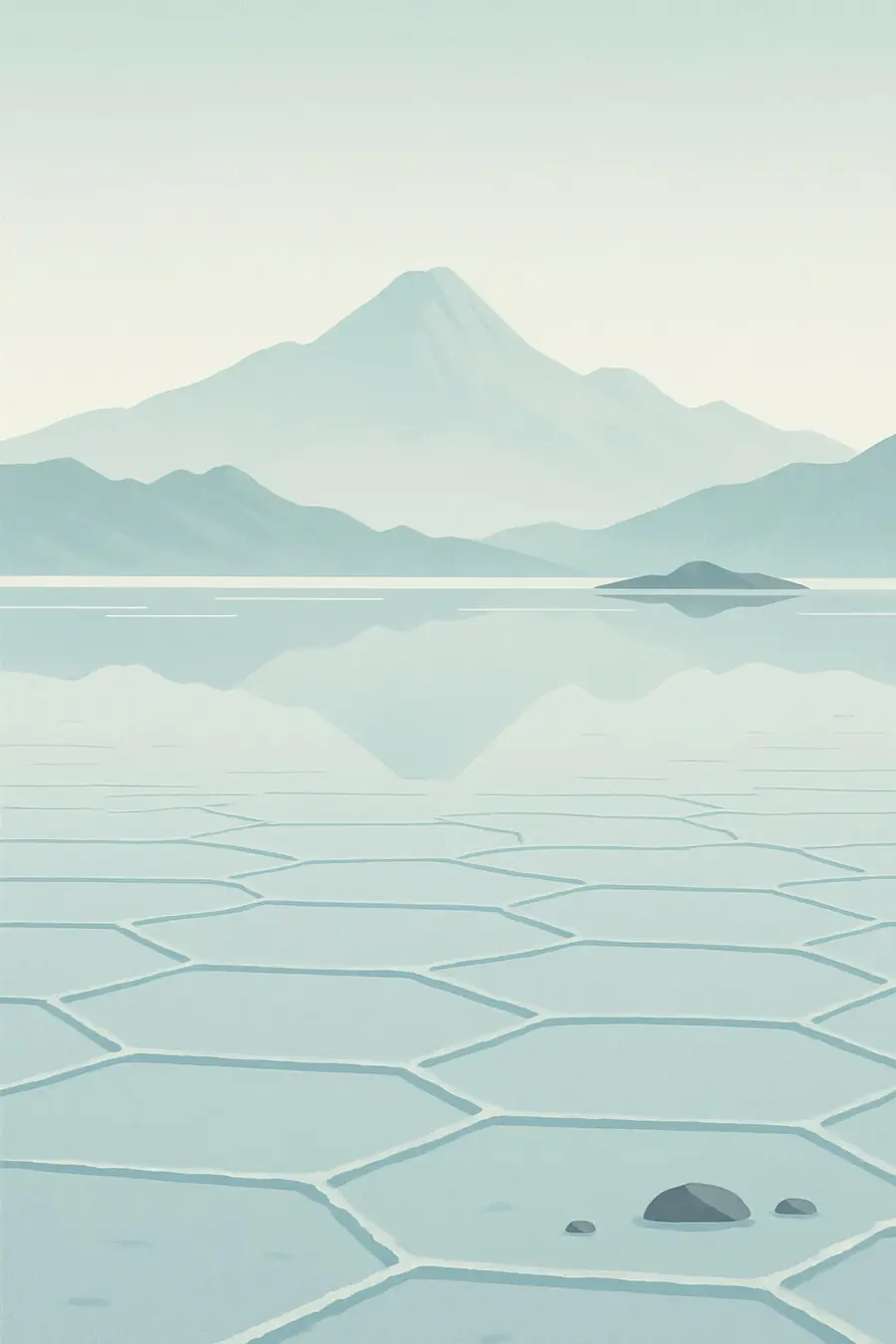
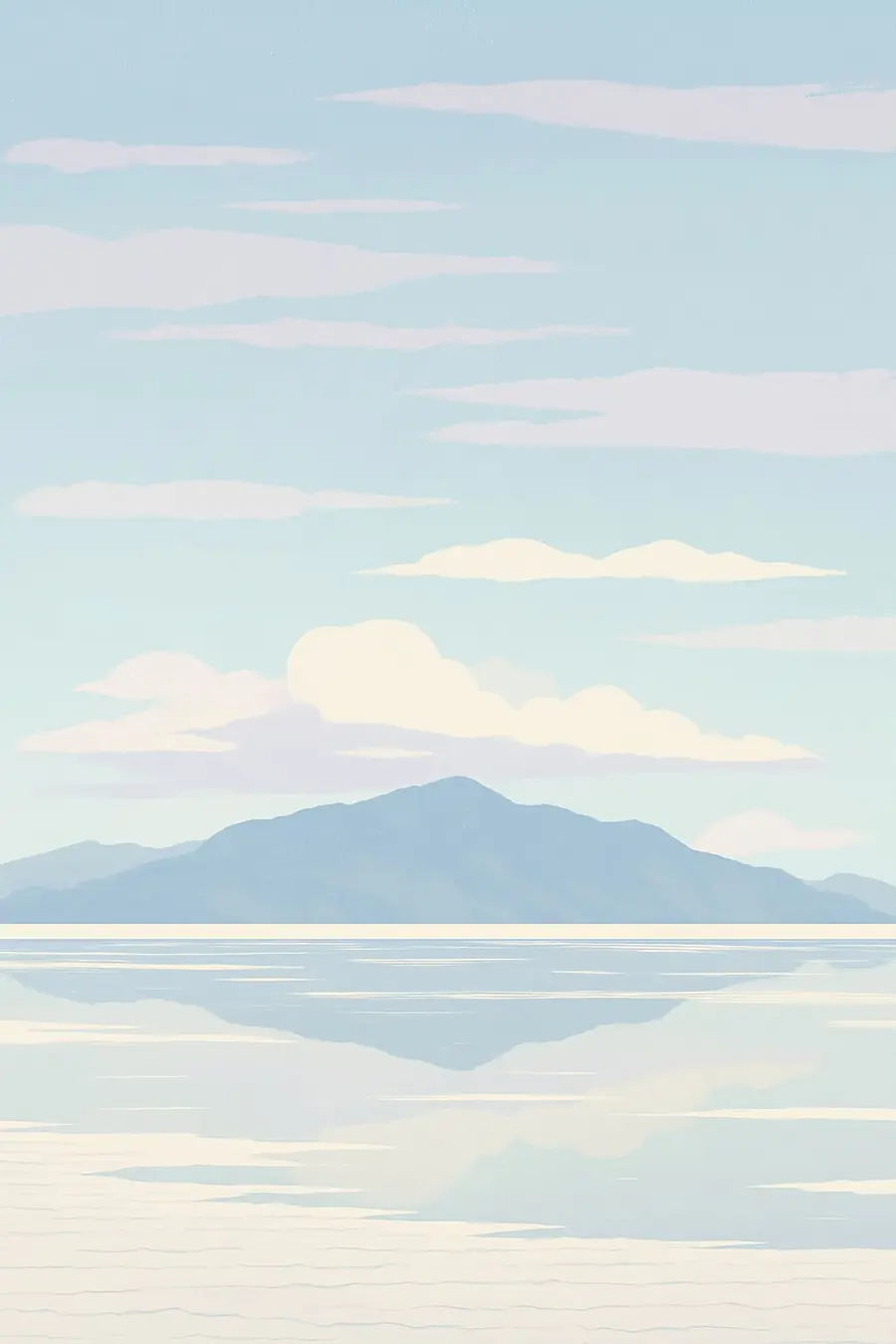
The salt flat lies at about 3,650 metres above sea level. It is almost perfectly flat, a white crust of salt patterned in hexagons stretching to the horizon. In the rainy season, from about December to March, a thin layer of water turns it into a vast mirror reflecting the sky. Islands of rock covered in giant cacti, such as Incahuasi, rise from the salt. Volcanoes, among them Tunupa, frame the edges. Days are bright and the sun is strong, nights can be very cold. In the dry season, the only sounds are wind and the crunch of salt underfoot.
History
The salar is the remains of large prehistoric lakes that covered much of the southern Altiplano and dried as the climate changed, leaving salt and a brine rich in lithium, potassium and boron. People of the region, ancestors of today's Aymara and Quechua, harvested salt and traded it with llama caravans for thousands of years. Colonial and modern mining in Potosí shaped its economy. Tourism grew from the 1990s. In 2008 Bolivia's government launched a state-run lithium programme, later led by the company YLB, which opened a lithium carbonate plant at the salar in 2023.
Why it matters for the living world
The salt flat is mostly lifeless on the surface, but its edges and nearby lagoons, such as those of the Lípez region, host flamingos, which breed in the salar in the rainy season. Giant cardón cacti grow on the islands, some very old. Vizcachas, Andean foxes and vicuñas live on the surrounding slopes. The salar also matters for science and satellites: its flatness and brightness make it useful for calibrating instruments that measure the earth. Under the surface lies a vast brine. The water around the salar is scarce and largely fossil, recharged very slowly, so taking freshwater for industry can affect springs, wetlands and grazing.
People of the place
Quechua and Aymara communities live around the salar, in villages such as Colchani, Colcha K and Tahua. They grow quinoa, herd llamas, harvest salt by hand and increasingly earn income from tourism, running hostels, jeep tours and hotels built of salt blocks. The Nor Lípez Native Community Land is a recognised Indigenous territory near planned lithium operations. Local groups say they were not consulted before Bolivia signed lithium contracts with foreign companies in 2024, and a provincial association representing 53 Indigenous communities has demanded the contracts be cancelled. Many residents want any lithium industry to respect water, consultation and local benefit.
What it faces
Lithium extraction is the main concern. In 2024 YLB signed deals with Russia's Uranium One and China's CBC, a subsidiary of CATL, for direct lithium extraction plants, which researchers warn may need more freshwater than traditional methods. No public hydrological study or full environmental impact assessment had been completed by 2025, and the contracts still awaited final approval by the national legislature. Communities already face water shortages, and rainfall in the pre-rainy season has declined over four decades. Tourism brings traffic, waste and pressure on water. Communities are calling for prior consultation under ILO Convention 169, have written to the UN and are preparing legal action.
Sources
- Bolivian communities push back against foreign-backed lithium projects (Mongabay, 2025)
- Surviving the white gold rush: life in South America's lithium triangle (Al Jazeera, 2024)
- Bolivia: communities already experiencing water shortages share concerns about Chinese and Russian lithium projects (Business & Human Rights Resource Centre)
Written for Regenerative Voices from the sources above. Spotted something wrong? Tell us.