
The place
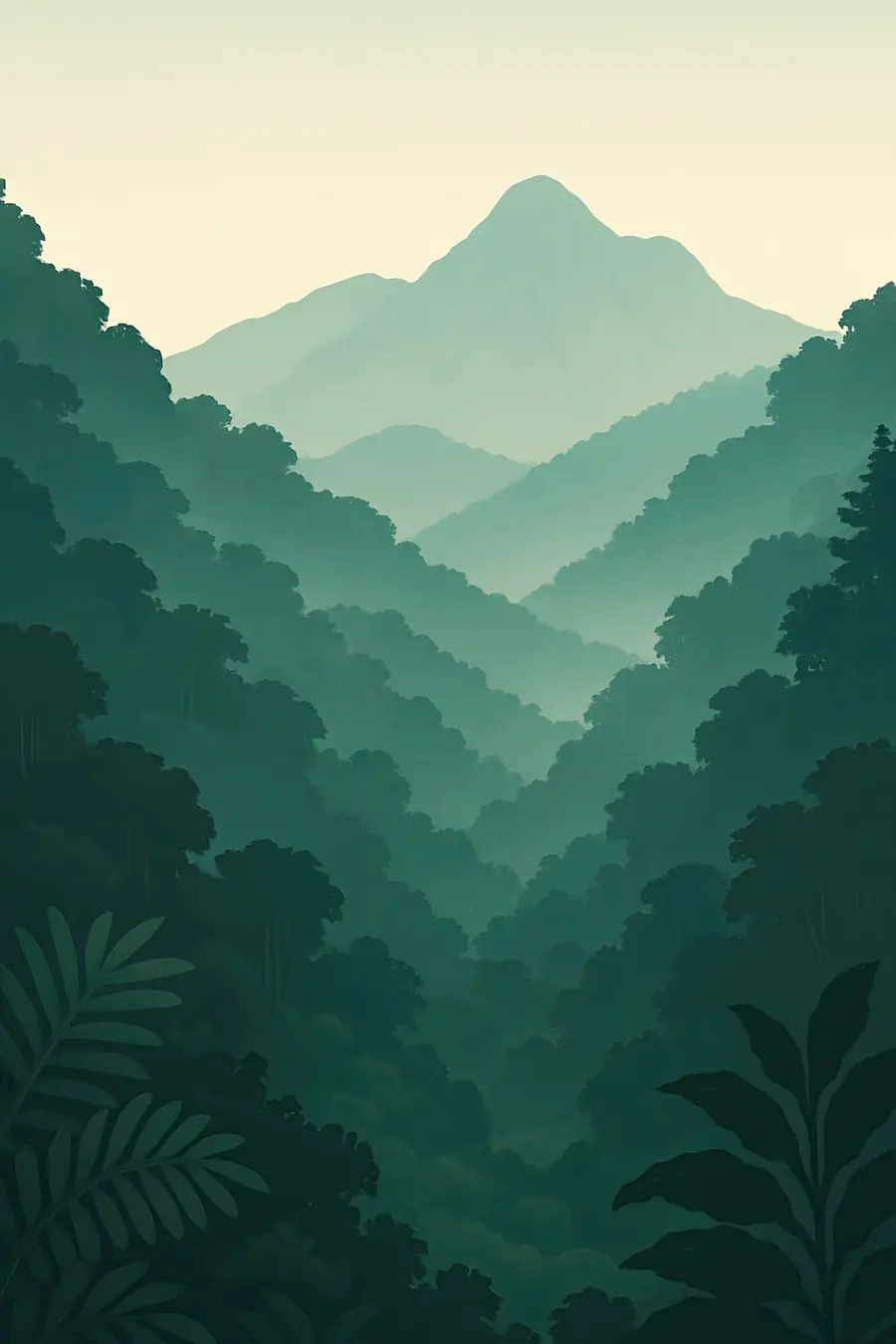
The Serra do Mar rises sharply from the Atlantic coast to a plateau around 800 to 1,000 metres high, with granite peaks and domes above. Moist winds from the ocean are forced up the slopes and drop heavy rain, so the escarpment is covered in dense, misty rainforest, with waterfalls and fast rivers running to the sea. Below lie mangroves, sandy plains, islands and estuaries such as the Iguape–Cananéia–Paranaguá complex. The forest is green year-round, with tree ferns, palms, bromeliads and orchids. Mornings fill with the calls of birds and the howl of brown howler monkeys, and frogs call through wet nights.
History
The range is built of ancient crystalline rocks of the South American platform; its escarpment took shape as the Atlantic opened and the edge of the continent rose and eroded. Indigenous peoples, including the Tupi and Guarani, lived along the coast and in the forest for thousands of years. Portuguese colonisers arrived in the sixteenth century, and paths over the Serra, such as the one between São Vicente and São Paulo, became trade routes. Gold, coffee and later railways and roads crossed the escarpment. The industrial city of Cubatão at its foot became notorious for pollution in the 1980s. São Paulo created Serra do Mar State Park in 1977.
Why it matters for the living world
The Atlantic Forest is one of the world's biodiversity hotspots, with a very high share of species found nowhere else. UNESCO notes that in the South-East Reserves about 70 percent of tree species and 85 percent of primates are endemic, and records 120 mammal and 350 bird species. Jaguars, pumas, the endangered southern muriqui, the largest monkey in the Americas, bush dogs and the blue-cheeked Amazon live here. The forest protects the water supply of millions of people in São Paulo and Rio de Janeiro and holds the steep slopes together, reducing landslides. Most of the original Atlantic Forest has been cleared, and much of what remains lies on these steep slopes.
People of the place
Guarani Mbya communities live in villages in and around the Serra do Mar, and some have won recognition of their land while others are still waiting. Caiçaras, coastal people of mixed Indigenous, Portuguese and African descent, fish and farm along the shore. Quilombola communities, descendants of people who escaped slavery, live in the Vale do Ribeira and other areas, where many fight for land titles. Millions of people in the São Paulo and Rio de Janeiro metropolitan areas depend on the forest for water. Traditional communities have often clashed with strict park rules, and new approaches are bringing them into management and tourism.
What it faces
Fragmentation by roads, power lines and urban growth is the main threat, along with strong real estate pressure on the coast. Illegal palm-heart harvesting and hunting continue inside protected areas. Climate change brings more extreme rains, which trigger deadly landslides, as in São Sebastião in 2023. Port, oil and gas development around Santos and the São Paulo coast adds pollution and traffic. Responses include large state parks and the UNESCO site, reforestation and restoration programmes under the Atlantic Forest Restoration Pact, payments for water services, and growing partnerships with Guarani, caiçara and quilombola communities in managing land.
Sources
- Atlantic Forest South-East Reserves (UNESCO World Heritage Centre)
- Serra do Mar (Wikipedia)
- Serra do Mar State Park (International Parks)
Written for Regenerative Voices from the sources above. Spotted something wrong? Tell us.