
The place
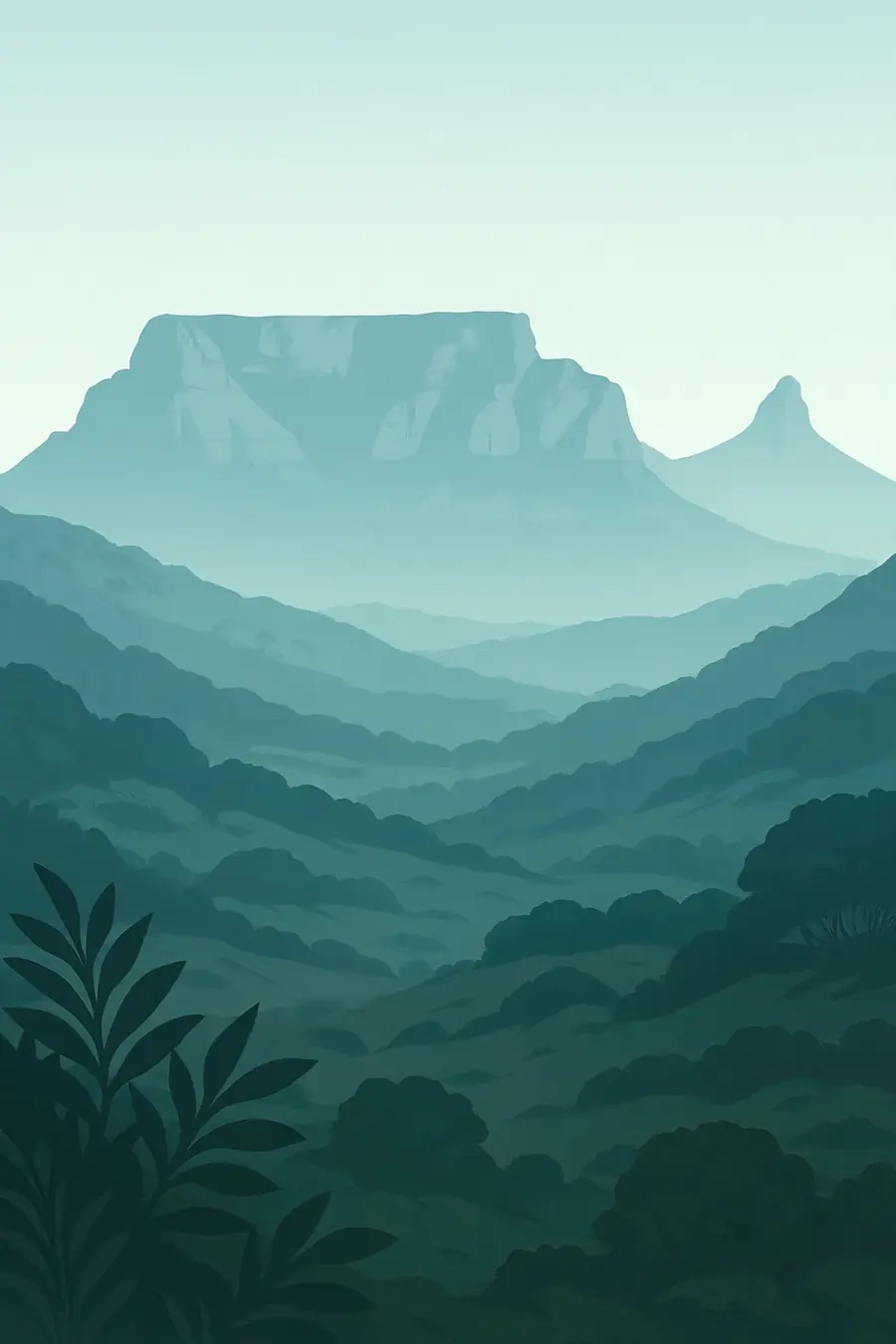
The mountain rises steeply from the city to a long, level top at just over 1,000 metres, flanked by Devil's Peak and Lion's Head. Its grey sandstone cliffs sit on older granite and shale, and the peninsula continues south as a chain of hills, valleys and beaches between two oceans. In summer the south-easterly wind pours cloud over the top in a white sheet that locals call the tablecloth. Winters are cool and wet. The slopes are covered with fynbos, a fine-leaved shrubland of proteas, heaths and reeds. You hear wind, sunbirds, the bark of baboons on the lower slopes and the city below.
History
The sandstone was laid down as sand on the bed of a shallow sea some 450 million years ago. For thousands of years hunter-gatherers and, later, Khoekhoe herders used the peninsula; the Khoekhoe name Hoerikwaggo is often translated as mountain in the sea. In 1652 the Dutch East India Company set up a station at the foot of the mountain, and over the following decades the Khoekhoe were pushed off their grazing land through wars and disease. Enslaved people from Asia and Africa were brought to the Cape, and some who escaped hid in the mountain's ravines. Under apartheid, communities were removed from places like District Six below the mountain. The park was created in 1998.
Why it matters for the living world
The Cape Peninsula lies within the Cape Floral Region, the smallest and richest of the world's six floral kingdoms. The peninsula alone holds more plant species than many entire countries, and many are found nowhere else. Fynbos depends on fire to renew itself, and many plants release seeds only after burning. The park protects endangered species such as the Table Mountain ghost frog, which lives in a few streams on the mountain. African penguins breed at Boulders Beach, and the coastal waters are part of a marine protected area. The mountain's catchments also provide some of Cape Town's water.
People of the place
Cape Town has grown around the mountain, and millions of people see it every day. Khoi and San descendants, along with many Capetonians of mixed heritage, have revived interest in Khoekhoe names, histories and plant knowledge connected to the mountain. People walk, run and climb on it, collect medicinal plants, and hold religious practice in its ravines; the kramats, shrines of Muslim holy men, ring the city. Volunteers clear invasive plants and fight fires. Access is unequal: many people from the townships on the Cape Flats rarely visit, and the park works with schools and communities to change this.
What it faces
Fire is part of fynbos, but fires that are too frequent or too intense, often near homes, are a growing risk; in April 2021 a fire spread from the mountain to the University of Cape Town and destroyed part of its library. Invasive trees such as pines and Australian acacias crowd out fynbos and use more water. The city presses in on all sides, and crime on some trails affects visitors. Climate change, including the severe drought that brought Cape Town close to running out of water in 2018, threatens species with tiny ranges. SANParks, the city and volunteers run invasive clearing, fire management and restoration programmes.
Sources
- Table Mountain National Park: natural and cultural history (SANParks)
- Table Mountain National Park (Wikipedia)
- Table Mountain National Park history (SANParks)
Written for Regenerative Voices from the sources above. Spotted something wrong? Tell us.