
The place
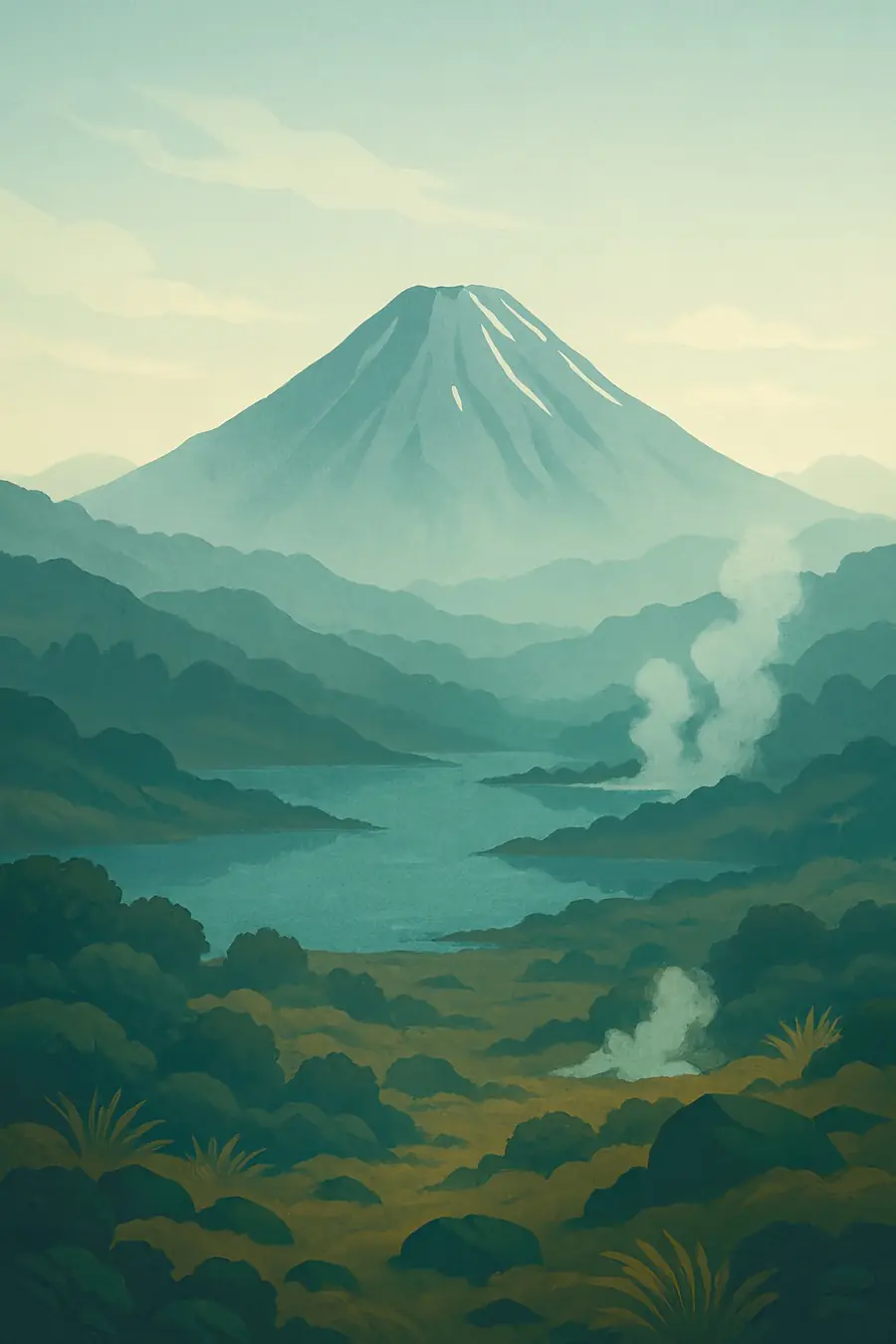
The park sits at the southern end of the Taupō Volcanic Zone, where the Pacific plate dives beneath the North Island. Ruapehu, the highest mountain in the North Island, carries small glaciers and a hot crater lake on its summit. Ngāuruhoe is a young, steep cone, and Tongariro is a complex of craters, vents and colourful lakes such as the Emerald Lakes. Around them lie lava fields, ash deserts, tussock and beech forest. Steam rises from vents, and the air can smell of sulphur. Weather on the mountains is harsh and changeable, with snow in winter and strong winds year-round.
History
In Māori tradition, the high priest Ngātoroirangi, arriving on the Arawa canoe, climbed Tongariro and called on his sisters in Hawaiki to send fire, which travelled underground and burst out in the volcanoes. The mountains are tūpuna, ancestors, of Ngāti Tūwharetoa and other iwi. In 1887, the paramount chief Horonuku Te Heuheu Tūkino IV made a tuku, a customary gift, of the peaks to the Crown, intending a partnership to protect them. The park was established in 1894, the first in New Zealand, and it grew far beyond the original gift, under Crown control. On Christmas Eve 1953, a lahar from Ruapehu caused the Tangiwai rail disaster, killing 151 people.
Why it matters for the living world
The park holds a sequence of habitats from beech and podocarp forest through shrublands and tussock to bare volcanic ground near the summits. Many plants are specially adapted to the young, unstable soils and harsh climate. Native birds include whio, the blue duck of fast rivers, kiwi, kākā and fernbirds. Volcanic activity constantly resets parts of the landscape, making it a place to study how life colonises new ground. The mountains also feed major rivers, including the Whanganui and tributaries of the Waikato, and their water is used for hydropower in the Tongariro Power Scheme.
People of the place
Ngāti Tūwharetoa, Ngāti Rangi, Ngāti Hikairo and other iwi hold ancestral relationships with the mountains, which they see as living ancestors. In 1993 the park became the first place listed as a World Heritage cultural landscape on the basis of Māori spiritual and cultural values. Iwi have sought a stronger role in managing the park, and settlement negotiations with the Crown address how the 1887 gift was treated. The park draws large numbers of visitors for skiing on Ruapehu and walking the Tongariro Alpine Crossing, and nearby towns such as National Park, Ohakune and Tūrangi depend on tourism.
What it faces
Volcanic eruptions and lahars are a constant natural hazard, monitored closely by scientists. Introduced heather, planted in 1912 to provide habitat for game birds, has spread widely and displaces native plants. Wilding pines, deer and predators such as stoats and rats are also pressures. Heavy visitor numbers on the Tongariro Alpine Crossing cause crowding, erosion and human waste problems, and booking or permit systems have been introduced for parking and guiding. Ski fields face uncertainty with warmer winters and financial difficulties. Climate change is shrinking Ruapehu's glaciers. Iwi and the Department of Conservation work together on restoration and visitor management.
Sources
- History and culture – Tongariro National Park, Department of Conservation
- Tongariro National Park – UNESCO World Heritage Centre document
- Tongariro National Park datasheet
Written for Regenerative Voices from the sources above. Spotted something wrong? Tell us.