
The place
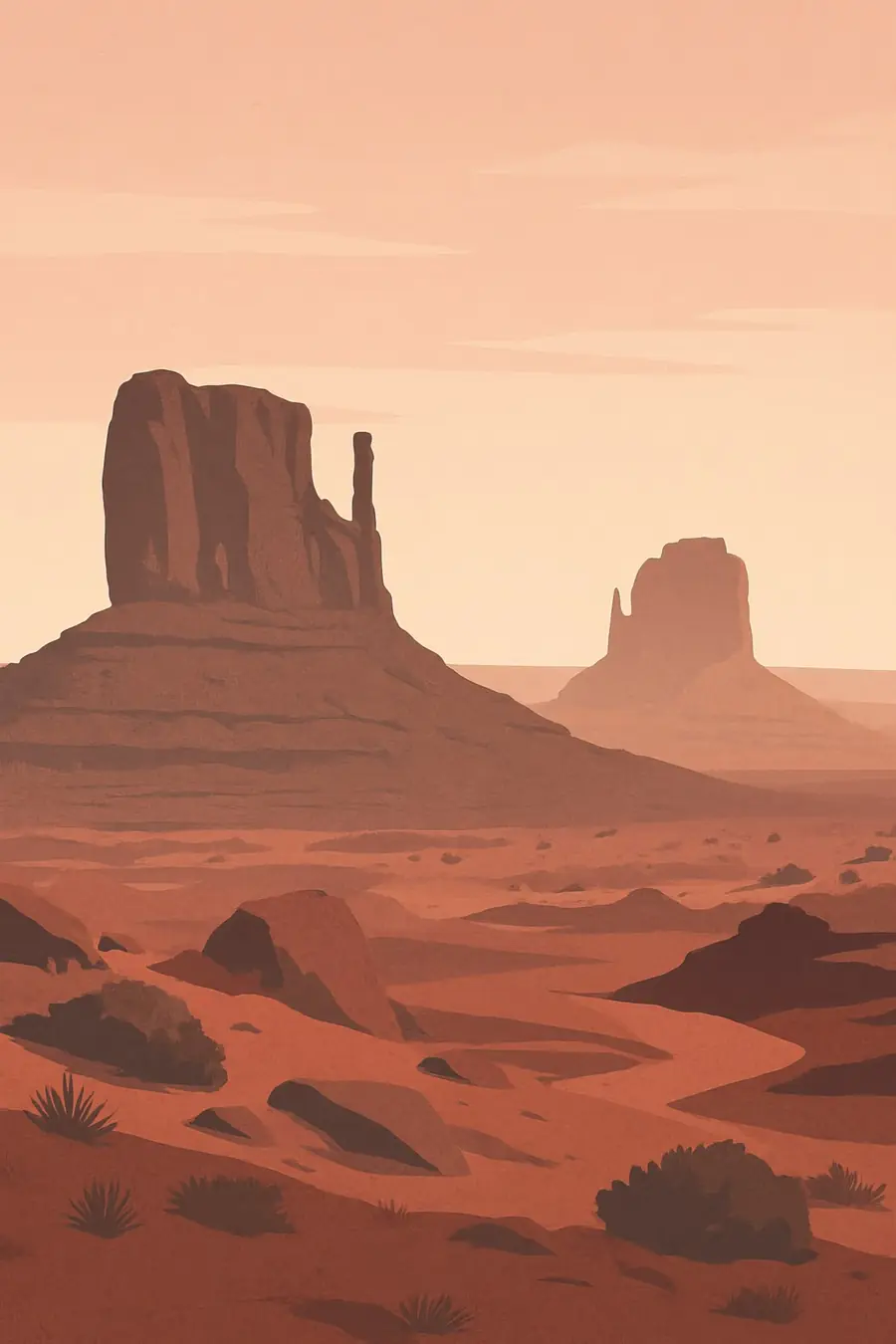
Great red buttes and spires stand above a wide sandy plain at about 1,600 metres. They are remnants of a plateau worn away over millions of years, made of red de Chelly Sandstone sitting on softer slopes of Organ Rock Shale, some capped with harder rock that slows their erosion. The famous Mitten Buttes and Merrick Butte rise several hundred metres from the valley floor. Between them lie sand dunes, sagebrush, junipers and dry washes. Iron oxide gives the rock and sand their deep red colour. The climate is arid, with hot summers, cold winters, occasional snow and sudden summer storms. You hear wind, ravens, and sometimes sheep bells and dogs from family homesteads.
History
Ancestral Puebloan people lived in the valley area before around 1300, leaving ruins and rock art. The Diné, or Navajo, have lived here for centuries. In the 1860s the United States waged war on the Navajo and forced thousands on the Long Walk to Bosque Redondo in New Mexico. Some families hid in the canyons and mesas near Monument Valley and Navajo Mountain and were never captured. The Navajo returned to part of their homeland after the treaty of 1868. In the 1920s a trading post was opened at the valley, and from the late 1930s Hollywood westerns made the buttes famous. In 1958 the Navajo Nation created Monument Valley as its first tribal park.
Why it matters for the living world
Monument Valley is part of the Colorado Plateau's high desert, with plants adapted to drought and wide temperature swings, such as sagebrush, rabbitbrush, juniper and yucca. Lizards, snakes, coyotes, foxes and many birds live here, including ravens and raptors that nest on the buttes. Biological soil crusts of mosses, lichens and bacteria hold the sand in place and are easily damaged by vehicles and feet. The landscape is also a clear record of erosion, showing how wind and water slowly break down sandstone plateaus into buttes and spires. Springs and seeps are rare and valuable sources of water for both wildlife and people.
People of the place
For the Diné, the valley is Tsé Biiʼ Ndzisgaii, often translated as "valley of the rocks" or "clearing among the rocks", and the buttes have places in their stories and ceremonies. Navajo families still live inside the park, herding sheep and goats, weaving and making jewellery, often in homes without piped water or mains electricity. The tribal park is run by the Navajo Nation, and visitors need a permit. Navajo guides lead tours into areas closed to independent travel. Tourism brings jobs and income, but residents also have to live with heavy traffic and crowds. Many families also carry the legacy of uranium mining in the region, which harmed miners' health and contaminated land and water.
What it faces
From the 1940s to the 1960s uranium was mined in and around Monument Valley, and abandoned mines and waste piles across the Navajo Nation still contaminate land and water. Clean-up has been slow, though federal agencies have worked on some sites. Long-term drought is reducing water for families and livestock, and many residents still have to haul water. Overgrazing and off-road driving damage fragile soils. Large numbers of visitors create pressure on roads and on the people who live in the park. The Navajo Nation manages access through the tribal park, guided tours and visitor rules, and works with federal agencies on mine clean-up and water supply.
Sources
- History - Monument Valley Navajo Tribal Park
- Monument Valley, Arizona, Processing Site fact sheet (U.S. Department of Energy, Office of Legacy Management)
- The Uranium-Vanadium Production History of the Monument No. 2 Site, Monument Valley (University of Arizona Repository)
- Shadows of the Shinarump? (SummitPost)
Written for Regenerative Voices from the sources above. Spotted something wrong? Tell us.