
The place
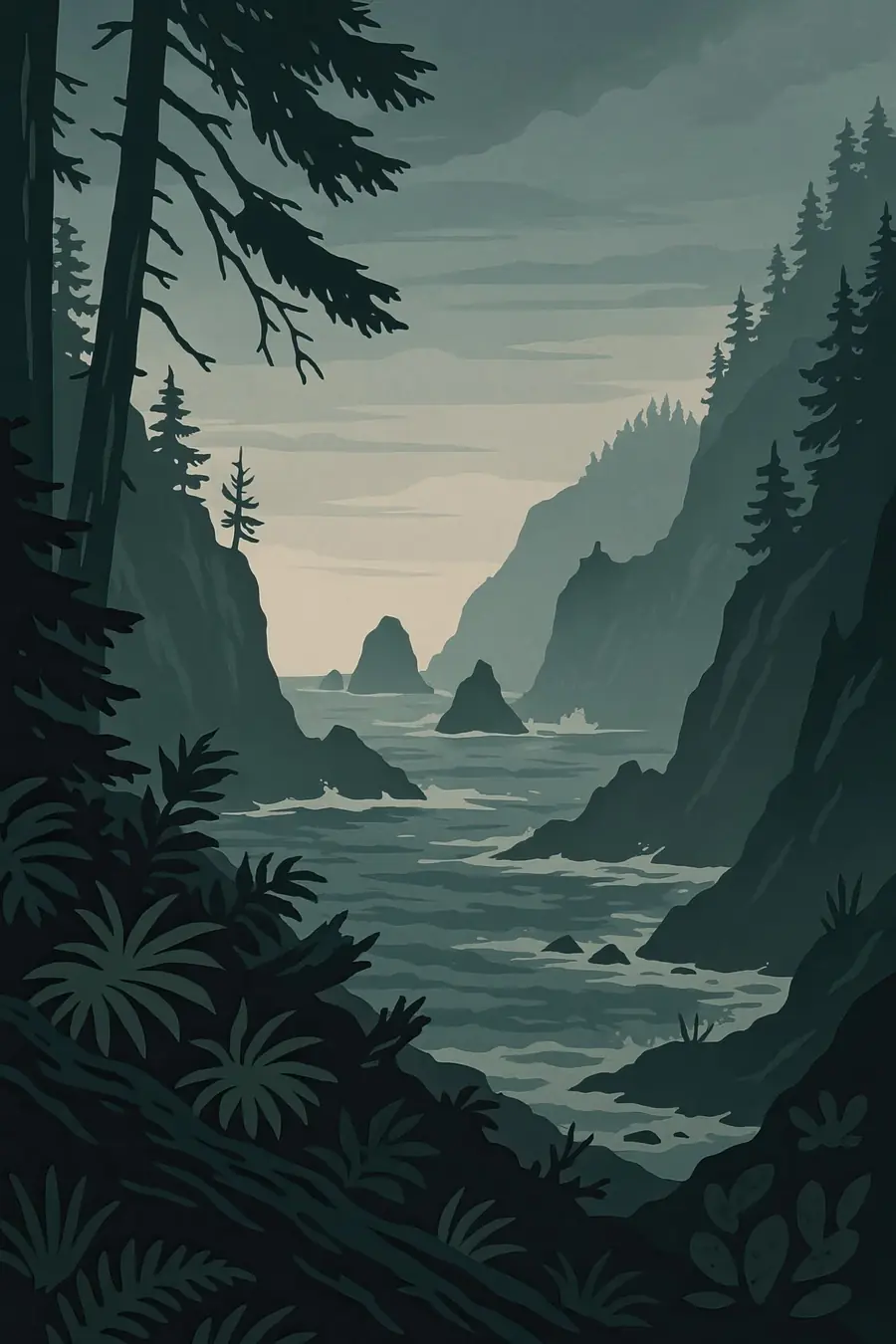
The Olympic Mountains rise in a tight dome from the peninsula, pushed up from sea-floor rock as the ocean plate dives under North America. Mount Olympus, the highest peak, carries glaciers on its slopes. Moist air from the Pacific drops heavy rain on the western valleys, where the Hoh and Quinault rainforests grow huge Sitka spruce, western hemlock and red cedar draped in moss. The eastern side lies in a rain shadow and is much drier. Along the coast, sea stacks, tide pools and driftwood-piled beaches face the surf. Winters are wet and mild at sea level, snowy in the mountains. You hear rain dripping, rivers, elk calling and waves.
History
People have lived on the Olympic Peninsula for thousands of years. Coastal and river peoples fished for salmon, hunted whales and seals, gathered shellfish and plants and built cedar plank houses and canoes. The Treaty of Point No Point and the Treaty of Neah Bay in 1855 and the Treaty of Olympia in 1856 ceded much of their land while reserving fishing rights. Logging cleared vast forests around the peninsula. President Theodore Roosevelt created Mount Olympus National Monument in 1909, partly to protect elk, and it became a national park in 1938. Two dams built on the Elwha River in the early twentieth century blocked salmon for nearly a century until they were removed between 2011 and 2014.
Why it matters for the living world
Olympic protects one of the largest areas of old-growth temperate rainforest left in the lower United States, along with alpine meadows and a long undeveloped coastline. Because the peninsula was cut off by ice and water during past ice ages, it holds species found nowhere else, such as the Olympic marmot. It has the largest unmanaged population of Roosevelt elk. Fishers, a forest weasel, were brought back after being trapped out. Since the Elwha dams came down, salmon have returned to upper reaches of the river and the river's sediment is rebuilding its estuary and beaches. Its forests store very large amounts of carbon in living trees and fallen logs.
People of the place
Eight tribes have long ties to the lands now in the park: the Lower Elwha Klallam, Jamestown S'Klallam, Port Gamble S'Klallam, Makah, Quileute, Hoh, Quinault and Skokomish. Several have reservations on the coast or at river mouths bordering the park. Their treaty fishing rights were affirmed in the Boldt decision of 1974, and tribes co-manage fisheries in the region. The Lower Elwha Klallam Tribe campaigned for decades to remove the Elwha dams, and when the reservoirs drained, a sacred creation site of the Klallam people came back into view. Logging towns such as Forks and Port Angeles now also depend on tourism, fishing and park work.
What it faces
Glaciers in the Olympics are shrinking fast and snowpack is declining, which reduces summer river flows and warms water for salmon. Winter storms and heavy rain have washed out park roads, including the road up the Elwha valley. Non-native mountain goats damaged alpine plants until most were relocated or removed between 2018 and 2020. Introduced species such as barred owls compete with endangered northern spotted owls. Military aircraft training flights over the peninsula bring noise to the wilderness. Logging around the park's edges fragments habitat. The park and tribes are restoring the Elwha, monitoring glaciers and wildlife, and working on a climate adaptation plan.
Sources
- Vanishing Elwha Reservoirs Reveal Long-Buried Sites (NPS)
- Elwha Ecosystem Restoration (NPS, archived)
- World Heritage Centre news on Olympic National Park (UNESCO)
- Sacred tribal land exposed (The Spokesman-Review)
Written for Regenerative Voices from the sources above. Spotted something wrong? Tell us.