
The place
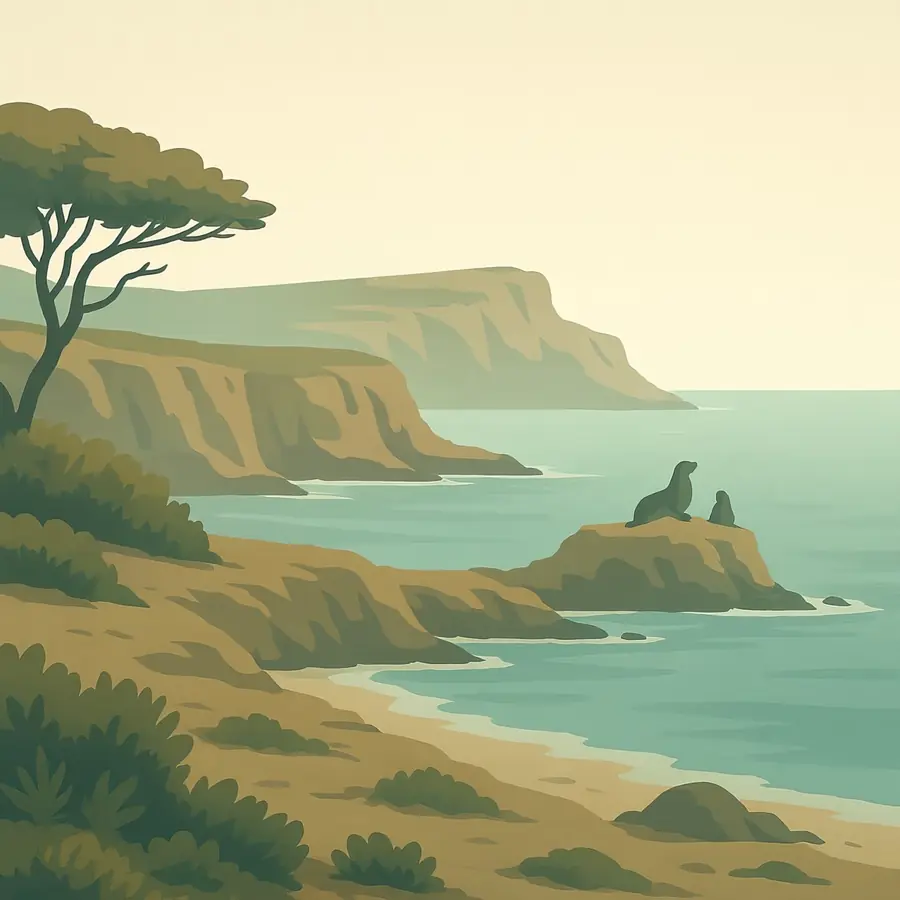
The peninsula is a dry plateau of Patagonian steppe, with low shrubs and grasses, edged by cliffs, gravel beaches and tidal flats. Two sheltered gulfs, Golfo San José and Golfo Nuevo, lie on either side of the isthmus. Inland are salt flats, among them the Salina Grande, which sits below sea level. The climate is dry and windy, with cold winters and warm summers. Along the shore you hear the bellowing of elephant seals, the barking of sea lions and, in winter and spring, the blowing of whales in the gulfs. Puerto Pirámides is the only village on the peninsula.
History
The peninsula is built of marine sediments rich in fossils, laid down when the sea covered much of Patagonia. Tehuelche peoples lived along this coast and hunted on the steppe for thousands of years, leaving shell middens and burials. Spanish colonisers built a short-lived fort on the isthmus in 1779 and later extracted salt from the salinas. In the late nineteenth century, after Indigenous people were driven out, the land was divided into large sheep estancias, which still own much of the peninsula. Welsh settlers arrived at nearby Puerto Madryn in 1865. Chubut Province began protecting the area's wildlife in the twentieth century, and UNESCO listed it as a World Heritage Site in 1999.
Why it matters for the living world
The sheltered gulfs are one of the most important calving grounds in the world for the southern right whale, which arrives from about May to December. Southern elephant seals breed on the beaches, the only continental breeding colony of the species, along with South American sea lions and Magellanic penguins. Orcas at Punta Norte hunt sea lion pups by deliberately stranding themselves on the beach, a rare behaviour. IUCN's 2025 assessment notes that the whale population is still growing, though more slowly, and that a 2023 bird flu outbreak killed about 17,000 elephant seals, mostly pups. The steppe holds guanacos, maras and lesser rheas.
People of the place
Much of the peninsula is private land divided into sheep estancias, some of which now combine ranching with wildlife tourism. Puerto Pirámides has a few hundred residents who live mostly from whale-watching boats, diving and hospitality, and the nearby city of Puerto Madryn is the main base for visitors. Tehuelche and Mapuche communities in Chubut maintain links to the coast and its archaeological sites. Scientists from Argentina's research council CONICET and international groups have studied the whales and seals here for decades, and many local guides work closely with researchers. A management plan brings together provincial authorities, landowners and tourism operators.
What it faces
Avian influenza is a new and serious threat, after the 2023 outbreak that killed most elephant seal pups born that year. Kelp gulls, fed by fishing waste and rubbish, peck at the backs of right whales, causing wounds, and unusually high whale deaths have continued in some years. Tourism pressure, unauthorised settlements, marine traffic, and plastic and fishing waste affect coasts and waters. Offshore oil exploration in the Argentine Sea also raises concern. Weak enforcement on private land limits the management plan. Responses include whale-watching rules, gull control, research on the whales, and monitoring of seal and sea lion colonies.
Sources
- Península Valdés (IUCN World Heritage Outlook)
- Península Valdés (UNESCO World Heritage Centre)
- Península Valdés (World Heritage Site)
Written for Regenerative Voices from the sources above. Spotted something wrong? Tell us.