
The place
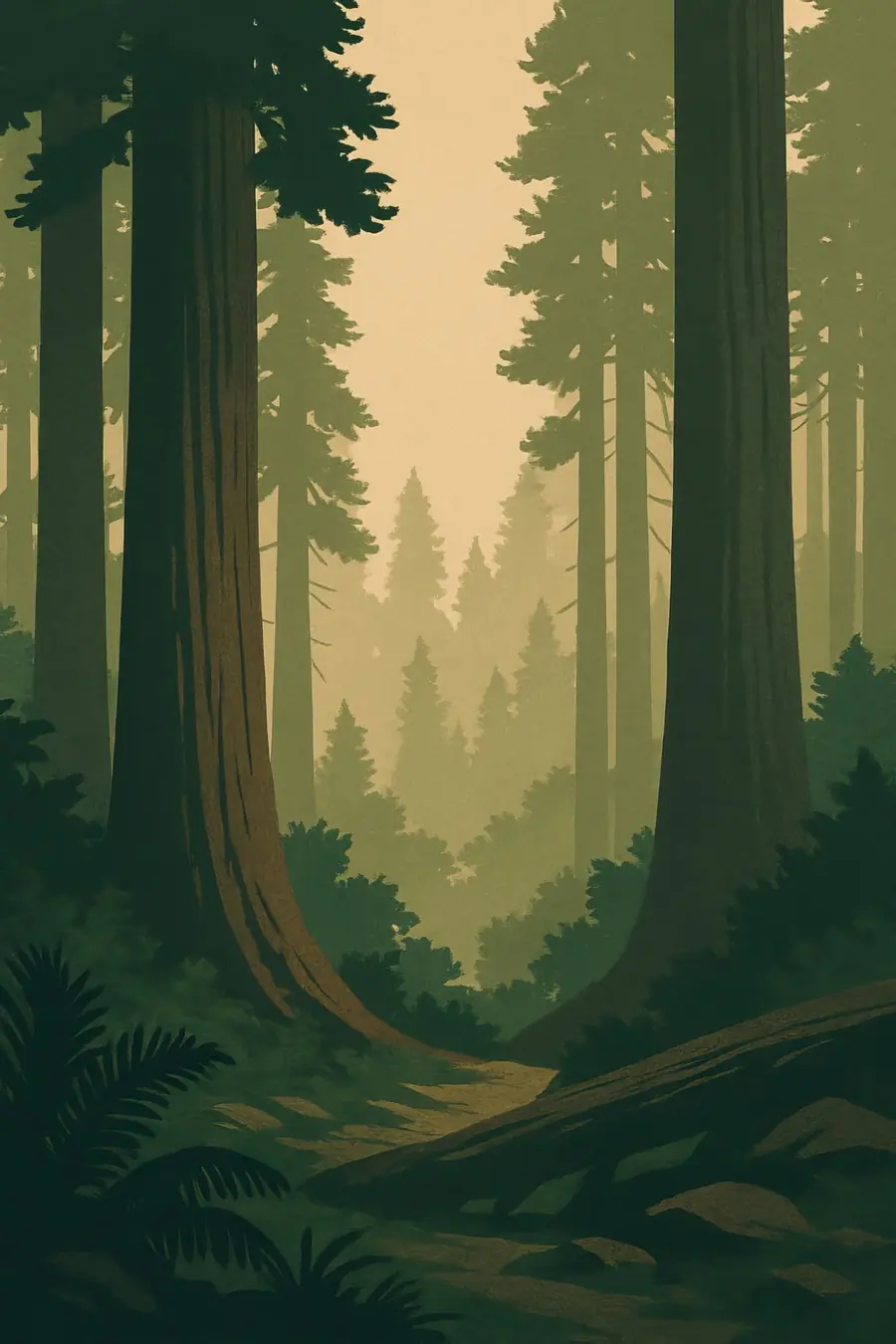
Coast redwoods, the tallest trees on Earth, grow here in groves where trunks rise more than 100 metres into the fog. The forest floor is soft with needles, ferns and sorrel, and fallen giants rot slowly into nurse logs. Fog rolls in from the Pacific most summer days, dripping moisture onto the trees and keeping them cool. Winters bring heavy rain. Rivers such as the Klamath, Smith and Redwood Creek cut through the forest to the sea. The coast is rugged, with bluffs, sea stacks and long beaches, and open prairies and oak woodland on the hills. You hear the quiet of the big trees, ravens, Roosevelt elk bugling and surf on the shore.
History
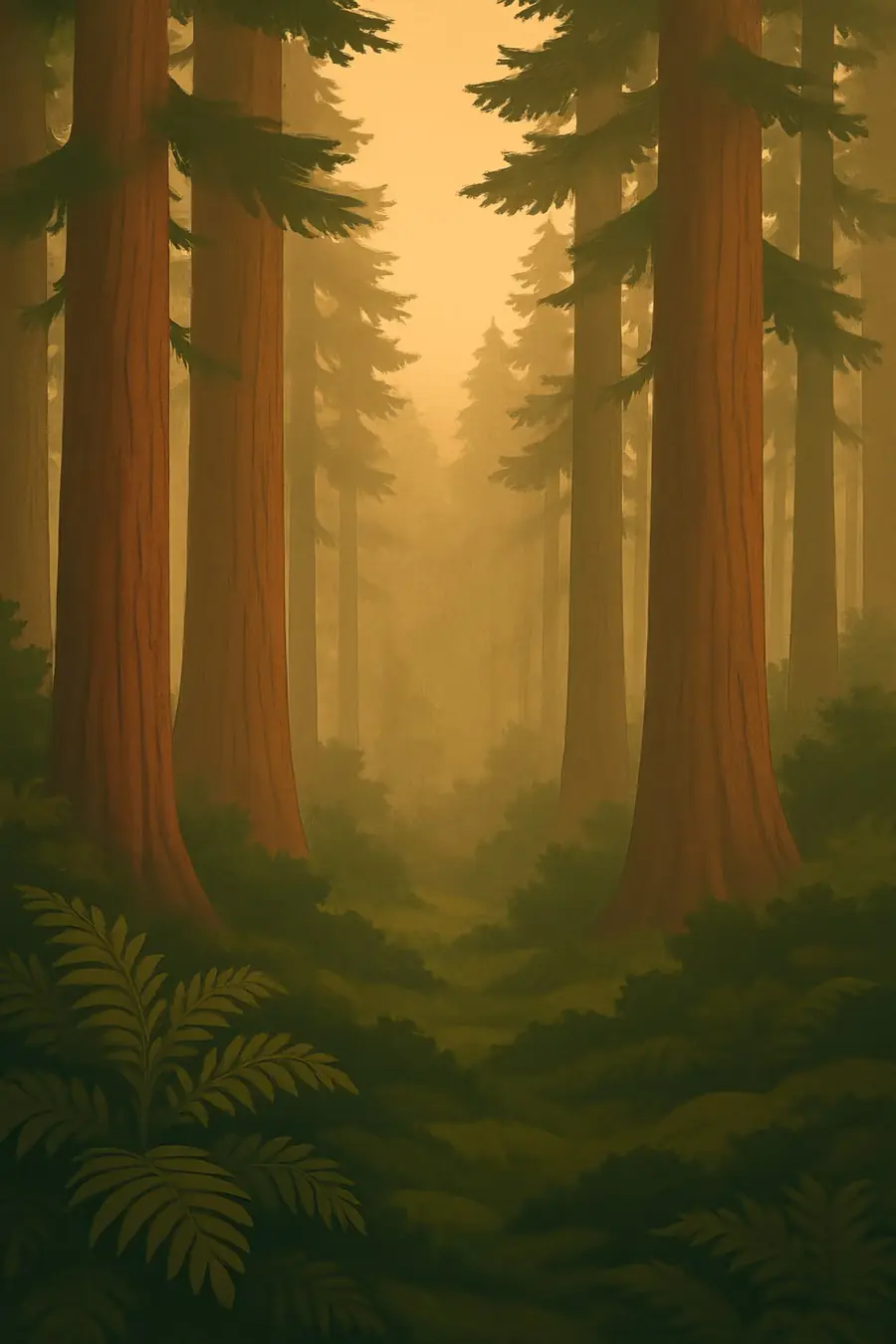
Yurok, Tolowa, Chilula and other peoples have lived among the redwoods and along these rivers and coasts for thousands of years, fishing for salmon, hunting, gathering acorns and building houses and canoes from fallen redwood. The California Gold Rush brought miners and settlers in the 1850s. Indigenous people were killed in massacres, driven from their villages and stripped of most of their land. Loggers then began cutting the old-growth forests, and by the late twentieth century about 95 percent of California's original redwood forest had been logged. Save the Redwoods League, founded in 1918, bought land for state parks. Redwood National Park was created in 1968 and expanded in 1978.
Why it matters for the living world
The parks hold a large share of the old-growth coast redwood forest that remains, including the tallest known trees in the world. Old-growth redwoods store more carbon per hectare than almost any other forest. They shelter the endangered marbled murrelet, a seabird that nests on high mossy branches, and northern spotted owls. Rivers and creeks in the parks support Chinook and coho salmon and steelhead. Since 2022 California condors have been released here again, more than a century after they vanished from the region. Restoration work is helping logged forests and streams recover, by thinning crowded young trees and removing old logging roads.
People of the place
The Yurok Tribe, the largest tribe in California, lives along the lower Klamath River, and the Tolowa Dee-ni' Nation lives around the Smith River to the north. Both are closely tied to the redwoods, rivers and salmon. The Yurok have led the return of the California condor, which they call prey-go-neesh, and the recovery of Klamath River salmon, including the removal of four dams on the Klamath completed in 2024. In 2024 Save the Redwoods League and the parks announced the return of about 125 acres at 'O Rew to the Yurok Tribe, to be co-managed with the parks. Towns such as Orick, Klamath and Crescent City live from tourism, fishing and timber.
What it faces
Most of the forest in the parks was logged before protection, and its young, dense stands and old logging roads still cause erosion and silt in salmon streams. The Redwoods Rising partnership between the parks and Save the Redwoods League is working to restore these lands. Climate change may reduce the coastal fog that redwoods rely on in summer, and droughts, heat and wildfire are increasing. Visitor crowds damage roots and soils in the most famous groves. Invasive plants and diseases such as sudden oak death affect the forest. Salmon have declined sharply, and their recovery depends on healthy rivers. The parks, tribes and conservation groups are working together on restoration and co-management.
Sources
- Redwood National Park land returned to Yurok Tribe (CBS News)
- Redwoods Rising (Wikipedia)
- Northern California Tribe to Get Back 125 Acres of Ancestral Land Stolen During Gold Rush (KQED)
- California tribe that lost 90% of land during Gold Rush to get redwoods site (Fortune)
Written for Regenerative Voices from the sources above. Spotted something wrong? Tell us.