
The place
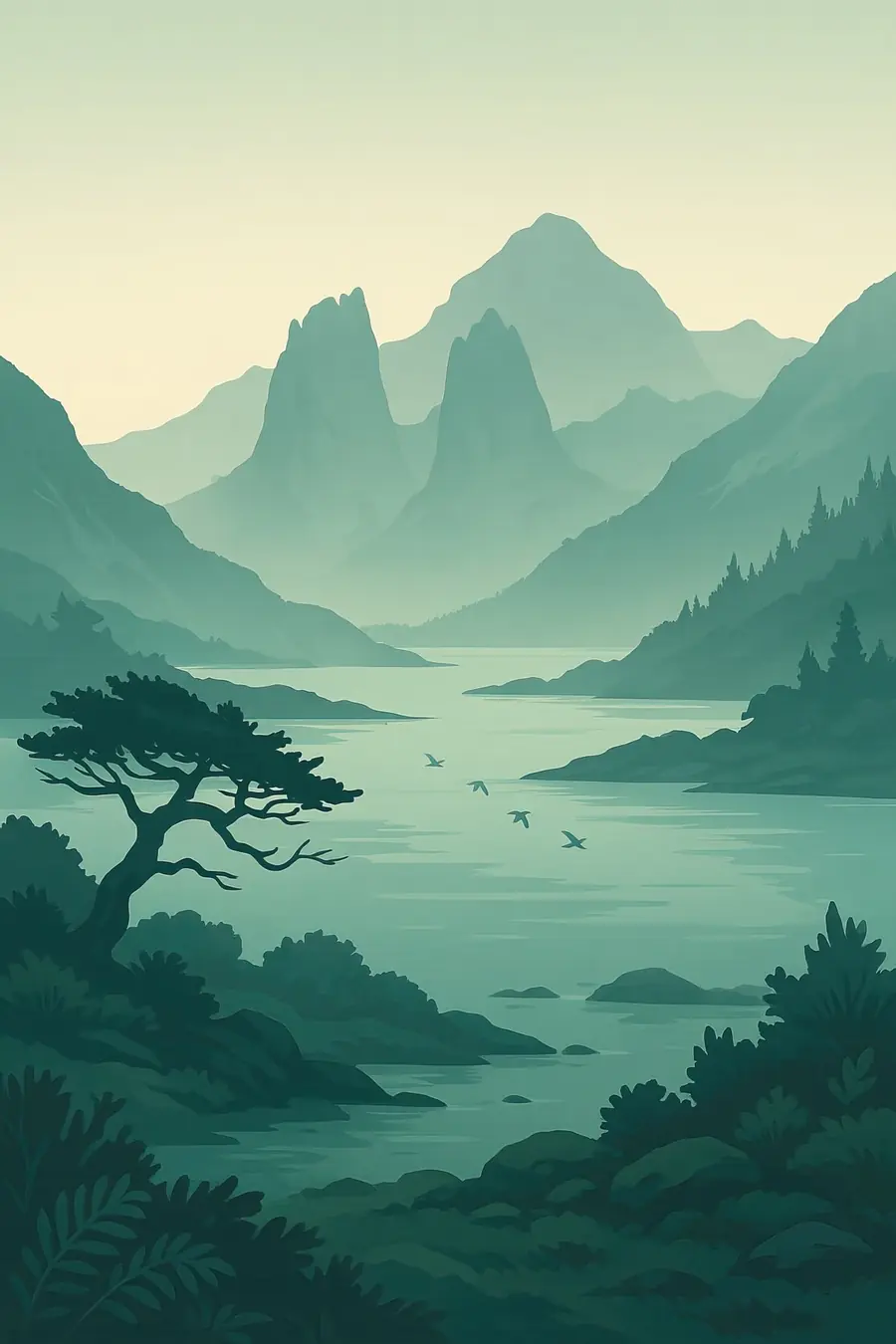
The archipelago has three landscapes. The north of Isla Grande is open steppe and rolling grassland, dry and windy. The south is mountainous, with the end of the Andes running east, glaciers in the Cordillera Darwin, and forests of lenga and ñire beech. Along the Beagle Channel, peat bogs, lakes and fjords fill the valleys. Further south, islands such as Navarino and the Cape Horn group face the Southern Ocean. The weather is cool, windy and changeable all year, with short summer nights and long winter darkness. You hear wind in the trees, seabirds, and the sound of water over beaver dams.
History
Ice-age glaciers carved the Strait of Magellan and the Beagle Channel, separating the islands from the continent. People reached Tierra del Fuego more than 10,000 years ago. The Selk'nam hunted guanaco on the main island, the Haush lived on its eastern tip, and the Yaghan and Kawésqar travelled the channels by canoe. Magellan named the land in 1520 after the fires he saw on shore. In the late nineteenth century, gold seekers and sheep estancias took over the land, and Selk'nam people were hunted, killed and deported to missions, where many died of disease. Argentina built a prison in Ushuaia, and Argentina and Chile divided the island in 1881.
Why it matters for the living world
Tierra del Fuego holds some of the southernmost forests in the world and large peatlands that store a great deal of carbon. Guanacos, culpeo foxes, Magellanic woodpeckers, Andean condors and many seabirds live here, and the channels host sea lions, dolphins and whales. The islands lack many predators and grazers found on the continent, which made them vulnerable to introduced species. In 1946 Argentina released twenty North American beavers to start a fur trade. Without predators, they spread across most streams on both sides of the border, felling beech forests and turning them into dead wetlands. Mink, muskrats and rabbits also cause damage.
People of the place
The Yaghan live mainly in Villa Ukika on Navarino Island, Chile, and are recovering their language and canoe traditions. Selk'nam descendants in Argentina and Chile, long described as extinct, are now organised and seeking legal recognition; in Argentina, the Rafaela Ishton community holds land near Tolhuin. Most residents of Tierra del Fuego today live in Ushuaia and Río Grande, working in tourism, fishing, government, oil and gas, and electronics assembly under Argentina's tax regime for the province. Sheep estancias remain on the northern steppe. Ushuaia is also the main port for Antarctic cruises, linking the town to tourism far beyond the island.
What it faces
Invasive beavers are a major threat, changing rivers and killing forest. In 2008 Argentina and Chile agreed to try to eradicate them, but funding has dwindled and many doubt that full eradication can succeed. Climate change is shrinking glaciers and may change peatlands and forests. Peat extraction and oil and gas development in the north affect wetlands. Salmon farming was banned in Argentine Tierra del Fuego by provincial law in 2021, the first such ban, while in Chile Yaghan groups have fought to keep it out of the Beagle Channel. Rising cruise tourism adds pressure. Selk'nam and Yaghan communities are seeking a stronger voice in land and sea decisions.
Sources
- The Beavercene: eradication and settler-colonialism in Tierra del Fuego (Arcadia, Environment & Society Portal)
- Imported beavers gnaw away at Argentina's forests (NPR, 2011)
- Alberto de Agostini National Park (Wikipedia)
Written for Regenerative Voices from the sources above. Spotted something wrong? Tell us.