
The place
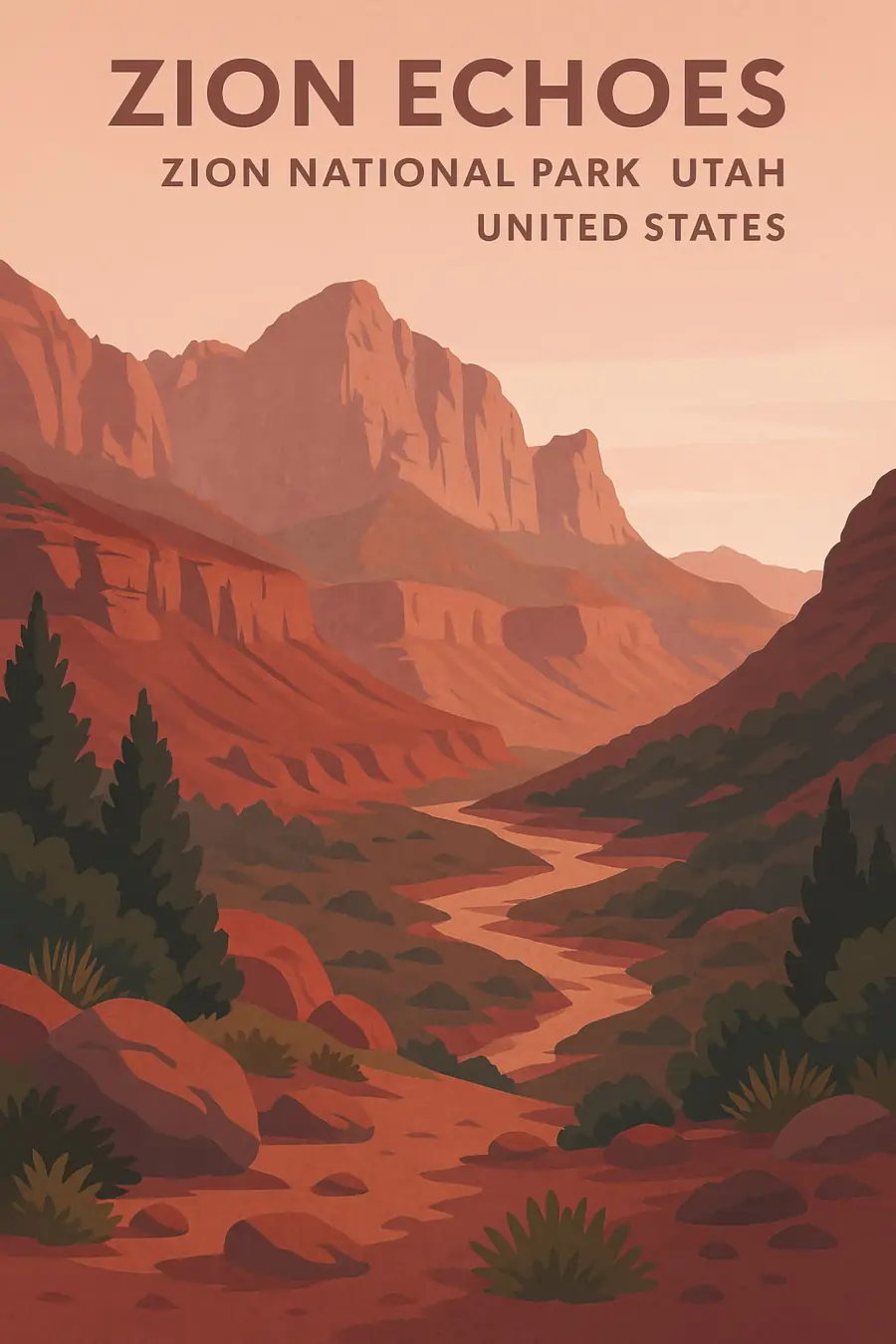
The heart of the park is Zion Canyon, a narrow gorge with sandstone walls rising around 600 metres from the river. The cliffs are Navajo Sandstone, the hardened remains of a vast desert of sand dunes from the Jurassic period, and the sweeping lines of those ancient dunes can still be seen in the rock. The North Fork of the Virgin River runs through the canyon and, upstream, squeezes into The Narrows, where the walls almost close overhead. Springs seep from the cliffs and feed hanging gardens of ferns and flowers. Summers are hot, with monsoon storms that bring flash floods. You hear the river, canyon wrens and wind against the rock.
History
People have lived in this area for thousands of years. Ancestral Puebloan and Fremont peoples farmed corn, beans and squash along the river and stored grain in the cliffs. The Southern Paiute later lived here, hunting, gathering and farming along the Virgin River. Mormon settlers arrived in the 1860s, displacing the Paiute and farming the canyon floor, and one of them called it Zion. Government survey parties explored the region in the 1870s. In 1909 President Taft created Mukuntuweap National Monument, using a name thought to come from Paiute. It was renamed Zion and became a national park in 1919. The Zion-Mount Carmel tunnel, opened in 1930, brought motor tourism.
Why it matters for the living world
Zion lies where the Colorado Plateau, the Great Basin and the Mojave Desert meet, so it holds a wide mix of plants and animals in a small area. Cottonwood and willow line the river, pinyon and juniper cover the slopes, and ponderosa pine grows on the high plateaus. The park is home to desert bighorn sheep, which were reintroduced, Mexican spotted owls and California condors, which now nest in the canyon. The tiny Zion snail lives only in the park's hanging gardens. The Virgin River supports native fish such as the Virgin spinedace, and its free-flowing reaches are a rare example of an undammed desert river.
People of the place
The Southern Paiute, including the Kaibab Band, the Paiute Indian Tribe of Utah and the Shivwits Band, regard the Zion area as part of their homeland. Settlers took the best land and water in the 1800s, and Paiute communities were pushed onto small reservations. Today the park consults with Southern Paiute bands on cultural sites and history, and Paiute people share their knowledge in park programmes. Gateway towns such as Springdale and nearby communities live from tourism, while farming and ranching continue in the surrounding valleys. Many local families descend from the Mormon settlers who farmed the canyon before the park.
What it faces
Zion receives several million visitors a year, which crowds the canyon and its trails. The park runs a shuttle system in Zion Canyon and requires permits for popular hikes such as Angels Landing. Flash floods and rockfalls are a constant risk and have closed trails and roads. Toxic cyanobacteria have bloomed in the Virgin River, leading to health warnings. Fast population growth in southwestern Utah increases demand for water from the Virgin River. Climate change brings hotter summers, drought and more intense storms. The park manages visitor numbers, monitors water quality and works with tribes and neighbouring communities on land and water planning.
Sources
- History and Culture - Zion National Park (NPS)
- Would You Love Zion National Park as Much If It Were Called Mukuntuweap National Park? (National Parks Traveler)
- Park History: Zion National Park (National Parks Traveler)
- A confluence of cultures: Zion human history (Canyoneering USA)
Written for Regenerative Voices from the sources above. Spotted something wrong? Tell us.